


 Francais
 Deutsch
 Italiano
Refine Your Search
Naha Okinawa Ryukyu Islands 1945 stock footage and images
- Showing 1 to 6 of 9403 results more
more Hide
Hide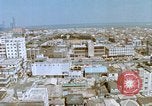
Street scenes and the people in Naha, Okinawa Island (Japan)
View of Naha, the capital of Okinawa Island in Japan. Cars drive along the streets of Naha. Shop signs written in Japanese are seen on Kokusai-dori Street. Japanese pedestrians walk on Kokusai-dori. Shoppers enter the Mitsukoshi Department store. Shop signs read “Okinawa Bird Center”, “Kokusai Watch Store”, “Noritake Naha China Shop”, “Bank of the Ryukyus” and “Souvenir Stores Fuji Omiyage”. Beauty salon sign in Japanese reads “Perm Beauty Salon Moriyama”. A woman buying mandarin oranges from a fruit store. Hands open a pack of chopsticks before eating a Chinese meal (beef broccoli, fried rice and egg rolls). Women walk past Johnny’s Gift Store in Naha. A Japanese movie poster hangs outside a building. Elderly Japanese men and women walking on the street. Groups of male and female High School students cross the road. Japanese salarymen wearing sunglasses cross the road. Farmers working on the field. A mother holding her baby on the street. A man browses for sunglasses from a street vendor. A Japanese Office Lady (OL) typing on a typewriter. Fishermen with net. A mason chiseling a rock. A construction worker operating a digger. A lineman working on powerlines.
Japanese delegates reach Ie Shima, Ryukyu Islands and then advance towards Manila, Philippine Islands in the South East Asia.
Japanese surrender in Southeast Asia during World War II. Airplanes in formation flight. Two Japanese Mitsubishi G4M-1 'Betty' twin-engine bombers painted white with green crosses on their wings, fuselage and tail land at Ie Shima Ryukyu Islands near Okinawa carrying Japanese delegates. The planes land at Nichols Field at 1813 hours. The planes are dubbed 'Bataan number 1' and 'Bataan number 2.' Lt. Gen. Torasirou Kawabe, the vice chief of the Japanese Army's General Staff and his surrender party disembark from the airplanes. Members of the surrender party include Rear Admiral Ichiro Yokoyama Representative, Imperial Japanese Navy Staff., Colonel Yashima Terai General Staff, Colonel Orato Yamoto General Staff, Mr. Morio Yakawa Secretary, Japanese foreign office. Kawabe leads the surrender party. Army C-54 transport airplanes parked. Japanese surrender delegates board the airplanes which take off for Manila, Philippines. United States Army General Douglas MacArthur speaks to his troops from a balcony at the war damaged Manila City Hall (Padre Burgos Ave, Ermita, Manila, 1000 Metro Manila) on 20 August 1945. He notes that he is hopeful that they will all be able to return home soon.
U.S. 8th Regiment Combat troops during invasion of Aguni, Shimajiri District, Okinawa, Japan during World War II.
Invasion of Aguni, a village in Okinawa, Japan during World War II. Battleships at sea during invasion of Aguni in Ryukyu Islands in Japan on 9th June 1945. Artillery fired from the ships. Landing crafts carrying 8th Regiment Combat troops approach the island. The troops holding guns, advance on the island. The soldiers fire guns. The soldiers move under cover. The Japanese civilians come out of their hiding in underground shelters. A civilian and few others come out of their hiding place. The Japanese civilians being held. Women and children standing on the road. The native women prostrate before a soldier. The soldier offers them cigarettes to calm their fear. Soldiers with the women and children.
Bulldozers pull the vehicles through a muddy area in Ryukyu Island, Okinawa during World War II.
The U.S. troops at the Shuri Line in Ryukyu Islands during the Battle of Okinawa, World War II. Vehicles move across the muddy area. Bulldozer pulls trucks through washed out culvert. Shacks in the area.
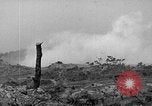
White smoke arises from exploding artillery shells on hillside in Okinawa, Ryukyu Islands.
United States 7th Infantry Division soldiers advance on Okinawa Island. Artillery shells explode on hillside. White smoke arises from exploding shells. (World War II period).
United States 7th Infantry Division soldiers advance under artillery fire in Okinawa, Ryukyu Islands.
United States 7th Infantry Division soldiers advance on Okinawa Island. Artillery shells explode on hillside. White smoke arises from exploding shells. Helmet of a soldier and a hill in the background. (World War II period).
CRITICALPAST.COM: About Us | Contact Us | FAQs - How to Order | License Agreement | My Account | My Lightboxes | Shopping Cart | Advanced Search | Featured Collections | Website Terms & Conditions | Privacy Policy ©2026 CriticalPast LLC.
License Agreement |
Terms & Conditions |
Privacy Policy
©2026 CriticalPast LLC.