


 Francais
 Deutsch
 Italiano
Refine Your Search
Japanese-martial-arts stock footage and images
- Showing 1 to 6 of 4336 results more
more Hide
Hide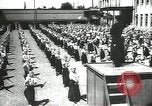
Japanese students practice Japanese martial arts (Kendo) focused on sword fighting
Opening scene shows instructor on a raised platform drilling students in preliminaries for Kendo training. Next, the students divided into two large teams, charge each other in combat exercise. The students wear protective armor (Bogu) and wield wooden swords (Bokken).
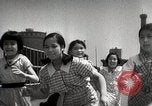
Japanese children practicing sports including martial arts like Kendo and swimming (WW2)
Small school girls play. Japanese children practice and compete in traditional Japanese martial arts Kendo with bamboo sticks. Japanese school children play tug of war and run through a line of showers on the way to a swimming pool to swim and play with a ball. (World War II period)
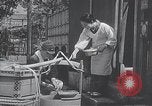
Children learn to write Chinese characters (Kanji), play baseball, and practice kendo in Japan.
A Japanese maid buys soft tofu (soybean curd) from a street vendor. Street vendor cuts a block of tofu. A Japanese woman practices Ikebana flower arrangement. Japanese woman places the finished flower arrangement on the Butsudan, a small household Buddhist shrine for family ancestors. An old Japanese woman sews on a new kimono while a little boy plays with his toys. Japanese woman bows in front of the Butsudan. At the railway station the Tokyo Express steam train arrives on time and official in-charge writes the train report. Engineer inspects steam train. Children learn to write Japanese characters inside a classroom. Schoolchildren use bamboo calligraphy brushes to write basic Chinese characters or Kanji. Japanese boy writes Chinese characters that read “Great Japan”. Children play baseball during school recess. Older children practice kendo, a modern Japanese martial art.
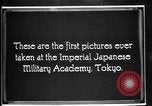
Cadets training at the Imperial Japanese Military Academy in Tokyo. Students demonstrate Kendo martial art at a Military school in Kobe, Japan
Opening scene shows cadets at the Imperial Japanese Military Academy in Tokyo, practicing Kendo martial art using bamboo swords (shinai) and wearing protective armor (bōgu). Next the cadets run an obstacle course. We see them leaping over a wall and then running over wooden poles across a deep open pit. They then leap another wall and climb out of a deep ditch and over a stone wall to the top. Next, students are seen demonstrating kendo in a courtyard at the a Military School in Kobe, Japan. Many spectators watch the demonstration.
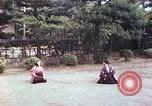
Two Japanese young women demonstrate the ancient martial art of Naginata in Kyoto, Japan
Two young women demonstrate the basic elements of the ancient martial art of Naginata using wooden weapons. They assume various classic stances and movements in unison. After the series of actions, they pose for closeups.
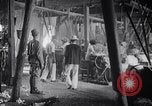
Japanese attack on Manchuria, China, Hong Kong and Corregidor. Japanese industry and training of children for war.
Preparations for war in Japan during World War 2 period. Japanese laborers work hard in various factories. War production workers creating war materiel, armament, airplanes, tanks. Men and women at work in war production factories, together with child labor. Japanese troops mobilize and prepare for World War 2. Japanese soldiers on parade and Japanese tanks seen passing in review. Anti-Japanese propaganda. Japanese children being trained and doing various physical exercises. Japanese young boys perform drills and war combat training, calisthenics, and classroom testing. Boys wearing only goggles receive some kind of light therapy or ultraviolet or sunray therapy. Japanese youth and soldiers learning various martial arts (possibly Kendo or Bōjutsu) and hand to hand combat. War in Manchuria. Newspaper headlines show the attack of Japan on Hong Kong and Corregidor. Japanese soldiers seen fighting in wars. Scenes of war devastation and dead civilians in Manchuria and various areas where Japan has attacked. Bodies loaded onto carts and dead Chinese civilians in streets killed by Japanese. Japanese officer leading Japanese solders in a banzai cheer.
CRITICALPAST.COM: About Us | Contact Us | FAQs - How to Order | License Agreement | My Account | My Lightboxes | Shopping Cart | Advanced Search | Featured Collections | Website Terms & Conditions | Privacy Policy ©2026 CriticalPast LLC.
License Agreement |
Terms & Conditions |
Privacy Policy
©2026 CriticalPast LLC.