


 Francais
 Deutsch
 Italiano

Refine Your Search
+"Africa" +1942 stock footage and images
- Showing 25 to 30 of 165 results more
 Hide
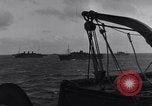
Allied Forces in Battle of Casablanca and North Africa in World War II
Operation Torch in World War 2. Allied invasion convoy off Casablanca, Morocco. American troops on ship's deck, cleaning and checking their rifles. Closeup of a wire from the Invasion Task Force Commanders, listing signals that will tell of the French forces' decisions. Closeup of U.S. troops boarding Higgins Boat from a transport ship. Rear Admiral H. Kent Hewitt on the USS Augusta (CA-31). U.S. President Roosevelt, Free French Commander, Charles de Gaulle, and French General Giraud, all issue calls for French forces not to resist Allied invasion. View of triple turret 8-inch guns on the USS Augusta. Sailors in their bunks. Suddenly guns from the shore begin firing on the invasion convoy. Shells explode in water near convoy ships, as sailors man battle stations and begin returning fire on Casablanca. French defenders signaled friendly attitude by directing searchlights vertically. British spitfire aircraft launch toward Algiers, from Gibraltar. British troops in an amphibious landing at Algiers on November 8, 1942. View of French Admiral Jean Darlan. Allied troops enter Algiers. American airborne troops parachute from C-47 transport aircraft over Oran, Algeria. Next section covers Battle of Casablanca: Allied warships fire at Vichy French ships and aircraft and more troops head to shore in landing craft. Sailors firing anti-aircraft guns from landing craft, at enemy aircraft overhead. A U.S. carrier-based SBD Douglas Dauntless aircraft as it descends in the sky. French sailors load 380mm guns on battleship Jean Bart and fire her guns. Glimpse of French Shore defense guns firing with shells exploding in waters offshore. Gunners aboard U.S. warship loading a heavy gun. Angered over British attack on the French Fleet in 1940, Admiral Daran refused to negotiate with the British. Inserted footage of French battleship Dunkerque exploding during British attack on French fleet at Mers-el-Kébir, July3, 1940. A tank driving ashore from a landing craft. Closeup of a French soldier (from the rear) firing his rifle at invading Allied troops. Allied medical corpsmen on the sandy shore, running with a litter. A jeep pulling a towed artillery field piece ashore from the surf. Medical corpsmen carrying a wounded on a stretcher. Allied troops fighting defenders in Casablanca. Animated map shows German invasion of Vichy France. View of Philippe Pétain, Head of Vichy France. View of Admiral Darlan saying goodbye to U.S. Lieutenant General Mark Clark after secret meeting of the two. Officers of German Armistice committees departing a North African city. Cheering crowds are happy to see them depart in a truck. French crowds cheering American troops. British Lieutenant-General Kenneth Anderson arriving at Algiers. French General Henri Giraud salutes. General Dwight D. Eisenhower salutes. Parading color guard with flags of France, Britain, and the U.S. Animated map shows German forces pouring into Tunisia. View of German troops on deck of a ship and at ship's anti-aircraft positions. General Eisenhower conferring with British and French allies. Camels used on rough terrain. American writes "Tunis Toonerville." in chalk. Allied troops sitting on floor of freight rail car with door open as old steam engine moves the train. Animated map shows German and Allied supply lines. A U.S. Douglas A-20 Havoc bomber landing on an airstrip. Numerous German warplanes parked in Tunisia. U.S. M2 tanks and other military vehicles moving along narrow mountainous roads. Locomotive transporting mules in stock cars. C-47 transport airplanes drop British and American airborne troops. Commandos disembark from ships at Bone, Algeria. Allied aircraft parked on a captured enemy airfield, under attack by German Dornier Do 17 and Heinkel He 111 bombers. A Parked American B-25. Allied soldiers firing small arms and anti-aircraft guns at German planes.
British Prime Minister Winston Churchill in many meetings before and after America's entry into World War II
Opening slate reads: "Quebec Conference August 1943." The English battleship, Prince of Wales, is seen in fog off the Coast of Newfoundland, in August 1941. View of sailor on fore-deck of the British ship. View inside engine room of the ship where sailor manipulates her power. Closeup of engine crankshaft stopping as she drops anchor in Placentia Bay. View of Prime Minister Winston Churchill, greeting U.S. President Franklin D. Roosevelt aboard the Prince of Wales. He proffers a letter to the President, from the King of England. View of Roosevelt and Churchill seated on deck with their respective military leaders standing behind them. Admiral Ernest King, U.S. Chief of Naval Operations converses with U.S. Army Chief of Staff, George Marshall, as they stand behind Churchill and Roosevelt. Wider camera view shows the larger military entourage accompanying the Prime Minister and the President. Glimpse of prisoners and enslaved workers taken by Nazi Germans in Europe. Glimpse of bombs falling from an airplane. Classic film views of the Japanese attack on Pearl Harbor in December 7, 1941. Bombs exploding along "Battleship Row." Heavy smoke rising from the bombed ships. The USS Arizona tilted heavily and burning. Camera pans along the path of destruction, as the voice of President Roosevelt is heard in the background, asking the Congress to declare that the Japanese attack created a state of War between the United States and the Japanese Empire. View of President Roosevelt speaking to the U.S. Congress. Seated behind him are Vice-President Henry Wallace and Speaker of the House, Sam Rayburn. Glimpse of Congress members applauding. Change of scene shows President Roosevelt and Winston Churchill meeting in Washington, DC, in December of 1941, during World War 2. Views of war preparations in the United States, including the building of new war production plants and facilities. A large steel ingot being forged into an artillery gun barrel. Machinist at work turning a gun barrel on a lathe in a munitions factory. Views of manufacturing plants in operation and steel being made. A railroad train carrying new Army trucks. Another meeting of Churchill and Roosevelt in Washington, D.C. June, 1942. Standing behind them is President Roosevelt's special assistant, Harry Hopkins, a British naval officer, and an American navy Captain. American soldiers boarding a troop ship, and closeups of them as they enter the ship, looking out of portholes, and waving from the ship's deck. Glimpse of Washington Monument and its image in the reflecting pool in Washington DC. Closeup of a book entitled, "Time Table for Invasion." General George Marshall with several of his generals doing preliminary planning. Series of scenes involving senior military officers engaged in war planning. A convoy of warships is seen at sea during the Operation Torch Allied invasion of French North Africa during 8–16 November, 1942. Views of Allied Navy ship guns firing. Allied troops riding in landing craft, and advancing from beached craft on shore of Algiers. Aerial view of a flight of Douglas Dauntless bombers in formation. "Bombs away" view from Allied airplane dropping bombs. Allied troops firing camouflaged antiaircraft guns from sandy positions near shore. Enemy shells or bombs exploding nearby. Two U.S. Army soldiers holding a document in French entitled, "Message from the President of the United States.
French Air Force in World War I. Germany Army occupies Paris in World War II
Opening scene shows French Nieuport biplanes in aerial combat with German airplanes in World War 1. Many are engaged in a massive dogfight. One aircraft is seen hit and falling toward the ground. Next, two French aircraft are seen returning to their base. They fly over a hangar where a crashed airplane sits with tail in the air. Near the hanger are several airplanes in various stages of maintenance. Mechanics are moving one. An airplane taxis in front of the hangar. Scene shifts to closeup of a Lafayette Escadrille Indian logo painted on a metal structure. Scene shifts to a formal award ceremony for some pilots and crews. Their squadron members are lined up behind them in front of a line of aircraft. The view is from behind a formation of French soldiers with rifles, rendering salutes. Next, French soldiers parade on the airdrome, led by a military band. At this point the scene phases out as a fireball is superimposed on a map of Europe, signifying World War 2. Adolf Hitler is seen in closeup near the Eiffel Tower, when he visits Paris, France following its occupation by German forces in 1940. Several views of German troops marching along the Avenue des Champs-Élysées and through the Arc de Triomphe. Closeups of some German soldiers in the ranks. Scene shifts to North Africa, in 1942, as American troops make an unopposed amphibious landing on the coast, in Operation Torch. Several landing craft are seen and troops ashore. A Dodge 3/4 ton WC-51 army truck, with half of its hood open, makes its way through the surf as it leaves a landing craft.
Fierce battle for Stalingrad and for Russian oil fields near Baku during World War II.
Battles fought by Russians fighting military invasion from Germany during World War II years of 1942-1943. A poster shows Hitler cuff held by the Allies. United States ships at docks for aid and supply to Russian people. Fight for the control of oil field of Russia near Baku. Buildings and house of Stalingrad. German Army offensive on Stalingrad in order to take control of the oil fields. Civilians take arms to fight the invading German Army. German artillery and bombers raid Stalingrad. Fierce battle on the streets. Snipers fire from inside a house, artillery fire from a house. Bombing and infantry fight in every house of the city. Ruined city buildings and houses by war. German bombers on raid, shot by anti aircraft guns. Battle for Stalingrad continues on streets during Russian winter. Map shows British and United States forces land in North Africa. Soviet Army pushes back German Army in various cities and occupies them. Fresh cavalier troops arrive in Siberia. Russians Army commanders Marshal Nikolai Voronoff and others at a meeting. Operation Uranus: Soldiers of Soviet Army encircling meet from two ends as they prepare to attack German forces in Stalingrad and drive them out..
U.S. Army Quartermaster Corps prepare mortars, fire anti aircraft guns, and provide supplies during World War II.
Clip opens with brief World War I scene, circa 1917, of new American army recruits receiving army uniforms being issued by a U.S. Army Quartermaster. Clip then covers U.S. Army Quartermaster Corps' combat operations in various Theaters of Operations during World War II. Quartermaster Corps soldiers with rifles under the cover of a military truck during battle. Troops in trucks. An aircraft in low flight over a field. A U.S. Army truck. A Quartermaster fires an anti aircraft gun. Explosions occur and smoke rises. A British tank in a field. Soldiers beside a truck. Cans and barrels stacked on the ground. An enemy German tank in a field. Soldiers take cover. Quartermasters with guns in a trench. They come up the trench in prone positions. Dramatized battle scene with several Quartermaster corps casualties beside a wire fence. Soldiers prepare a mortar gun. An anti aircraft gun on an army truck. A soldier takes aim and fires a rifle during training. The Quartermaster flag hoisted on a pole. Actual footage shows aerial view of Bataan, and then ground views of groups of remaining U.S. Army soldiers around time of surrender of Bataan in April 1942. American soldier seen with their hands up and under guard of Japanese soldiers during Bataan surrender. Landing crafts arrive at a beach in North Africa. Supplies being offloaded at various battle fronts of World War 2. Soldiers and supplies off-loaded on the beach. Quartermasters seated on supplies boxes. Landing crafts arrive at a beach in the South West Pacific. Troops move across the beach. Troops disembark from landing crafts and move across a beach in Sicily, Italy. The Quartermasters unload boxes of supplies during various beach landings. They unload supplies and fire artillery on a beach head in Italy. Troops in trucks. A convoy of trucks loaded with supplies. Ammunition, ration and personnel in trucks move from Algeria to the front in Tunisia. Explosions occur and smoke rises. Trucks advance through smoke at night and in difficult conditions. Quartermaster General Major General E. B. Gregory speaks about the Quartermaster Corps. He says that the Quartermasters distribute goods to the army during training and combat. The movement of the Corps should be so regulated so as to deliver the goods at the right time in the right quantity.
Production of petroleum at oil refineries and its transportation in United States, before and during World War II
Documentary titled, ' Oil Is Blood ' on production and transportation of petroleum and its by products in United States. Crude oil in a pit. Man takes samples from the pit. View of derricks at an oil drilling site. Derricks at sea. Exteriors of a building near the derricks. Service station attendants, pumping gas and cleaning the windshield, on a 1942 Lincoln Continental convertible, at a "Tydol Flying A" gas station. Scenes of busy highways and plenty of fuel give way to empty roads, closed gas stations, and restricted hours for obtaining fuel, as it is rationed during World War 2. Views of persons obtaining ration stamps and books. Various gasoline ration books including the "A" books (allowing the smallest amounts) and "B", "C", and other books allowing larger rations to more essential users. Oil rig "roughnecks" inserting new sections of pipe and proceeding to drill. Closeup of a "gusher" before it is capped. Men filling railroad tank cars with petroleum products. A long train of tank cars pulled by a steam locomotive. Animated map illustrates the ocean shipping lanes that formally served as means to transport fuel and oil, before the German U-Boat threat made them too dangerous for general use. Drums of fuel and oil being loaded aboard a ship to supply the Allies during the war. A convoy of ships heading to the war zone of North Africa.