


 Francais
 Deutsch
 Italiano
Refine Your Search
+"Aleutian Islands" +1942 stock footage and images
- Showing 7 to 12 of 16 results more
more Hide
Hide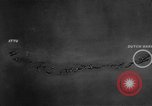
Seabee Construction Battalions build a base at Attu in the Aleutian Islands during World War II.
Activities of the Seabees at Attu in the Aleutian Islands during World War II. The destination of Construction Battalions (Seabees) is Attu. An animated map shows Attu. Seabees make amphibious landings on Attu, while part is still occupied by Japanese troops. They begin immediate construction activity. A derrick unloads coal. Seabee stevedores unload cargo. A rough Seabee camp of tents and campfires, with an American flag flying from a pole. Seabees at breakfast mess. Carpenters, with rifles on their backs, erect a temporary barracks building. Prefabricated parts for buildings being unloaded on shore. Seabees erecting a prefabricated field hospital (in 5 hours). Refueling bulldozers from 55 gallon drums. View from moving boat, of the completed base at Attu.
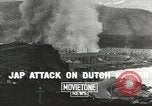
Aftermath of Japanese attack on a Dutch harbor in Aleutian Island, Alaska
'Japanese attack on a Dutch harbor '. Oil supplies burn after a Japanese attack on a Dutch harbor in Aleutian Islands, Alaska. Buildings at an air base burn as smoke rise from them. Destruction caused by bombings and fires. A bombed out ship in the harbor. (World War II period).
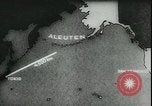
Japanese troops land and advance inland on the Aleutian Islands in the Pacific Ocean during World War II.
Japanese troops on the Aleutian Islands in the Pacific Ocean during World War II. A map locates places. Ships underway at sea. Japanese troops aboard a ship. They advance across a field. A seaplane takes off and in flight overhead. United States Army Air Forces B-24 Liberator aircraft bombard Japanese battleships. Smoke and splashes in water due to the bombardment. The aircraft bomb a shore. Enemy anti aircraft guns are fired. Soldiers stand at attention. A soldier holds a flag. A map of Pacific areas controlled by Japan.

Japanese invasion of Aleutian Islands during World War II
Animated map shows Northern Pacific with line from Japan to the Aleutians and thence to the West coast of the United States. View zooms in on the Aleutian Islands. View, from Japanese transport ship, of several Japanese warships underway in Northern Pacific ocean during World War 2. Japanese Naval officer steering in the wheelhouse of the ship. A light cruiser and two more warships in a column. A company of Japanese marines receive instructions from an officer and board a landing craft.View of marines in landing craft, underway, with their rifles resting on the gunnels.
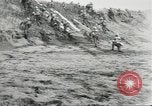
Japanese forces landing on Kiska, Aleutian Islands, during World War II
Japanese No. 3 Special Landing Party of 500 Imperial Marines are seen landing and proceeding inland on Kiska, Aleutian Islands. They carry the rising sun flag. They are seen searching two captured Americans from the U.S. Naval Weather Detachment. The rising sun flag is seen in right foreground. The Japanese troops continue walking across the island. Buildings of the weather detachment seen in background.The Japanese troops assemble in formations near the weather detachment buildings as their commander addresses them. A Japanese Type 97, 4EFB (Mavis) flying boat seen taxiing into the bay and being tended by Small boats. (Reportedly, the Tail code "O" identifies the seaplane's unit as Taiwan-based Toko-tai, also active in Solomon islands.)
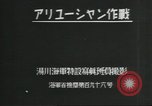
Japanese warships fire at U.S. aircraft off Kiska, Aleutian Islands, during World War II
View of a motorboat heading toward an Japanese Imperial Navy Niagra-class light cruiser anchored near a submarine, in waters off Kiska,in the Aleutian Islands, during World War 2. Scene shifts to Japanese naval guns firing. A U.S. Army Air forces B-24 Liberator bomber is seen in flight overhead. Explosion and smoke fills scene next to Japanese camera ship, and then another bomb explodes in the water nearby. A Japanese submarine and destroyer are in the background. Japanese ship fires anti-aircraft guns at a U.S. PBY-5 Catalina in flight overhead. Camera follows flight of the Catalina past ship's funnel which is emitting black smoke. Another bomb hits water near the ship. More anti-aircraft fire is seen from the ship. The Catalina turns away, with a slight trail of smoke behind. Next, a large explosion is seen from a bomb striking near the shore. A Catalina, flying toward the camera ship, passes over a hill, through black flak clouds, and is struck. It descends, emitting trailing puffs of black smoke and strikes the shoreline in an explosion and black smoke.