


 Francais
 Deutsch
 Italiano
Refine Your Search
+"Atlantic coast" +1944 stock footage and images
- Showing 1 to 6 of 6 results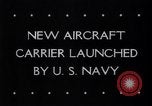
People cheer as a new aircraft carrier Bon Homme Richard of the U.S. Navy is launched at an Atlantic coast shipyard.
U.S. Navy launches a new aircraft carrier Bon Homme Richard at an Atlantic coast shipyard. The air craft carrier at the shipyard. People at the shipyard to see the launching ceremony. People cheer as the aircraft carrier sails out into the sea.
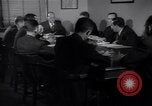
Atlantic Coast Director, W W Schwenk in a meeting with other officials in War Shipping Administration Division headquarters (WW2)
View at War Shipping Administration Division headquarters in New York City. Atlantic Coast Director W.W.Schwenk discussing with other officials in a meeting. Schewenk discussing and looking into Secret War Administration Data Book. Door sign of 'OFFICE OF ATLANTIC COAST DIRECTOR - WAR SHIPPING ADMN ENTRANCE' can be seen. (World War II period)
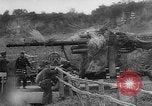
German forces engage in realistic live fire exercises in preparation for defense of France against Allies, WWII
German forces engage in live fire exercises as they prepare to defend against anticipated Allied invasion. German gun crew fires artillery piece. Concealed German soldiers look through binoculars toward coastal terrain. .Soldiers climb hilly terrain behind bushes. Soldiers, in trench, hold their ears as they fire a mortar. Artillery guns beinf fired. Heavy smoke rises up due to explosions. Soldiers communicate through radio. View of Atlantic coast from camouflaged defensive position. Sky is filled with German paratrooper chutes. Paratroopers organizing on the ground and moving as a group. Firing a machine gun. German gun crew fires from concealed position. Crewman wipes shells clean before they are placed in gun. German officer looks through periscope. (World War II period).
John Edgar Hoover talks about German saboteurs captured in the U.S. and other enemy agents during World War 2.
Opening scene depicts (dramatized) the presence of German submarines off the Atlantic Coast, delivering Nazi German saboteurs of Operation Pastorius to Long Island, New York and to Florida in 1942. View of German submarines in the ocean. A scientist in a FBI laboratory examines explosives found when the sabotage attempt was uncovered, including blocks of TNT and explosives designed to look like lumps of coal. J. Edgar Hoover describes how the explosives were designed to target American citizens and war industries during World War 2. Paddy wagons with military guards standing on read door platforms are seen entering court facility in Washington DC. View inside the paddy wagons of German agents ("submarine saboteurs") being brought to military trial. View of the accused and the military officers of the court sitting in court during the trial. Military judges are seen seated during the trial proceedings. View of a wall of file cabinets and a hand reaching into a cabinet marked "secret." Past events show Adolf Hitler in meetings with his staff. An animated map shows Nazi symbol overlaying an outline of the United States. A United States flag in the background. The director of the FBI (Federal Bureau of Investigation) John Edgar Hoover in the United States. He sits at a desk in his office. He talks about enemy agents, Hitler's desire to punish the United States, and the victory of the United States over them.

Representatives of labor and management observe an aircraft on maneuvers and learn from pilots during navy show in U.S. (WW2)
Executive visit U.S. navy show at Atlantic Coast in the United States during World War II. Representatives of labor and management observe an aircraft on maneuvers. The U.S. aircraft takes off during a navy show. A man signals to the aircraft for take off. Business leaders learn from pilots, crews and executive staff, how industry can best aid war effort. Crew and pilot near and around the aircraft.
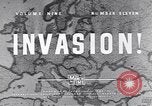
News media military analysts discuss the problems of Allies invading Europe to defeat Germany in World War II
Map of Europe and label "Invasion." Westbrook Van Voorhis leading a panel discussion about the problems arising from the Allied invasion of Europe in World War 2. He introduces panelists: Hanson Baldwin (military editor of the New York Times) Dewitt MacKenzie (Associated Press military analyst), and Paul Schubert (of Mutual Radio Network). He asks Mr. Baldwin about the importance of aerial bombing campaigns. Baldwin also stresses importance of a land invasion of Europe. Relief map of Europe highlighting major German cities. Asked about the merit of invading Italy on the way to Germany, Mr. Schubert cites the problem of the Alps and suggests other more effective invasion routes. Van Voorhis asks Mr. MacKenzie about best route into fortress Germany. He considers the criterion of ease of supply as most important, and suggests the Atlantic coast, near a good port and not far from England. Animated map shows this idea. When asked about this, Mr. Baldwin agrees completely, calling the conflict "a quartermaster's war." He adds, "The problem of victory is the problem of supply."