


 Francais
 Deutsch
 Italiano
Refine Your Search
+"Bastogne Belgium" +1944 stock footage and images
- Showing 1 to 6 of 6 results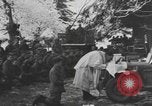
Supplies being dropped from airplanes and gliders landing on a snow covered area in Bastogne, Belgium.
A film depicts the Battle of the Bulge in the area of Bastogne, Belgium by U.S. troops during World War II. Belgian civilians are evacuated from an area. Civilians and soldiers in an area. Guns on a field. U.S. aircraft flying in formation to deliver supplies, ammunition, and food to U.S. Army forces including 101st Airborne Infantry soldiers fighting in the battle of the Bulge. Soldiers watching the airplanes through binoculars. Point of view shot from inside a glider hooked via a tow rope to an aircraft in flight, preparing to cut loose for glide to the ground. Aerial view of the target area. The airplanes in flight overhead. Supplies are being dropped via parachutes. View inside supply aircraft as troops push supplies out of doors. Gliders loaded with supplies and equipment landing in a snow covered area in time for Christmas 1944. Combat in the snow with a night artillery barrage by American soldiers firing at the Germans. U.S. soldiers using flame throwers at night directed at Germans. Dead bodies of German soldiers lying on the snow covered battlefield the next day. German prisoners of war standing under the guard of the U.S. soldiers, some of German prisoners found wearing civilian clothing or wearing pieces of U.S. uniforms. The 101st Airborne Infantry soldiers march in a victory celebration in town. A board reads: "Bastogne Bastion of the Battered Bastards of the 101st."
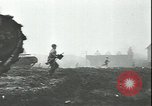
The U.S. Army Signal Corps in War and Peace. Descriptions and demonstrations of VT (proximity-fused) munitions
Opening scene shows troops of the U.S. Army 101st Airborne Division engaged at Bastogne, Belgium, during the Battle of the Bulge, in 1944, during World War II. They advance through fires and set up defenses in buildings, firing rifles from apartment windows. Outside, riflemen fire from behind a concrete barrier. Closeup of one firing his M1 Garand rifle. Glimpses of infantry firing mortars and walls falling to mortar fire. Gun crews firing heavy field artillery pieces, some under camouflage nets and others in the open. Intervening slate reads: "VT." and introduces postwar discussion of Signal Corps-developed proximity fuse, using animated cartoon. Shows how it proximity shells increase their explosive envelope compared to regular time fused munitions. U.S. Army gunner fire a number of proximity shells that burst above ground targets in the distance. A cartoon shows the proximity fused munition being used by a fighter aircraft. A Republic P-47 fighter plane is seen firing VT munitions from guns in its wings. Aerial bombs falling. A line of VT bombs exploding above ground.
U. S. reinforces defense of Bastogne, Belgium, during World War II
Opening scene shows people fleeing a German advance toward Bastogne during World War II. American Military Police check the identifications of all persons leaving Bastogne on Highway 15. One Belgian refugee is delayed by an MP Sergeant because he has shaved the moustache that appears in his identification papers. American forces in trucks moving through at a major road intersection. U.S. troops of the 318th Regiment, 80th Infantry Division entering Bastogne in trucks, to relieve defenders there. Some 8th Regiment soldiers are seen patrolling a street where an American flag is displayed on a building with a sign on front reading: "Civil Affairs," and posting office hours. View of U.S. troops moving along sidewalks on both sides of a street in the town.
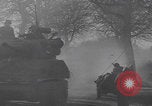
United States Third Army fights German advance during the Siege of Bastogne (WW2)
General George Patton’s Third Army mobilize to rescue trapped Ninth and Tenth Armored Division and 101st Airborne in Bastogne, Belgium during World War II. A house in flames at Sibret, near Bastogne. Sign reads “Sibret” in front of the burning house. Soldiers and vehicles move in the snowy field and roads. Explosion and fire on the hill. A damaged and abandoned M3 half-track on fire. Soldiers in dugouts in hillside wait for supplies. A fleet of transport planes fly over Bastogne. Allied transport planes drop 1500 tons of supplies for the besieged troops in Bastogne. Supply boxes are dropped with parachutes. Artillery crew firing a M101 105 mm Howitzer under a canopy. A soldier walks away from a German tank on fire. Heavy smoke rises from a burning tank. A United States soldier escorts captured German prisoners (POW) away. The aftermath of the Siege of Bastogne. Bombed damaged buildings and debris scattered on the streets of Bastogne. A damaged M3 half-track is left on the street. Soldiers inspect smashed Jeeps and military equipment. Bodies of dead casualties are covered with cloth.
Damaged U.S. vehicles and blanket covered bodies of U.S. soldiers in bombed ruins in Bastogne, Belgium
Bombing of Bastogne in Belgium. Damaged half trucks,jeeps and other U.S. vehicles. 101st Airborne, 10th Armored Division soldiers inspect the damaged vehicles. Wreckage in the city. Bombed buildings. Damaged U.S. Army vehicles in ruins. Blanket covered bodies of U.S. soldiers in bombed ruins of city. Rubble on ground. (World War II period).
101st Airborne and 4th Armored Division defend Bastogne (WW2)
Map showing Stavelot and Bastogne in Belgium during World War II. A soldier uses binoculars to inspect United States Army Air Force planes in the sky. Soldiers watch aerial combat between United States and German Luftwaffe Air Force planes. Smoke from planes hit by flack lingers in sky. 101st Airborne division soldiers march to the outskirts of Bastogne. Soldiers ride an armored vehicle and march on foot. 4th Armored Division M4 Sherman tanks move on snow covered road. Explosion during battle in Bastogne. Douglas C-47 Skytrain transport planes from bases in Britain and France bring supplies to the defenders of Bastogne. German prisoners of war marching by as the transport planes arrive. The C-47 transport planes airdrop supplies over Bastogne.