


 Francais
 Deutsch
 Italiano
Refine Your Search
+"Bougainville Island Papua New Guinea" +1943 stock footage and images
- Showing 1 to 6 of 13 results
The bombing of Buka Airdrome on Bougainville Island by U.S. B-24 Liberators
Events relating to the bombing of Buka Airdrome on Bougainville Island on September 14th 1943. U.S. B-24 Liberator bombers and fighters in flight at a high altitude over the airdrome. B-24s dropping bombs. Impacts visible. Japanese fighter aircraft receiving fire from American aircraft. (World War II period).
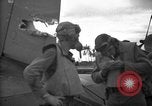
U.S. Marine Lieutenant Marshall, with his severely battle-damaged F4U Corsair at Torokina Air Strip in World War II
Flight operations at Torokina Air Strip on Bougainville Island during World War 2. U.S. Marine First Lieutenant Marshall, and another airman stand and smoke by the tail of the bullet-riddled F4U Corsair aircraft that he just landed on Torokina airfield. The aircraft, Corsair number 25 (BuNo 17736) is from Lieutenant Marshall's unit, VMF-216. They examine the damage on the aircraft. Lt. Marshall, who suffered head injury from cockpit shrapnel is being given first aid in an army tent. Views of damage to the aircraft, including tattered wing, flaps shot up, holes in the fuselage, and huge pieces shot out of the rudder. ( This mission took place on 19 Dec 1943. After flying cover for B-24 bombers over Rabaul, Three U.S. Marine Corps F4Us flown by Capt. Lawrence 'Cloudy" Faulkner, and First Lieutenants Marshal and Guv Kemper, were surprised and engaged by 20-30 Japanese Zekes (Zeros) diving from behind clouds . Lieutenant Marshal was the sole survivor of the encounter.)
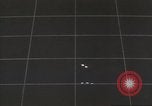
Battle of Empress Augusta Bay: United States Task Force Division 46 and Division 45 advance towards Japanese enemy target.
Artistic rendition: Diagram shows United States Destroyer Division 46 firing torpedoes at the Japanese enemy ships. Explosions as the enemy positions are hit. Task Force Division 46 and Division 45 ships advance towards the enemy target. The radar show friendly planes in range. Note shows results of the battle. (World War II period).
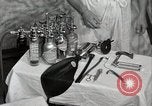
1st U.S.Marine Corps Medical Battalion surgeon attends to wounded U.S. Marine in tent, Bougainville, Papua New Guinea.
Physician of the 1st United States Marine Corps Medical Battalion performs surgery on a wounded U.S. Marine in a tent at Bougainville, Papua New Guinea, within the Solomon Islands archipelago. Surgeon prepares instruments for operation. Patient is given anesthesia via inhalation. His back shows large cut swabbed with antiseptic. The patient is given intravenous injection. Surgeon performs a thoracotomy incision on patient's chest to remove shrapnel from his thoracic cavity. The lung is visible in the wound as a retractor is placed to expose the inside of the chest. The surgeon removes the shrapnel and places it on piece of cloth. Surgeon reapproximates the ribs using wire suture. Chest tube is inserted. Doctors dress the wound with gauze. Attending medical staff wipe face of patient and doctor with clean cloths. X-Ray of the patient shows pieces of shrapnel in his chest.
Bombing of Kahili Airdrome on Bougainville Island by U.S. AAF B-24 Liberators
Aerial views of the bombing of Kahili Airdrome on Bougainville Island. U.S. B-24 Liberator bombers in flight at a high altitude over the airdrome, dropping bombs. (World War II period).
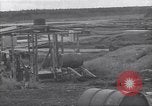
A Coast Watcher and a Police man at the Bougainville Island of the Papua New Guinea in South Pacific during World War II.
The Bougainville campaign of World War II on and around Bougainville Island in South Pacific. A Coast Watcher and a Police man at the Bougainville Island of the Papua New Guinea in South Pacific. The Coast Watcher, a local citizen of the island and a Policeman of the Allied forces keep a watch for enemy ships in the sea and check the weather from among the bushes. The Coast Watcher holds a gun with him.