


 Francais
 Deutsch
 Italiano
Refine Your Search
+"Burma" +1942 stock footage and images
- Showing 19 to 24 of 24 results more
more Hide
Hide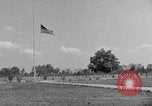
United States soldier checks graves with crosses at a cemetery in Burma.
The United States flag at half mast in a cemetery. A soldier checks various graves with crosses. He takes off his hat. (World War II period).
United States war equipment unloaded into India and British forces training and battling Japanese (WW2)
United States Army soldiers in a market area in India during World War 2. American soldiers move about the market place in India, shop for items, and watch a snake charmer at work. Allied war equipment unloaded at a port and carried away on camel carts into Burma. American tanks being unloaded and transported by rail. Camel caravans hauling boxes of rifles and ammunition. Camels pulling wagons filled with armament. Supplies being loaded into U.S. Army aircraft for delivery to the battle front. British Indian troops move up the jungle terrain in Burma and fight against Japanese troops in World War II. British troops guarding a border railroad. Some British soldiers pop out from a hidden trench at a railroad line with rifles ready (likely training operation). View of an Indian river that narrator says is mined. Indian sappers wire wooden rafts with explosives to float out. American airmen on airfield with Indian temple in background are seen briefing Chinese pilots in training at the airbase. Closeup views of faces of Chinese pilots. Fighter aircraft and bomber aircraft taking off to hold open the Burma road from the air. Aerial view of aircraft propeller spinning on airborne aircraft with Indian city in background. Allied aircraft bombing Japanese positions.
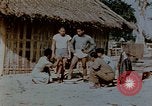
Soldiers demonstrate the application of war paint to disguise while fighting jungles of Burma (WW2)
A World War II Office of Strategic Services (OSS) training film titled, 'War Paint', demonstrates the use of war paint to disguise or camouflage American soldiers and OSS agents (precursor to Central Intelligence Agency or CIA) with white skin fighting in the Far East jungles, so they are less obvious to the Japanese enemy. American and a native Burmese soldier apply war paint on their legs. Burmese man looks in a mirror and applies color paint on his face. Soldiers apply war paint on their bodies. A soldier applies hair dye on the hair of another soldier. Kachin and White troops move in field. An experienced American commando demonstrates application of paint on the body to darken skin of white man. He gears up, smiles and poses for the camera. Narrator asks "are you going to use it" (the paint). The man seems to shake his head answering no. Next is a dramatized scene showing a soldier in a tree being shot. His helmet with blood on it falls to the ground. Implication is that he was not using camouflage paint to change the tone of his white skin, which made him a more obvious target.
United States and Chinese forces delivering war ammunition and supplies to China via India during World War 2
U.S. Military personnel together with Indian personnel in India receive military cargo such as ammunition, arriving by boat during World War II. Large boxes of ammunition and supplies lowered from boat. A boat being pushed to dock by tug. Natives of India push boxes onto carts. Railroad cars being loaded with tanks from boat and trains leave the harbor area. Camel pulling carts filled with ammunition and equipment. Mechanics work on P-47 warplanes in a large hangar in India. American military Personnel loading supplies on C-47 transport plane. American and Chinese Pilots seen, involved in shuttling supplies to China through India due to Japanese closure of the Burma road. P-40 aircraft with Chinese pilots take off.
P-40 fighters piloted by Flying Tigers (1st American Volunteer Group) attack Japanese planes in China during World War II.
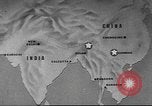
Flying Tigers (1st American Volunteer Group) operations in China during World War 2. An animation shows location of U.S. 10th and 14th Air Forces in India and China. Japanese troops march. Japanese aircraft taxi and take off. Japanese troops wave as planes take off. Japanese planes in flight. Planes strafe trucks on a highway. U.S. Army pilots assigned to the Flying Tigers (1st American Volunteer Group) beside P-40 Warhawk fighter aircraft. U.S. Army Air Corps Lieutenant General Claire Lee Chennault looks at a map laid on a jeep. Japanese planes in flight over clouds. Flying Tigers come out from behind a tree and run to P-40s. P-40s taxi on an airfield. Formation of P-40s in flight. Interior of a plane shows Japanese gunners cleaning guns while on the mission. Formations of P-40s. Japanese planes being shot down. Japanese planes spin down, hit the ground and explode. A wrecked Japanese plane. U.S. Lieutenant Art T. Smith in the cockpit of a P-40. An animation shows the location of an old Burma road from Rangoon, IndoChina. An American convoy at sea. Cargo is unloaded at a harbor in India and transferred to river barges. Small Chinese barges on the Rour. A small Chinese train loaded with supplies. The cargo being transferred from an American standard gauge train to a small gauge train. Chinese civilians load equipment on trucks.
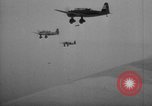
Japanese bombing of Rangoon, Burmese citizens evacuate from bombing during WW2
Three Imperial Japanese Army light bombers (likely Mitsubishi Ki-51 Sonia Type 99 Assault Planes) drop bombs over Rangoon (present-day Yangon, Myanmar) during World War 2. Explosion from dropped bombs. Burmese child runs away. A child rides on the back of his mother running away from bombing. Japanese bombers drop more bombs over buildings in Rangoon, destroying them. Buildings on fire due to Japanese bombings. Huge fire in roof of building. Burmese refugees sit on roof of moving train cars as railroad train moves down track. Farmland on fire. Rangoon’s destroyed buildings after Japanese bombings. Buddhist statues surrounded by debris.