


 Francais
 Deutsch
 Italiano
Refine Your Search
+"Burma" +1944 stock footage and images
- Showing 37 to 42 of 178 results more
more Hide
Hide
Transport airplanes land U.S. and Chinese soldiers on Myitkyina airstrip in Myitkyina, Burma during World War II.
Allied forces win Myitkyina airstrip in Myitkyina, Burma during World War II. A map of Burma highlights Myitkyina. Transport airplanes tow gliders over Myitkyina. An aerial view of Myitkyina airstrip. Gliders land on a field and U.S. and Chinese troops disembark. U.S. Army General Joseph Stilwell talks with U.S. Army General Frank Merrill on a field. A wrecked U.S. airplane on the field. A Japanese fighter overhead. U.S. Army Lieutenant Colonel Gordon Seagrave operates on a wounded soldier in a field hospital.
U.S. Lieutenant General Daniel Sultan explains Japanese aggression in China and need for troops in India and Burma during WW2
World War II film about the China, Burma, India (CBI) Theater of Operations. A soldier is seen filling out a form seeking information about him and inviting him to write in questions about anything he hadn't learned through normal information channels. Scene shifts to Information and Education Department of the Burma-India Command, where it is being processed by a soldier. Lieutenant General Dan I. Sultan, commander of Burma-India Theater, is seen next, seated at a desk, with wall map of the region behind him. He is appearing in an information film intended to inform troops under his command. He notes that more than half the troops who filled out the information form, asked why American troops were stationed in India and Burma. He refers to the recent recall of General Stillwell and the splitting of CBI into two theaters (China and India/Burma). He states that the purpose is a path toward Japan. An animated map shows China (that narrator notes has been fighting Japan since 1937). Animation shows Japan walling off China from the outside world, by seizing her ports, and then concentrating its grip on the Eastern part of the country. Without access by sea, the allies had only one option to assist China in the fight against Japan. That was to open the Burma Road. Film shifts to scenes of Japanese bombing of Shanghai and Chinese civilians abandoning the city in 1937 during Second Sino-Japanese War. Wounded and injured Chinese fighting fires while tending casualties in an open area. Glimpse of Chinese soldiers near one of their few large artillery pieces. A gun crew manning one of her few antiaircraft guns. Chinese jam road in trek to the unoccupied provinces of the country. Chinese carrying casualties on stretchers, making do without ambulances. Chinese coping in the face of all kinds of shortages. In contrast, well supplied Japanese troops are shown in formation. Japanese troops, military vehicles and equipment are seen. Japanese firing machine guns and heavy artillery against Chinese positions. Japanese armor and long lines of troops engaged against the Chinese, who continue to resist in spite of shortages and hardship. Chinese soldiers without shoes, marching in a column.
Medics carry a wounded soldier on a stretcher in Burma.
Medics carry a wounded soldier on a stretcher in Burma. Shacks in the field. The wounded carried to C-47 airplane. (World War II period).

Indian elephants help the British engineers to haul heavy loads at the Burma Front.
Indian elephants at the Burma Front. The elephants in chains. An elephant pulls a load. British engineers stand nearby. A baby elephant near its mother. A man sits nearby. The baby and the mother elephant step into a puddle of water. An elephant pushes a log of wood on a cart.
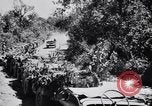
British Brigadier General Orde Charles Wingate and Chindits in Burma, during World War II
The Chindits or the Indian 3rd Infantry Division of the British Indian Army in Burma during World War 2. The Chindits move through a jungle. Chindits with a pack train climb up a hill. Soldiers carry a wounded soldier on a stretcher. Another wounded helped into a plane. The wounded are evacuated by Stinson L-1 Vigilant.. A Stinson L-5 Sentinel lands. Supplies are brought for Chindits. Soldiers unload supplies from a UC-64 Noorduyn Norseman aircraft and put the boxes on a jeep. The jeep is driven away. Soldiers roll drums near a plane. A tent with supplies. A soldier talks over a radio. Chindits cross a stream in small rubber boats. British Brigadier General Orde Charles Wingate inspects the area. Orde with other officers. One of the officers with a cigarette in his mouth. A plane lands. A plane in flight over a water body. Royal Air Force (R.A.F) pilots fly the plane. Brigadier General Orde with another person in the plane. (First Air Commando aircraft in this film: Stinson L-1, Stinson L-5, UC-64 Norseman, Douglas C-47, P-51A Mustang.)
The Chindits march forward and a funeral service for dead Chindits in Burma.
The Chindits or the Indian 3rd Infantry Division of the British Indian Army in Burma. Tanks and infantry advance. The soldiers march forward. A Red Cross truck passes. Smoke rises in the distance. The Chindits carry the wounded on stretchers. They aim and fire artillery. A flaming village. Wooden framework of the burnt houses. The troops move past dead Japanese soldiers on the ground. The wounded are treated. A funeral service for dead Chindits (World War II period).