


 Francais
 Deutsch
 Italiano
Refine Your Search
+"Burma" +1945 stock footage and images
- Showing 1 to 6 of 64 results more
more Hide
Hide
Captain James Green being airlifted from his crash site by a Sikorsky YR-4 helicopter in Shingbwiyang, Burma during World War 2
Men carry injured U.S. Army Air Force Jungle Rescue Pilot Captain James Green from hospital tent to completed MEDEVAC landing zone in Shingbwiyang, Burma during World War II. Green had been injured in a crash of his helicopter. Dr. Underwood talks on hand radio as men sight an incoming Sikorsky YR-4 helicopter. Engineer sets off smoke flare. Helicopter lands and men hold it. Men carry Captain Green on litter to the helicopter and he shakes hands with Pilot Lieutenant Raymond Murdock. Dr. Underwood gives Green an injection in his arm. Men put Captain Green in the helicopter and it takes off. Men cheer and shake hands with Dr. Underwood. This is an early example of one of the first helicopter MEDEVAC (Medical Evacuation) flights in a combat zone. Prior to this MEDEVAC flight, this particular helicopter, a Sikorsky YR-4, had been dismantled at Wright Field in Dayton, Ohio on January 17, 1945, loaded on a C-54 transport, and flown to the North Burma theater of operations. It was reassembled and flown by Capt. Frank Peterson, USAAF, on January 26, 1945 to evacuate wounded weather observer Private Howard Ross from a 4,700 foot mountain ridge in the Naga hills of Burma.
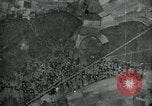
7th Bomber Group (H) Squadron and 4934 Bombardment Squadron of U.S. Army Air Force over Moulmein in Burma, WWII
U.S. Army Air Force attack enemy positions of Burma in China-Burma-India Theater during World War II. The 7th Bomber Group (H) Squadron and the 4934 Bombardment Squadron of the U.S. Army Air Force during a mission on railroad bridges in Moulmein in Burma. Smoke rising from bombed places in farms and railroads.
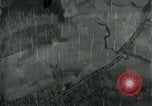
Bomber aircrafts of the U.S. Army Air Force flying over farms, railway tracks, roads and river bridges in Moulmein Burma.
U.S. Army Air Force attacks enemy positions in Burma in China-Burma-India Theater during the World War II. Agricultural farms, railway tracks, roads and river bridges as seen by the 7th Bombardment Group (H) Squadron and the 4934 Bombardment Squadron of the U.S. Army Air Force flying over Moulmein in Burma.
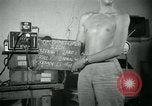
U.S. Army Air Force technicians perform laboratory tests and check control systems of an Azon Bomb at a laboratory in Burma.
China-Burma-India Theater during the World War II. U.S. Army Air Force Technicians perform laboratory tests and check the working of control systems of an Azon Bomb at a laboratory in Burma. Technicians check an Azon Bomb's tail section kept on a test bench with various control equipment and instruments at a laboratory. Meters and indicators display results of the test.
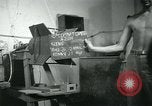
Demonstration by 7th Bombardment Group of U.S. Army Air Force on controlling and directing Azon Bombs at a laboratory in Burma (WW2)
China-Burma-India Theater during the World War II. A technician checks the working of control systems of an Azon Bomb at a laboratory in Burma. He turns the transmitter filament pilot light switch on, turns antenna, checks frequency. He controls the rudders of the tail with a control lever.
Demonstration on assembling and directing Azon Bombs by the 7th Bombardment Group U.S. Army Air Force at a laboratory in Burma.
China-Burma-India Theater during World War II. A United States Army Air Force technician checks the working of control systems of an Azon Bomb at a laboratory in Burma. He fills in the 24volts battery, tests gyro, tests tuning receiver. He puts radio receiver, gyro and battery in the fin assembly. He measures the movement of the rudders on a scale.