


 Francais
 Deutsch
 Italiano
Refine Your Search
+"California USA" +1948 stock footage and images
- Showing 1 to 6 of 9 results more
more Hide
Hide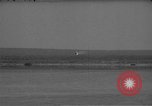
Douglas Skyrocket research aircraft taking off during initial testing in 1948
Douglas D558-2 Skyrocket research aircraft, built for the U.S. Navy, is seen taking off from Muroc Army Airfield (AKA Edwards Air Force Base). in first test flight, piloted by Douglas test pilot, John F. Martin. It makes gradual ascent passing low over the camera. In this first flight it is powered by a Westinghouse J34-40 turbojet engine. (After early flights with the jet engine, it would re-powered by a rocket engine.)

Take off of the General Motors GM A-1 'Bug' missile from a launching automobile in Muroc, California.
A review of research and development in guided missiles by the United States Air Force from 1919 to 1948. General Motors power-driven bomb (GM A-1 Bug), number 9 on tail, in Muroc, California. Technicians work on the same. The bomb is raised into position for attaching to the launching automobile by means of a hoist on a truck. The missile is nick named the 'Bug'. Technicians work at the automobile being driven beneath the suspended missile. The missile is radio controlled. The automobile specifically built for the launch of the missile is powered by two 165 HP Cadillac engines attached to a single drive shaft. Attaching the 'bug' missile to the launching car. The tractor and the hoist are removed. The automobile is driven across terrain at Muroc. A testing station for testing radio control section of aircraft during test. A technician checks over the radio equipment and shows television camera and equipment used for test. The automobile start at a high speed across the launching strip. Take off of the missile from the automobile. 'Bug' missile in flight. Views from a control aircraft beside the GM A-1 Bug while the Bug is in flight. (World War II period).
International Houses in New York, University of California at Berkeley, and Chicago.
Clouds move in the sky. A college student lies in the grass with his hands behind his head, then joins two fellow students of differing nationalities as they enter the main gate of a college. Exteriors of the college building. A young engineer draws designs. Young woman draws a sketch. A student examines corn and makes notes. A man reads a medicine book. Scenes from International Houses in New York, Chicago and Berkeley, California. Front facade of International House building on Riverside Drive in Manhattan, New York City, with words "That brotherhood may prevail" inscribed above "International House". Exterior shots of college buildings in New York City, at the University of Chicago, and at the University of California at Berkeley. Individuals arrive at International House at the University of California, Berkeley. Exteriors of the building. Student named Carlos walks up the steps. He is greeted by a staff person who escorts him inside. In the lobby, Alan Blaisdell, Executive Director of Berkeley's International House, meets him and escorts him upstairs.
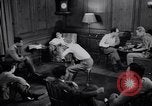
Foreign students at International House of Berkeley.
Facilities in International House at University of California, Berkeley. Students relax in a room. A lady goes through a book in a private room. Men and women dine at a restaurant. Man at a shop look for things to buy. A nurse treats a boy. Students at a library. Group of students chat. A woman at piano. Students in residence hall areas and common areas at Berkeley. Students of different nationalities gather as a chorus in a large auditorium room. Students on the tennis court. A South American student ties a turban. Foreign students hold a dance in their native costumes.
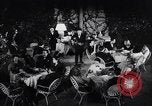
Foreign students befriend each other at the International House, at the University of California, Berkeley
Foreign students at the International House of the University of California, Berkeley. A student plays a guitar, strolling to various tables in a courtyard dining area of the International House. A student reads a book by the tree in a garden. A female student joins him. Students converse with each other. They leave, holding each others hand.
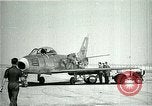
Air Force test pilot, Major R.L. Johnson, sets speed record in U.S. Air Force North American F-86A airplane number FU-611
Air Force Test pilot, Major R.L. Johnson, boards North American F-86A armaments test Sabrejet aircraft number FU-611 at Muroc Air Base (soon after renamed Edwards Air Force Base). Ground crew assists the pilot with chute. Pilot puts on the helmet and oxygen mask. Aircraft taxis. Aircraft in level flight -- extends and retracts speed brakes. Plane rolls to its right and dives. Men at monitoring post on the ground. Aircraft performs several low level high speed passes.Plane lands, and Major Johnson hops out of cockpit all the way to ground where he is congratulated by another Air Force major and ground crew personnel. He puts cigarette in his mouth and feels in his flight suit for a lighter. Major Johnson set an official record of 670.981 mph by flying four times over a 1.86-mile course at altitudes below 150 feet.