


 Francais
 Deutsch
 Italiano
Refine Your Search
+"China" +1943 stock footage and images
- Showing 43 to 48 of 59 results more
more Hide
Hide
Newsreel 'Chinese troops drive Japs from Changteh'
Chinese troops defeat the Japanese at Battle of Changde in China (spelled as Changteh in this footage flate). Chinese troops firing at Japanese enemy positions. Dead Japanese soldiers seen. Chinese General with other troops gathered. Japanese rifles and other military equipment is captured and examined by Allied military representatives. Japanese prisoners seen under guard by Chinese soldiers. Chinese civilians return to the ruined city. The civilians are given financial aid to buy food. A group of civilians gathered in front of a temple in Changde. (World War II period).
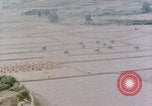
Chinese troops pass through a rice paddy field and carry essential supplies for delivering it to the trained soldiers.
Chinese troops trained by OSS (Office of Strategic Services) in China Burma India Theater during World War II. A flooded rice paddy field. They walk in a line and passing through the paddy field. The trainees cross the flooded paddy field. The troops carry rifles on their back and march forward. Farmers in the background harvest crops. Hay stack in the foreground and the troops walk past the stacks. They carry gun of their shoulders and advance. The troops advancing in the grassy area. They enter a town. The troops carry essential supplies for delivering it to the trained soldiers.

U.S. diplomatic mission reach Gyantse from Gangtok (WW2)
U.S. diplomatic and military mission to Tibet led by Major Ilia Tolstoy and Captain Brooke Dolan at the height of World War II. Map shows countries in Southeast Asia. Map shows a way through which mission passed starting from India to China. British political officer Sir Basil Gould, Chief Minister (Gongzim) of Bhutan Raja Sonam Tobgay Dorji, his wife Rani Chuni Wangmo (Dorji), and the daughter of the Maharaja of Sikkim are seen on a lawn where gifts for Dalai Lama are displayed. Kangchenjunga Mountain at a far distance. Members of mission with horses at Natu La pass. Horses loaded with bags used for transporting potatoes. The Himalayan Mountains and valley. Travelers come to a halt at a place in mountains where horses unload. They start journey again and men drive horses loaded with wooden boxes. Indian troops under British command at formation. British officers walk by the troops. Raja Dorji and others walk. Honor guard gives send-off to Raja Dorji and British officer. Snow capped mountains. Mules loaded with wool pass the village. Mission members and honor guard reach British tail station, Gyantse in Tibet. British and American flags raised in gesture of friendship. U.S. mission members welcomed by British Major and Tibetans. U.S. mission people and Tibetans at a reception at house of British State agent. A Tibetan ceremony is held.
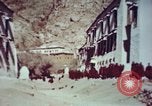
New Year religious festival in Tibet (WW2)
United States Office of Strategic Services (OSS) diplomatic and military mission to Tibet led by Major Ilia Tolstoy and Captain Brooke Dolan. Tibetan monks come out from monasteries to attend a New Year religious festival. Monks with long poles try to control other monks. Women of a family wear new dresses for the festival. Natives walk down the steps after paying homage to Dalai Lama in Potala Palace. Re-enactment of legendary battle at the opening ceremony for New Year festival. Native Tibetans in the courtyard of Potala Palace (35 Beijing Middle Rd, Lhasa, Tibet, China, 850000). Dancing ritual for religious ceremony. Pole sitting act. Priest at religious ceremony. Monks at oracle. Men ride horses. Men shoot arrows. Officials and men pay homage to representatives of the region. The last part of New Year ceremony is annual cavalry show with armed riders. The cavalry marches. Rider fire targets while riding horses. (World War II period).
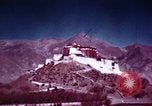
Pilgrims perform Holy Walk to Potala Palace
United States Office of Strategic Services (OSS) diplomatic and military mission to Tibet led by Major Ilia Tolstoy and Captain Brooke Dolan. A pilgrim performs Holy Walk to the Potala Palace. Paintings on rock walls. A monk turns prayer-wheel. Pilgrims perform Holy Walk. View of the Potala Palace (35 Beijing Middle Rd, Lhasa, Tibet, China, 850000). Current Dalai Lama, a young 7-year-old child, seated (Tenzin Gyatso, 14th Dalai Lama).
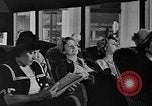
World War II film intended to encourage American civilians (especially women) to participate in the home front war efforts.
Mix of actual World War 2 footage scenes outside the United States, and dramatized war scenes inside the U.S. Narrator speaks as a U.S. soldier writes a letter to his mother at home, in which he contrasts the hardships of war torn countries and peoples with the relative safety and lack of suffering of the U.S. population during World War 2. Opening scene shows typical American women riding in a bus. One woman, ostensibly the soldier's mother, climbs aboard a bus as another woman steps out of it. A woman visits a friend who says she had to give up her Red Cross work because it didn't leave her time to get her hair done each week. A group of women at a garden party bridge club. Narrator says one of them could not work at a USO canteen because it conflicted with her bridge party. A woman lounging in a garden chair, is claimed to avoid a war job because they are all boring and dirty. A maid serves some hard to obtain foods to two woman at lunch. The hostess accused of obtaining them on the black market. The scene shifts to the letter writing son serving with the army in Europe. He relates taking a village recently, and the film shows residents cheering as the American soldiers occupy it. Fire fighters direct streams of water on burning wrecked buildings. Refugees fleeing their homes. Several nuns helping some as they evacuate. shells striking as refugees travel. Populations fleeing and refugee citizens leaving as invading forces come, in Russia, Czechoslovakia, Poland, France and France. View of people running for shelter in China. At this point, the film shows the chaos in those countries superimposed on America, where fires are being fought, and ambulances respond to help injured. A woman picks up her child as she and others run, looking skyward with dread. Air raid sirens sound in the background. A British soldier looks over a scene where Asian people are evacuating from war torn homes. A group of despairing European people. The film creates an imaginary image of and ordinary American woman digging through the rubble of her destroyed home. American women lined up, in front of bomb damaged buildings, to receive one egg a month. Other American civilians lined up to receive a ration of potatoes. Women in England are seen shoveling rubble from the remains of their homes after a blitz bombing by the German Luftwaffe. In Russia many women are seen digging and performing manual labor which the narrator says is labor forced by invading forces (possible slave labor forced by Nazi German forces). Women in Greece clearing rubble. Again, film creates imaginary view of Americans clearing rubble from their destroyed houses and evacuating en masse. Two American women comforting another in front of her burning home. More views of Americans in mass evacuation, carrying their belonging with them. Narrator states children are evacuated first and them film shows scenes of English children being sent to safety on buses. View of Russians evacuating in horse-drawn carts. Imaginary transition to Americans evacuating known local places. Chinese evacuating across a bridge, assisted by British soldiers. More imaginary scenes of Americans evacuating. A soldier writing a letter and then packing up his gear to move on with members of his army unit. They line up in formation and then march. Imaginary view of American women marching side by side with them. Glimpse of large formation of uniformed nurses marching. Last scene is of American flag superimposed on marchers.