


 Francais
 Deutsch
 Italiano
Refine Your Search
+"China" +1945 stock footage and images
- Showing 115 to 120 of 139 results more
more Hide
Hide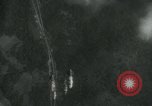
Bombing by the 7th Bomber Group (H) Squadron and the 4934 Bomber Group of the U.S. Army Air Force in Burma during World War II.
U.S. Army Air Force attacks enemy positions in China-Burma-India Theater during World War II. The 7th Bomber Group (H) Squadron and the 4934 Bomber Group of the U.S. Army Air Force target railroad and road bridges to drop bombs. Four bombs dropped simultaneously on a bridge. Bomb destroys with an explosion.
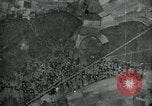
7th Bomber Group (H) Squadron and 4934 Bombardment Squadron of U.S. Army Air Force over Moulmein in Burma, WWII
U.S. Army Air Force attack enemy positions of Burma in China-Burma-India Theater during World War II. The 7th Bomber Group (H) Squadron and the 4934 Bombardment Squadron of the U.S. Army Air Force during a mission on railroad bridges in Moulmein in Burma. Smoke rising from bombed places in farms and railroads.
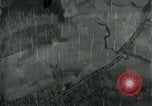
Bomber aircrafts of the U.S. Army Air Force flying over farms, railway tracks, roads and river bridges in Moulmein Burma.
U.S. Army Air Force attacks enemy positions in Burma in China-Burma-India Theater during the World War II. Agricultural farms, railway tracks, roads and river bridges as seen by the 7th Bombardment Group (H) Squadron and the 4934 Bombardment Squadron of the U.S. Army Air Force flying over Moulmein in Burma.
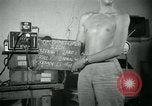
U.S. Army Air Force technicians perform laboratory tests and check control systems of an Azon Bomb at a laboratory in Burma.
China-Burma-India Theater during the World War II. U.S. Army Air Force Technicians perform laboratory tests and check the working of control systems of an Azon Bomb at a laboratory in Burma. Technicians check an Azon Bomb's tail section kept on a test bench with various control equipment and instruments at a laboratory. Meters and indicators display results of the test.
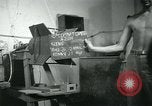
Demonstration by 7th Bombardment Group of U.S. Army Air Force on controlling and directing Azon Bombs at a laboratory in Burma (WW2)
China-Burma-India Theater during the World War II. A technician checks the working of control systems of an Azon Bomb at a laboratory in Burma. He turns the transmitter filament pilot light switch on, turns antenna, checks frequency. He controls the rudders of the tail with a control lever.
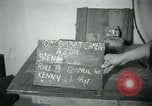
Demonstration on assembling and directing Azon Bombs by the 7th Bombardment Group U.S. Army Air Force at a laboratory in Burma.
China-Burma-India Theater during World War II. A United States Army Air Force technician checks the working of control systems of an Azon Bomb at a laboratory in Burma. He fills in the 24volts battery, tests gyro, tests tuning receiver. He puts radio receiver, gyro and battery in the fin assembly. He measures the movement of the rudders on a scale.