


 Francais
 Deutsch
 Italiano
Refine Your Search
+"Corsica" +1944 stock footage and images
- Showing 43 to 48 of 51 results more
more Hide
Hide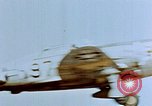
U.S. Army Air Corps 57th Fighter Group P-47 aircraft perform variety of flight maneuvers during World War II
Three P-47s of the U.S. Army Air Corps 66th Fighter Squadron, 57th Fighter Group, raise dust as they take off from Alto Air Base in Corsica,France, during World War 2. Pilot seen in bubble canopy of late model P-47D, named "Halliburtons Hellion" of the 64th Fighter Squadron, during flight over water. Flights of P-47s in formation maneuvers. A Squadron of P-47s in formation overhead. One P-47 dives. View over P-47 in flight over hilly terrain in Italy. View from a P-47 flying very low over some people with a small truck, examining destroyed vehicles and equipment on the ground
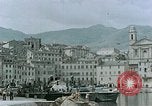
Buildings along a harbor and scenic views of Corsican port city in France.
People in Corsican port city in France. Views of Corsica Harbor. Buildings along the harbor. Several boats in the harbor. Small children jump into water and swim. Aerial view of the buildings. A coastline in view. A waterfall into a small stream lined by rocks. View of a graveyard. Grave markers on the graves. Buildings along the side of a road. A woman carries a bundle of firewood. A man and a boy moving on a countryside road on donkeys. The man is smiling. Buildings in the background.
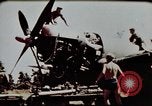
Recreational activities of U.S. airmen at Alto Air Base, Corsica.
Aircraft P-47s take off from Alto Air Base. Jeep loaded with men pulls away. Morning activities of airmen before mission. Men bathe in outdoor shower and get ready. A man gets hair cut. Sign reads 'Jerry's Clip Joint'. Man reads. Men on trailer truck. Men sing and dance. Men build clubhouses. A canal. Men on raft in water. Men go into sea at beach. Men sail in small boats. Men drink and fall in water. Men play outside a building. Men lie down at beach. A man sleeps. Man feeds puppies.
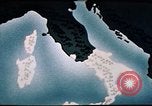
P-47 Thunderbolt fighter aircraft attack enemy targets under Operation Strangle.
Map of Italy shows narrowest part of peninsula where U.S. and British armies are stationed. Map highlights Anzio and Cassino. A building on top of mountain. On island of Corsica, Lt Gen Ira C Eaker, commanding general of the Mediterranean Air Forces, Maj Gen John K Cannon, leader of the Twelfth Air Force, and Brig Gen Gordon Seville of the Twelfth Tactical Air Command, plan Operation Strangle. By animation the operation is explained where pilots of Fifty-Seventh Fighter Group is required to bomb behind enemy lines and cut off the transport of enemy supplies using the P-47 Thunderbolt. Shows destroyed bridges. P-47s taxi at airfield. P-47s parked in flight line. Crew chiefs in canopy of the plane and inspect other sections of plane. Pilots board planes. Planes take off from runway. P-47s in flight over sea, mountains and a castle. P-47s in flight behind squadron leader. P-47s in flight over clouds. P-47s peel off above the bridge. An incendiary bomb is dropped on a bridge. More bridges are bombed. Explosions on bridges. P-47 in flight over fields and railroad tracks. One train spotted. P-47 strafing moving trains. Trains explode. P-47 in flight over coastline and pilot in cockpit. P-47 strafing installations and ground targets. (World War II period).
French Resistance Forces fight against Nazi forces in the battle of Paris, France, during World War II.
Battle for Paris during World War 2. Eiffel Tower in Paris. View of the city. Street signs in German. Nazi flags flying from buildings. Women in an apartment fastening FFI (French Forces of Interior) armbands on each other. Men checking their small arms and hand grenades. Outside, men of the FFI camouflage automobiles they've acquired. Aerial view of the Ile de France in the Seine river, and closeup of armed FFI forces taking up positions along the river. FFI members firing at German troops. Several of the Resistance fighters firing at police headquarters, from behind a granite barrier. Dead and wounded German soldiers. Fallen FFI fighters. French resistance fighters seize a German artillery piece. Others with captured German arms. An old man and woman seen looking down from their apartment window. Wounded and captured German officers and soldiers leaving the Police Headquarters building, after being subject to direct fire by captured artillery. Resistance forces gathered with captured German Swastika flag, which one of them presents to the leader of the French Resistance, Gorges Rene Tanguy (aka Colonel Roy-Tanguy). Next, a car drives into the FFI-held Police headquarters, carrying the ex-Prefect of Corsica, Charles Luizet, sent by General Charles de Gaulle to assume command of the Paris Police forces. Uniformed French police are seen in a formation, next to a group of FFI members. Luizet and Tanguy walk together informally inspecting the two groups. Luizet speaks to those assembled, extolling their efforts. Next, a poster calls for volunteers to build defenses. Parisians, using pick axes, dig up paving stones and cart them off to build barricades. Women placing the stones on barricades. Men moving sand bags on carts. Boys helping men to build barricades. Frenchmen checking their weapons. Inside resistance headquarters, women and men, oftain information about disposition and status of German units and about approaching Allied forces. The Notre Dame cathedral viewed from a window of the Resistance headquarters. French police in position with weapons ready. German tanks moving near the Hotel de Ville. A Resistance bugler sounds call to arms. German Panzer I tanks on the streets and passing barricades. Parisians fell a tree as a tank deterent. Closeup of Notre dame facade from Resistance defense position. German snipers on Cathedral roof fire at FFI running across the square. Many scenes of street fighting, and individuals being hit, rescued, and the like. German vehicles on fire. Several German prisoners. Resistance fighters looking out windows of the Battle-scarred Hotel de Ville. Many scenes French exchanging fire with German snipers. More German prisoners.
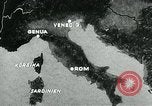
Scenes from the Battle of Monte Cassino during World War II, from the German perspective
Opening scene displays map of Italy, Sardinia, and Corsica. A German soldier at the front in the area of Monte Cassino, reads military news entitled, "South Front" which contains news about the battle of Monte Cassino, in Italy during World War 2. The high hill known as Monte Cassino and the Monastery located there are seen in the background. German troops are seen hidden among foliage at the base of the hill. One is hunkered down behind an M-42 machine gun equipped with a tripod. Glimpse of troops in trench, conversing. Next, American aircraft (too far away to see) begin bombing the Monte Cassino hilltop and Monastery. Numerous explosions are seen and heard as the bombs explode. A German soldier jumps over a stone wall to find better protection. German soldier observes through binoculars. At a campsite, where some clothes are drying in the background, Several German officers consult maps and discuss their plans. German infantry move into new positions at the base of the hill. One fires short bursts from an M-42 machine gun. Others fire their rifles. One uses a Schiessbecher to fire a rocket propelled grenade with his rifle. As they advance further, they come upon the bodies of several dead American soldiers. They capture an American soldier and disarm him. They capture several more American soldiers and march them back from the front. German officers interrogate the captured soldiers. Finger points at a location on an area map. German artillery then fires at that position. Artillery officers use periscopic binoculars to monitor the targeting. German artillery shells burst in a valley below the Monte Cassino hill.