


 Francais
 Deutsch
 Italiano
Refine Your Search
+"Cuba" +1938 stock footage and images
- Showing 1 to 6 of 17 results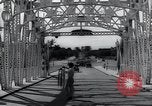
Scenes of Havana, Cuba, in 1938
A man stands on bridge over Almendares River waving fish for sale at cars driving between Miramar and Vedado, Havana. Distant view of bridge and river below. Children sitting at edge of a pond in Havana’s Biltmore neighborhood, with a woman standing near them. Gardens around the pond. Swans and ducks swim in the pond. View of Monument, to the Victims of the USS Maine, with the Hotel Nacional de Cuba in the background. View of local market. People and horse carts in the market. People purchasing fruits, other items and foods, including live poultry.
American landscape views 1930s; contributions of U.S. soldiers in the history and development of the USA.
The involvement of the American soldier in the history and growth of the United States from early 1900s until roughly 1938 before World War 2. Views of western United States countryside and mountain areas, including Mount Hood in Oregon, as seen from a slow moving car or other vehicle on a roadway. Wide, expansive landscape views in the U.S. Two Confederate and one Union uniformed veteran soldiers of the American Civil War walk together in the Arlington National Cemetery, in Virginia. U.S. Army soldiers marching at a an Army base, likely early 1930s, and wearing World War 1 era helmets. U.S. Army soldiers marching in a parade in Washington DC with U.S. Capitol in the background. Views of cities and towns in which U.S. Army posts were established, in the United States. Wide view of downtown Colorado Springs, Colorado, with Antlers Hotel in the distance and Pikes Peak in the far distance. Next shot is an unidentified downtown main street in the U.S. 1930s, followed by a scene of an industrial plant with a large water tower and snow covered low mountains in the distance. Next scene is the San Francisco skyline in the 1930s with the Bay Bridge in the far distance. Army troops and cavalry creating trails and paths, and eventually railroads, in wilderness areas of the United States. A railroad locomotive approaching beside the camera position at high speed, and then passing by pulling train cars. View of the Presidio Army Base and the Golden Gate Bridge, California. Subtle references to U.S. Army accomplishments, including curbing Mississippi River floods (Corps of Engineers) and conquering Yellow Fever (Army Doctor Walter Reed). Point of view (POV) shot from moving railroad train in a Colorado canyon; a side wheeler River boat on the Mississippi River; a sugar cane field in Cuba. View of locks in the Panama Canal. Statue of World War I soldiers.
Old Havana, Cuba. Iglesia de la Cathedral, Street scenes, Castillo de la Fuerza, and Oriental Park Race Track, Marianao, Havana
Scenes of activity around the Iglesia de la Cathedral in Old Havana, Cuba. People entering and leaving the church. A man standing with a loaded cart. Military officers relaxing at table under tree in Old Havana. Soldiers marching into the ancient "Castillo De La Fuerza" (Castle of Strength) in Old Havana. A military officer walking in the area of the military garrison Castillo De La Fuerza located on the water in the port of Havana. Street scenes of Old Havana showing the Prado Promenade, with automobiles, pedestrians and a little black dog. Views of spectators crowding the Oriental Park Race Track, Marianao, Havana, Cuba. Horses and riders seen in various phases of horse racing: Going to starting gate, and finishing a race.

People gather around a Battleship Maine Monument during the celebrations of American Independence Day in Havana, Cuba.
On July 4th Cubans celebrate the American Independence Day in Havana, Cuba as a sign of U.S. friendship. People in colorful dresses during a parade. A crowd on the streets to watch the parade. A Battleship Maine Monument. People gather near the monument and hold posters. They hold the flag of Cuba and march.
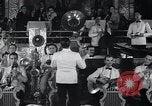
The Casino de la Playa Orchestra, led by Guillermo Portela, with singer Miguelito Valdes playing maraccas at the Casino La Playa club in Havana Cuba.
Casino de la Playa Orchestra performing at the Casino La Playa in Havana Cuba. Various musical instruments are played and the orchestra is led by conductor Guillermo Portela . Cuban dance music in which singer Miguelito Valdes, here seen playing the maracas, is featured. (Later, in 1940, Valdes was hired by Xavier Cugat as a singer.) People seen sitting behind the musicians. Nighttime illuminations on buildings. Patrons dining and dancing.
A dance performance and musicians playing Cuban dance music in Casino de la Playa night club, Marianao Beach, Havana, Cuba
Casino de la Playa, a night club in Marianao Beach, Havana, Cuba. People sitting at tables. A man and a woman give a dance performance. Lights focused on the center. Audience cheer the dancers. Musicians of the Casino de la Playa Orchestra under Guillermo Portela play Cuban dance music. Men and women dance. A young Walfredo de los Reyes seen playing trumpet. Trombone, saxophone, and clarinet players also seen in close ups.and maraccas player and singer is Miguelito Valdes who would later be Xavier Cugat star singer in the early forties