


 Francais
 Deutsch
 Italiano
Refine Your Search
+"Czechoslovakia" +1968 stock footage and images
- Showing 1 to 5 of 5 results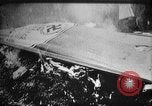
Czechoslovakia and Soviet relations after World War 2; Dubcek liberalization during Prague Spring; Soviet occupation in 1968
History of Czechoslovakia from 1919 to 1968 depicts lives of its people and various crisis. Clip shows combination of still images and moving images, with background of Czech musical soundtrack. A burning Nazi plane shot by Soviet military during World War II. Soviet Red Army marches in Prague, Poland in May 1945 to rescue from German occupation and atrocities. People destroy Nazi emblems and symbols from buildings. People assemble in large numbers on roads and cheer for the incoming Soviet troops and tanks. Civilians of Czechoslovakia during normal life after World War 2. Workers in mines, farmers in field and women work in houses. Spread of communism and communists make a star formation during a rally in Prague (sometimes called the Prague Spring). President Edvard Benes in 1948 signs pact with Soviet government. Photos of Soviet General Joseph Stalin and other Soviet leaders in his office. Various Presidents and leaders of Czechoslovakia during the 1950s. Military and civilian communist groups march on streets in 1956. Czech Skoda automobile production factory scenes in mid 1960s. Workers work in factories and shops till night hours. A Czech textile factory scene. Czech men and women in 1960s fashions enjoying mugs of beer. Several scenes with Alexander Dubček, (Alexander Dubcek), then Soviet leaders Nikita Khrushchev and Nikolai Brezhnev arrive for meeting with Dubček. Smiling Czech people walk in cities and at a cafe during liberalization measures. Soviet and Warsaw Pact tanks, armored vehicles, infantry and aircraft start their occupation ending the Prague Spring in Prague, Bratislave and other cities in August 1968. Civilians protest, demonstrate, and argue with Soviet troops and demonstrate in streets. Some approach tanks and attempt to damage the tanks. Large crowd of civilians watch the retreating Soviet forces from Czechoslovakia in 1968. Red Army met with agitation and resistance on streets by civilians. Soviet troops fire at some demonstrating civilians.
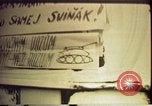
Soviet military use harsh tactics to curb civilian protesters and meet resistance while occupying Czechoslovakia
Methods used by the Soviet Army during their Warsaw Pact invasion to put down the Prague Spring in Czechoslovakia in 1968. Civilian protest cartoons, articles and signs against the Soviets. Czech civilian protesters run to escape from Soviet tanks and military in a city. Wounded demonstrators taken in ambulance. People demonstrating peacefully ran over by Soviet tanks and armored vehicles. People weep during the funeral ceremony of those killed by the Soviet Army. Soviet Army retreats from Czechoslovakia met with resistance and demonstrations by civilians.
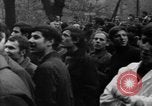
Demonstrators are captured by police as they set fire to Soviet flag during a demonstration in Prague,Czechoslovakia.
Violent anti-Soviet demonstrations and uprising in Prague, Czechoslovakia after Soviet occupation to end Prague Spring liberalization measures. Large crowds of anti-Soviet demonstrators on the street protest outside the Soviet Embassy. A Soviet flag on the building of Soviet Embassy. Demonstrators set fire to the communist Soviet flag. The flag burns. Demonstrators spread violence on the street. Police capture a demonstrator and take him away. Demonstrators set Soviet flag on fire on street.
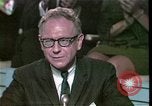
Presidential candidate Richard Nixon appears in a television program, Michigan, United States.
Presidential candidate Richard Nixon appears before a panel of citizens in a program, Michigan, United States. The television program is named 'Man in the arena'. The panel sits in the center of the studio. Audience seated in the studio. Stanley Krajewski seated in the panel asks Richard Nixon a question about his stand on Soviet Russia and Czechoslovakia. Richard Nixon states that as a President he would use economic and diplomatic powers of United States. He says that he is against the proliferation of nuclear weapons. Audience applauds Richard Nixon as he answers in the arena.
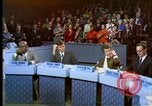
Richard Nixon speaks about signing Nuclear Non Proliferation Treaty with USSR, during a television program in Michigan.
Presidential candidate Richard Nixon's answers to a panel during a special television program in Michigan. A panelist speaks about delay in signing Nuclear Non Proliferation Treaty with the Soviet Union. Answering her Nixon's speaks about the Soviet movement in Czechoslovakia (to supress the Prague Spring liberalization measures). Nixon speaks about importance of nuclear treaties and the need for countries to follow the treaty rules.