


 Francais
 Deutsch
 Italiano

Refine Your Search
+"Europe" +1943 stock footage and images
- Showing 7 to 12 of 102 results more
 Hide
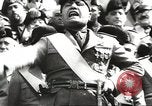
American offensive campaigns in Europe and Pacific Theater during World War 2
Fall of Benito Mussolini in Italy. Mussolini seen speaking to a crowd and shaking his fist. Sicily surrenders to Allied troops during World War II. German soldiers holding white surrender flags march forward. Civilians in Italy cheer the arrival of smiling American soldiers. Scene changes to American B-25 bomber aircraft dropping bombs over Japanese positions in Pacific Theater. Close view of bombardier calibrating position and bombs away from bomb bay doors toward Japanese-held targets. Gun camera footage of Allied aircraft attacking Nazi German Wolfpack submarines in the Atlantic Ocean. Allied aircraft, including B-25 bombers, bombing German industry and cities during a night raid. In England, United Kingdom, church service is held open to the sky in the ruins of bombed out Coventry Cathedral, which had been destroyed by German Luftwaffe blitz bombing of Britain. Clergy, robed choir members, and British parishioners seen at the enthronement service of Bishop of Coventry Neville Gorton in 1943, enclosed only by the exterior walls of St. Michaels, Coventry Cathedral.
Russian soldiers take Reshitsa and Gomel and help restore a city in Europe.
A Russian film titled Srazhenie Za Gomel about the Battle of Gomel. Russian soldiers take Reshitsa on November 18th and Gomel on November 26th, 1943. Russians help restore town. Buildings in city. Ruins of buildings. Soldiers enter the city. Old women happy to see the soldiers. Empty streets, bomb damaged buildings. Graves in a cemetery. Boards placed on poles and trees. Civilians return to city. Soldiers march into city. Artillery fired. (World War II period).
Mob uprisings against Fascists in Europe, during the end of World War II. The Third Moscow Conference of the Allied occupying powers. The Belsen trials.
A mob, seeking revenge against Fascist leaders, fills a city square. They pound on steel gates of a government building. Soldiers and police attempt to protect various persons from the mobs. Others are unprotected and suffer beatings and death. Bodies of Benito Mussolini and his Mistress Clara Petacci are seen hung upside down by Italian Partisans in Milan, Italy, on 28 April 1945. Scene shifts to image of postwar occupying powers, United States, Soviet Union, and Great Britain, whose flags are displayed in the center of a conference table during the Third Moscow Conference. Principals signing agreements, in November, 1943, providing, among other things, for lawful and orderly trials of war criminals, following World War 2. Seen signing are: Soviet Foreign Minister Vyacheslav Mikhailovich Molotov; U.S. Secretary of State, Cordell Hull; and British foreign Secretary, Sir Anthony Eden. View of General Dwight D. Eisenhower, leading a contingent of American wartime Generals on a mission to document Nazi atrocities at liberated German concentration camps. Closeup of a man directing local German citizens who were forced to observe the horrors of the camp. Closeup of an oven used to dispose of bodies of victims. Dead bodies of concentration camp victims strewn in a heap. A room filled with documentary evidence to be analyzed and used in war crimes trials. the body of German General Admiral Hans-Georg von Friedeburg , and of Heinrich Himmler, both of whom committed suicide. A hand holding cyanide capsules. Body of Leipzig City Council deputy mayor Dr. Ernst Kurt Lisso slumped over his desk, following suicide. Body of his daughter, Regina Lisso also a suicide victim. Nazi war criminals being rounded up by Allied military.One being carried on a stretcher. Another, a German officer, is taken into custody. Next, Josef Kramer, the Commandant of Bergen-Belsen concentration camp is seen under guard by a British soldier. British soldiers guarding the court room of the second Belsen trial, convened by the Allied occupational forces, in the Gymnasium building of Luneburg. View of the courtroom with defendants wearing numbers. Closeup of numbers 1 and 2, Josef Kramer, and Fritz Klein, respectively. View of Allied military officers sitting in judgment. Closeups of women defendants, including Irma Grese (number 9) and Elisabeth Volkenrath (number 11). Camera pans around the courtroom.

Allied forces prepare for D-Day, also known as 'Operation Overlord' (WW2)
'Eve of Battle' depicts the Allied invasion of Europe during World War II. Slave labor from Nazi Germany-invaded countries construct Atlantic Wall. German artillery and fortifications in the Atlantic Wall. Nazi German soldiers marching in groups. Nazi leader Adolf Hitler shake hands with Italian fascist leader Benito Mussolini. Allied leaders Franklin D. Roosevelt, Winston Churchill and Joseph Stalin sit together during the Tehran Conference in December 1943. Exiled Allied leaders such as General Charles de Gaulle of France, Queen Wilhelmina of the Netherlands and Dr. Edvard Beneš of Czechoslovakia inspect Allied troops. Various Allied troops from Poland, Norway, England, United States, and Czechoslovakia prepare to launch an invasion in France. Eisenhower along with other officers plans the European invasion. Allied ships and aircraft on their way to Europe. Allied bombers drop bombs over Nazi German U-boats. Naval battle begins and explosions occur, smoky docks. In England war supplies unloaded. Supplies include weapons, military equipment, and food. A tank and locomotive trains being loaded into a ship bound for Europe. Allied aircraft take off at night. A man directs an aircraft taking off. Allied bombers bombard German targets resulting into fiery flare in Europe. British children playing jump rope as a supply train pass by in the background. Tanks and fighter planes transported by train. Supply boxes unloaded and stacked for transport to the battle front.
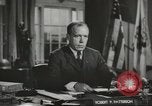
American Undersecretary of War speaks to difficulties facing Allies in confronting Germany and Japan in World War II
Undersecretary of War, Robert Porter Patterson, Sr. speaks about a report from the General staff outlining the needs for combating Germany and Japan in World War 2. He cites Operation Husky, the invasion of Sicily, as an example of what will be needed. He continues to narrate in the background as an animated map appears showing the buildup of supplies and Allied forces in North Africa; Allied air forces flying 60 thousand sorties over Sicily and, the direct amphibious assault using 3,200 vessels. Map also depicts opposing forces of 12 (“unwilling”) Italian Divisions and 3-1/2 German Divisions. View of Allied troops carrying some of their 31 thousand casualties on stretchers from field ambulances. Allied medics attending to the wounded. Some are seen lying on stretchers in a row on the ground near a wall. Interior of a field hospital where surgeons and other medical personnel treat the wounded. Animated map shifts to Europe with Germany at its center, showing , in contrast to Sicily that was only an “outpost,”, the heavily fortified perimeter of Axis controlled areas; the axis industrial might; and the disposition of 300 German Divisions (mostly on the Eastern front) defending the region. Next, the map illustrates Japan’s defended regions in the Pacific Image returns to Undersecretary Patterson i n his office, speaking of the Allied offensives planned for next year (1944), and emphasizing their challenge and difficulty. Scene shifts to General Jonathan Wainwright and his garrison at Corregidor, in the Philippines, surrendering to Japanese forces in 1941. Japanese military camera pans over the Americans being taken prisoner. Other Americans and Filipinos are seen being marched together under guard. Scene shifts to classic views of the Japanese attack on Pearl Harbor, Hawaii, on December 7, 1941. View of Japanese soldiers executing two Chinese civilians in 1937. Dangling bodies of persons hung by Nazis during Operation Barbarossa in Russia, in 1941 A Russian soldier comforts a little girl as he escorts her across a snowy landscape. Time bomb left by German forces retreating from Naples, Italy, in 1943, blows up a Post office building . Views of damage to building and bodies of victims. American Military Police assisting a victim. American soldiers carrying an injured civilian on a litter. Scene shifts to British Foreign Minister, Anthony Eden, Soviet Foreign Minister, Vyacheslav Molotov, and U.S. Secretary of State, Cordell Hull, entering a hall in the Spiridonovka Palace, during the 1943 Moscow Conference in Russia. Close-up of the American, Soviet, and British flags on a table. View of many delegates seated around the table. Close-up of Molotov, Eden, and Hull signing conference document.
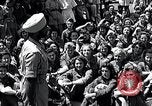
Women's Army Auxiliary Corps (WAAC) training and and contribution to war efforts in different parts of the world (WW2)
The role of Women's Army Auxiliary Corps (WAAC) in the United States Army during World War II. In January 1943, the first posting of WAAC enlisted personnel overseas, was to Algiers. Women disembark a ship. WAAC women walk with orphan children into a convent. A WAAC woman washes utensils; others dry clothes. WAAC women arrive in Scotland and get trained. Women visit India. Women at the Taj Mahal in Agra. Women visit New Delhi. Women on camels in Cairo. Women disembark a ship in Europe. Two women adjust a tent. Woman washes her hair and clothes using her helmet. Women inside a tent. Woman checks injured soldiers. Nurses in hospital as they look after soldiers. Women march. A woman pays homage to the female soldiers who sacrificed their life in war. Soldiers carry another injured soldier on stretcher. Officers check injured women in hospital. Women in uniform march.