


 Francais
 Deutsch
 Italiano
Refine Your Search
+"Europe" +1955 stock footage and images
- Showing 31 to 34 of 34 results more
more Hide
Hide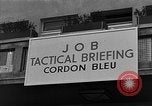
NATO forces engaged in exercise "Cordon Bleu" in Germany
Sign reads: "JOB, Tactical Briefing Cordon Bleu." Marshal Alphonse juin of France, Commander-in-Chief Allied Forces Central Europe, walks from staff car, followed by several other French officers. German officers assembled in a field. A civilian official converses with a French General in the field. Marshal Juin, relaxed with cigarette in his mouth, smiles and jokes with German soldiers.
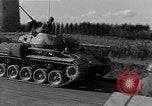
U.S. 7th Army units participate in NATO exercise in Germany
As part of the NATO forces, U.S. 7th Army tanks, troops, and artillery participate in "Exercise Cordon Bleu" with Central Army Group and 4th Tactical Air Force. One object of the exercise, among others, was to improve coordination of NATO forces of various types and nationalities. American M24 tanks move past a monitoring team parked at side of the road during the exercises in Germany. Another scene shows soldiers on motorcycles moving along a road and heavy armor following. A mortar team in the field. Infantry in defensive positions. A tank is guided into a firing position. Gunner on top of tank. Tank turret rotates. The name: "Austerlitz" painted on the turret. Tank commander looks through binoculars. Several NATO aircraft fly overhead and swoop low over water area. A tank rolls over a bridge, past Marshal Alphonse juin of France, Commander-in-Chief Allied Forces Central Europe, who is standing at side of road. Two F-80 jet fighters swoop low overhead. Marshal Juin is joined by two French officers, one a tank commander in helmet and goggles.
Rifles being manufactured, assembled and test fired at the Springfield Armory in Springfield, Massachusetts.
A film about uses and importance of weapons since old times in the United States. Rifles being manufactured at the Springfield Armory in Springfield, Massachusetts. Men work on machines at the armory. A man operates a barrel straightener machine. Parts of rifles being assembled. A man inspects the receiver of a rifle. A rifle being test fired at the armory. German aircraft in flight as they drop bombs over cities in Europe during World War II. Civilians run for cover during an air raid by the Germans. United States Congress ion session. The Japanese attack the Pearl Harbor in Hawaii in December, 1941. Explosions occur during the Japanese air attack.
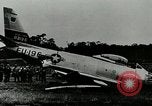
USAFE Flight Safety film depicting problems that can cause aircraft accidents
USAFE ( United States Air Force in Europe ) Flight Safety film illustrating the kinds of errors that can cause aircraft accidents. A Flight Safety Officer points to photograph of a crashed F-86 airplane and lectures to pilots. He says that most of accidents occur because of minor mistakes. A Captain, pilot, naps during the lecture. The most common pilot errors in USAFE written on a blackboard. After ignoring the lecture, the Captain prepares a flight plan at Base Operations. He fails to check NOTAMS (notices to Airmen)and declines assistance from Base weather officer. He performs perfunctory preflight inspection, initials Form 1, and taxis for takeoff breathing 100% oxygen. After takeoff, he levels at 30 thousand feet and makes position report. Sensing hypoxia, he sees oxygen depleted and must dive to lower safe altitude (where fuel consumption rate is too high). He tunes destination radio beacon, becomes disoriented and calls for steer to destination, which is below minimums for GCA (ground controlled approach). He goes to Alternate, has trouble with landing gear, runs low on fuel, and luckily lands safely, but runs out of fuel and must be towed to parking place. A litany of his mistakes is recounted.