


 Francais
 Deutsch
 Italiano
Refine Your Search
+"European Theater" +1941 stock footage and images
- Showing 7 to 12 of 31 results more
more Hide
Hide
Various scenes involving British forces during World War Two.
Activities of the Allies in the European Theater during World War II. Officers and prisoners walk up a gangway aboard an Allied ship. Wounded German prisoners being brought aboard the ship heading for France. Bombs being loaded aboard a Royal Air Force (RAF) Short Stirling bomber at an airbase in the UK. A flight crew boards the aircraft and is in the cockpit. A gunner at a mounted machine gun aboard the airplane. A captured German Ju-88 aircraft being performance tested at an air base in England. Near head-on view of the JU-88 taking off. View of tail rising as it gains speed and is about to break ground. Views of the JU-88 in flight over the airdrome. A RAF Hawker Hurricane takes off. The aircraft in flight. The aircraft attacks a Nazi ship in the North Sea. Explosions occur at the sea. A Nazi U boat being captured by a RAF Coastal Command airplane. The British flag flies aboard the German submarine. The German captain of the U-boat seen up close with grim expression on his face. British civilians on dock in harbor wave their hats and cheer as the captured U-boat approaches the dock.
Soviet Pe-2 dive bomber dropping bombs on German targets during World War 2
Soviet airplanes in the European Theater during World War II. A Soviet two-engine Petlyakov Pe-2 light bomber takes off. Pe-2 bomber in flight. Interior view of the aircraft shows a bombardier over target areas. Bombs fall toward a target. Bombs strike. Interior of airplane: The aircraft in flight shows crew of the Soviet bomber.
German propaganda film excerpts: German He-111 bomber is attacked by British P-36 Mohawk fighters after bombing British convoy
Excerpt from German propaganda film directed by Hans Bertram, released during World War 2, entitled "Kampfgeschwader Luetzow." Dramatizations feature authentic German aircraft and scenes include: German air attack on British convoy in European Theater during World War II. German officers receive report of bomber strike against British ship and plot results of bombing in headquarters. British crew abandoning burning British transport. Crew in cockpit of German aircraft Heinkel He 111. Formation of British P-36 Mohawk fighter aircraft. they attack the He-111 and hit it with many bullets. German machine gunner fires at P-36. Clouded, horizon in the background. P-36 falls streaming smoke. Another P-36 attacks and kills the German bomber pilot. Gunner runs to cockpit and takes control, shooting down the P-36. A third P-36 attacks and disables the bomber's number one engine, which the crew feathers and shuts down. The He-111 seen flying on number 2 engine only. View of Number one feathered. With bomber in and out of clouds, crewman attempts to keep it straight and level using artificial horizon instrument. With voice radio inoperative, German crewman uses modulated carrier wave (morse code) to send distress message which is received in German Headquarters.
German tanks advance and attack Soviet forces on the eastern front during World War 2
German panzer tanks move forward to attack Soviet Union in European Theater during World War II. Nazi tanks move against Russian troops. Fire and scenes of destruction from battle.
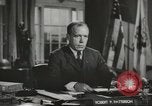
American Undersecretary of War speaks to difficulties facing Allies in confronting Germany and Japan in World War II
Undersecretary of War, Robert Porter Patterson, Sr. speaks about a report from the General staff outlining the needs for combating Germany and Japan in World War 2. He cites Operation Husky, the invasion of Sicily, as an example of what will be needed. He continues to narrate in the background as an animated map appears showing the buildup of supplies and Allied forces in North Africa; Allied air forces flying 60 thousand sorties over Sicily and, the direct amphibious assault using 3,200 vessels. Map also depicts opposing forces of 12 (“unwilling”) Italian Divisions and 3-1/2 German Divisions. View of Allied troops carrying some of their 31 thousand casualties on stretchers from field ambulances. Allied medics attending to the wounded. Some are seen lying on stretchers in a row on the ground near a wall. Interior of a field hospital where surgeons and other medical personnel treat the wounded. Animated map shifts to Europe with Germany at its center, showing , in contrast to Sicily that was only an “outpost,”, the heavily fortified perimeter of Axis controlled areas; the axis industrial might; and the disposition of 300 German Divisions (mostly on the Eastern front) defending the region. Next, the map illustrates Japan’s defended regions in the Pacific Image returns to Undersecretary Patterson i n his office, speaking of the Allied offensives planned for next year (1944), and emphasizing their challenge and difficulty. Scene shifts to General Jonathan Wainwright and his garrison at Corregidor, in the Philippines, surrendering to Japanese forces in 1941. Japanese military camera pans over the Americans being taken prisoner. Other Americans and Filipinos are seen being marched together under guard. Scene shifts to classic views of the Japanese attack on Pearl Harbor, Hawaii, on December 7, 1941. View of Japanese soldiers executing two Chinese civilians in 1937. Dangling bodies of persons hung by Nazis during Operation Barbarossa in Russia, in 1941 A Russian soldier comforts a little girl as he escorts her across a snowy landscape. Time bomb left by German forces retreating from Naples, Italy, in 1943, blows up a Post office building . Views of damage to building and bodies of victims. American Military Police assisting a victim. American soldiers carrying an injured civilian on a litter. Scene shifts to British Foreign Minister, Anthony Eden, Soviet Foreign Minister, Vyacheslav Molotov, and U.S. Secretary of State, Cordell Hull, entering a hall in the Spiridonovka Palace, during the 1943 Moscow Conference in Russia. Close-up of the American, Soviet, and British flags on a table. View of many delegates seated around the table. Close-up of Molotov, Eden, and Hull signing conference document.

Various views of Soviet soldiers preparing for combat during a lull during battle against German invasion in World War II
Opening of film shows image of famous statue being projected on a screen. The statue depicts a Soviet worker and a collective farm woman, respectively, raising a hammer and sickle high above their heads. The statue is a stainless steel art work created by Vera Mukhinafor the 1937 World's Fair in Paris, France. (It was later moved to Moscow, Russia.) Next a field and forest is shown on the Western front of the Soviet Union (Eastern Front of World War 2, in Europe). Soviet soldiers are preparing for combat during a temporary lull in their defense against German forces in their Operation Barbarossa offensive ,begun in June, 1941. Soviet soldiers place branches and foliage upon a BT tank as camouflage. Others assemble loose ammunition rounds into machine gun belts. Soldiers camouflaging an artillery field piece with foliage. Soviet soldiers refueling a tank. Soldiers moving through wooded area past another camouflaged gun. Several Soviet soldiers at a shelter in the woods, placing ammunition rounds in a clip. A printer producing a daily newspaper for soldiers. A soviet soldier picks one up to read. Closeup of the newspaper. Soviet munitions handlers inserting fuses into noses of artillery shells. A T-34 tank sitting in foliage. Soldiers looking at charts as they sit in the woods. A Soviet soldier running (possibly to deliver a dispatch).