


 Francais
 Deutsch
 Italiano
Refine Your Search
+"France" +1943 stock footage and images
- Showing 61 to 64 of 64 results more
more Hide
Hide
Civilians aboard MS Saturnia and MS Vulcania as they return from East Africa to Italy during World War II.
Civilians return to Italy during World War II. Italian hospital ship Saturnia (later the U.S. Army Hospital Ship Frances Y. Slanger) underway in the Mediterranean Sea. Women and others on the deck of a ship. Civilians disembark from the Saturnia and the Vulcania as they return from East Africa. Women and children on the deck of a ship.
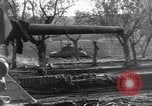
U.S. troops fire guns, advance on a field and drop bombs at a historic abbey in Italy during the Battle of Cassino.
A documentary television program depicts the role of U.S. soldiers in the Battle for Cassino which was a part of the Italian Campaign during World War II. U.S. 6th Armored Infantry Regiment troops advance on trucks. A barrel of a gun in the foreground. Fire by tanks and artillery. Mountains in the foreground. A town on the foot of Monastery Hill. A historic abbey which contains many medieval treasures. A German official at the abbey. A German soldier looks through binoculars. Troops around an artillery fire. A hand holding a leaflet. Leaflets are fired. A U.S. aircraft in flight over Monastery Hill and a pilot in the cockpit. Aircraft drop bombs over the abbey . Smoke rises due to an explosion. Soldiers fire guns. German troops at the abbey look through the binoculars. They fire guns. 5th Army troops on tanks advance. Aircraft in flight. Colonel William W. Quinn seated in a chair talks about the next story that is the invasion of Southern France.
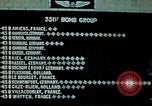
U.S. 351st Bomb Group is briefed before a bombing mission at the RAF base in Polebrook, Northamptonshire, England .
U.S. 351st Bomb Group at RAF Station Polebrook, Northamptonshire, England during World War II. A display board of the U.S. 351st Bomb Group, at RAF Station Polebrook, England, shows 15 principal targets and the number of times they've been struck by B-17s of the Group. The most missions were flown against Schweinfurt, Germany (25 times) and second most, against Hanover, Germany (17 times). Another recent status board records missions against Amiens and Evreux,and Romilly, France; Stuttgart, Germany; and Brussels,Belgium.Swastikas indicate German aircraft shot down during these raids. A C-45 aircraft lands and parks at the field. Major General Ira C. Eaker,Commander 8th Air Force, steps from the plane for a visit with the 351st Bomb Group. He proceeds to the briefing room, in a Quonset hut. Four Officers of the Group pose. View of heavy bombs in the bomb dump. Views of bombs hung wing racks of a B-17 to increase its bomb load. Bombs being transported on motorized dollies. Airmen writing in chalk on a bomb. It reads: "From the boys K of C #92 Jim, MH." Fliers at nighttime in their Quonset hut quarters. One writes a letter. Others trying to sleep, as sounds of aircraft engines are heard. Officer opens door of quarters and wakes crew members, telling them breakfast is at 3AM and briefing at 4AM. Briefing officer asks fliers to guess what the target of the day will be. Several make suggestions. The briefing officer removes a cover from the mission map, revealing target deep in Germany. The fliers respond with good-natured boos. Commander gives final instructions.,
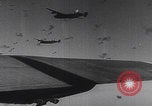
USAAF B-24 Liberator bombers dropping bombs over German-held cities in Europe (WW2)
U.S. Army Air Force aircraft dropping bombs over German-occupied cities in Europe during World War 2. USAAF B-24 Liberator bombers in flight. A bombardier prepares to drop bombs. Bomb bay of B-24 Liberator opens. A bombardier pushes a button to drop bombs. B-24 Liberator dropping bombs. Bombs fall into German-occupied city in Europe. Smoke forms over bomb site. Propeller of bomber engine moving. Multiple bombs are released from a bomber. Three B-24 Liberator bombers flying over thick winter clouds. Smoke forms from anti-aircraft firing. Thick clouds of smoke forms over Calais, France. A B-24 Liberator bomber flying over clouds.