


 Francais
 Deutsch
 Italiano
Refine Your Search
+"France" +1944 stock footage and images
- Showing 1351 to 1356 of 1897 results more
more Hide
Hide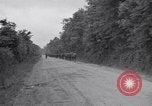
American troops of 1st Infantry march into liberated town of St Marie Du Mont, Manche, France during World War 2
U.S. Army 1st Infantry Division soldiers march past on a road with a sign board pointing way to St. Marie Du Mont and Carentan. Soldiers enter the town of Sainte-Marie-du-Mont and are greeted by civilians as some of them show victory sign. Close-up views of the American soldiers marching past the towering church of Sainte-Marie-du-Mont.
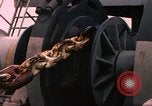
Allied ship convoys and preparations underway in English Channel before Normandy invasion during World War 2
Anchor being raised on an allied military ship. Ships at sea. Floating piers of concrete and steel being towed across channel. Barrage balloons over ships. Allied Troops on landing craft. Wake of a Coast Guard cutter. Allied bombers in the air heading toward targets in France. Soldiers seated and standing on landing craft, and quietly contemplating the task ahead. Antiaircraft guns firing at German warplane. German warplane destroyed and parachuted pilot descending. Ships in convoy heading for coast of France. Views of religious services being led by chaplains on the decks of Allied ships, before the D-Day invasion of France in the Normandy region.
WW2 German defensive preparations on French coast; Allied invasion scenes; Allied bombing over Germany
Slave laborers digging during the construction of the Atlantic Wall in World War II. German engineers oversee the construction. Men working around a large gun turret. Nazi German fortifications, bunkers, and artillery posts along coasts facing the Atlantic Ocean in Europe. The 380 mm gun at the Todt Battery near Cape Gris-Nez, Pas de Calais, France. 40.6 cm SK C/34 gun “Battery Lindemann” (German unit MKB 6 / MAA 244) as part of the Dover Strait coastal guns. German emplacements and troops marching along Normandy in France. A German soldier uses binoculars to watch the English Channel. Adolf Hitler and a Nazi German general. Adolf Hitler greets Benito Mussolini as the latter exits a plane in Vichy France. Allied leaders Winston Churchill, Franklin Roosevelt, Joseph Stalin, and General George C. Marshall at the Tehran Conference in 1943 during World War 2. Armies from various European countries march and prepare themselves for war against Germany. Supreme Commander General Eisenhower and other Allied generals during a meeting. Fleet of ships in sea ready to land in Normandy on D-Day. Navy and coastal command aircraft drop bombs on Nazi German submarines. Anti-aircraft guns fire at Nazi bombers. Docks damaged by German bombing receive aid from Allied countries. Cranes and hooks lower relief supplies, medicines and warfare material at dock. Warships loaded with artillery and warplanes lowered in ships by hoists. A locomotive train is being lowered from a ship. A military band plays music in a dock. Soldiers move towards the ships. British and Royal Canadian and Australian bombers at their base take off for bombing on Nazi bases at night. A soldier directs a bomber taxiing in runway. Aerial views of British bomber aircraft bombing targets in Germany at night, with immense explosions.
Allied troops liberate Le Havre, Lyon, Brussels and Antwerp (WW2)
Allied troops set off for the final drive of the Liberation of France and Belgium in World War II. La Havre: Intensive bombing by Allied bombers at the 2nd port of France. Allied planes in flight, drop bombs. Smoke from the explosions. German positions are covered by Allied target indicators. Soldiers and tanks advance through fields. Smoke and fire from destroyed vehicles and bombardment. The first Allied platoon enters the town. Destroyed buildings and ruins. The dock area, reduced to a complete rubble. Surrendered German soldiers are marched in the streets. Antwerp: Liberation of Antwerp. A convoy of tanks. Allied troops cross a Bailey bridge over the Albert Canal. British Second Army enters the city. Tanks and soldiers. Machine gun fire. The dock side railway head is captured. Civilians welcome the troops. Belgian Forces of Interior and civilians celebrate. Allied aircraft drop arms and supplies attached to parachutes for use by the Belgian Army. A low flying British Short Stirling bomber dropping supplies. Soldiers collect the supplies and load it into a cart. Brussels: Members of the Belgian Government lay wreaths at the Brussels war Memorial in tribute to the capital's liberation. Soldiers march. Field Marshal Bernard Montgomery is given a grand reception. The Field Marshal in a convertible. He greets the people from a hotel balcony. Lyon: The U.S. Seventh Army liberates Lyon. German snipers in elevated position in the Hotel Dieu, beside the Rhone River, fire into crowded streets from the hospital. Soldiers fire back at them. Smoke and fire coming from the German firing position. Civilians crouch and take cover. Hospital patients removed to safety. Nurses tend to a wounded man. French and U.S. troops drive through the city. Civilians shake hands with the soldiers. Some men and mostly women collaborationists, accused of working with the Germans, are disgraced and paraded on the streets with their hands behind their heads. FrenchpPeople cheer and celebrate.
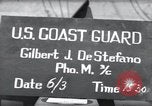
U.S. Military Chaplain (Roman Catholic) conducts mass on pier in Weymouth harbor, England, 3 days before D-Day
U.S. troops and Coast Guardsmen assemble for religious service on a pier in the port of Weymouth, England, three days before the invasion of Normandy, France, in World War 2. A Roman Catholic Military Chaplain conducts the mass. Landing Craft Infantry LCI(L) numbers 89 and 93 are tied up at the dock in the background. (These craft are part of LCI(L) Floltilla 10, operated by the United States Coast Guard.) A small dog stands at the feet of the Chaplain, as he conducts the mass. The service finishes as the Chaplain administers the sacrament of Holy Communion (Eucharist) to the troops. In concluding scenes, U.S. Landing Craft Infantry are seen underway from England, to join Assault Groups for the invasion of Normandy, France. One of the craft is seen to be Number 87 and another number 495.
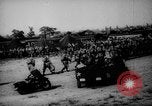
82nd Airborne troopers prepare England for invasion of Normandy during World War II.
Preparations in England for the Allied invasion of France during World War II. U.S. Army 82nd Airborne soldiers with equipment as they prepare to board an aircraft. Men load into buses as a motorcycle escort leads a convoy of buses through a farmland. Men get down from the buses and walk into hangar being used as barracks. Soldiers issued new equipment including life vests, ammunition and grenades. Medical supplies are checked. A jazz band of servicemen plays and men do pushups and calisthenics. Men play handball and volleyball. They read and write letters to loved ones at home. Men sharpen, check and work on knives and rifles. They clean and oil the rifles and attach bayonets. Soldiers paint invasion stripe marks on C-47 aircraft readying it for the D-Day invasion of France.