


 Francais
 Deutsch
 Italiano
Refine Your Search
+"Germany" +1944 stock footage and images
- Showing 451 to 456 of 598 results more
more Hide
Hide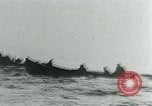
German Homeland defenders demonstrate abilities using small wooden boats armed with machine guns. They land and pursue enemy
Homeland defense forces in Germany operate small wooden boats armed with machine guns. The beach a boat and pursue enemy on shore. (World War II period).

German women work as postal clerks, mechanics, munitions workers, fire personnel and air raid wardens.
Contribution of German women during war for German World war II effort. Women work as postal clerks in Germany. They sort mails. The women work as mechanics, munitions workers in war production and war materiel, fire personnel and air raid wardens. Women work as conductors in buses. Women work as chauffeurs.
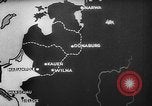
German Baltic Sea convoy officers assist in the evacuation of German civilians from the eastern front during World War II.
German forces evacuating German civilians from the Eastern Front during World War 2. Baltic Sea convoy officers assist in the evacuation of German civilians from the eastern front, where they are threatened by advancing Soviet forces. German civilian refugees, mostly women, board a ship. Girls talk aboard and a mother feeds her child on the ship. Convoy of warships escorting transports back to Germany.
Group of U.S. M-10 Gun Motor Carriages moves along crooked and steep road in Hurtgen Forest during World War II.
U.S. infantrymen and tanks advance through Hurtgen Forest, Germany during World War II. Group of U.S. M-10 GMCs (Gun Motor Carriages) moves along crooked, steep road in forest. Medics in forest bandage U.S. soldier's leg wound. Soldier assists soldier, a shock victim, from forest. Infantrymen move through forest. Infantrymen take cover from enemy.
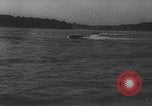
Kriegsmarine boat operator jumps from torpedo boat; Kriegsmarine officer awarded Iron Cross (WW2)
One man torpedo boats racing across lake in Germany during World War II. Various torpedo boats operated by German Navy (Kriegsmarine) sailors. Water splash from boat. A Kriegsmarine torpedo boat operator jumps from the boat. View of the German Iron Cross military decoration. An officer of the Kriegsmarine is awarded the Knight's Cross of the Iron Cross or simply the Knight's Cross (Ritterkreuz).
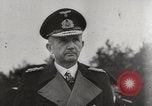
Testing of German one-man torpedo-carrying craft in World War II
View of German Grand Admiral Karl Doenitz. Complete change of scene shows a torpedo being loaded on a German Neger torpedo-carrying craft for a demonstration at Flender-Werke in Lübeck, Germany,during World War 2. Designed by Richard Mohr (whose surname means blackamoor),this craft cannot submerge but runs low, awash in the water. It is seen moving that way in the water and firing its torpedo. Back at the base, the operator, wearing an iron cross, climbs out of the craft. (Note: Not surprisingly, this little torpedo-carrier was sometimes called a human torpedo.)