


 Francais
 Deutsch
 Italiano
Refine Your Search
+"Germany" +1944 stock footage and images
- Showing 469 to 474 of 598 results more
more Hide
Hide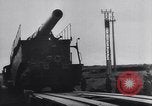
Germany's heaviest guns of World War II
Views of heavy and heaviest German railway siege guns of World War 2. A Krupp K5E 283 mm Leopold railroad gun moving along a railroad track. It hooks up with supporting rail cars. Soldiers ride in an open car carrying shells for the gun. Soldiers moving powder bags for the gun. Glimpse of German troops carrying shells from a trench (probably for a 12.8 cm FlaK 40 anti-aircraft gun). Next,German soldiers are seen pushing a shell for a 38 cm Siegfried K (E) (K - Kanone, on a rail dolly, and them moving it by means of a mechanical arm, up to the breech of the gun where gunners load it. Several views of shells being loaded into German railway guns, including the 80cm Dora, or Schwerer Gustav. Views of heavy German gun barrels being raised, including 406mm (16 inch) SK C34 Coastal Defense guns. The Thor 60cm mortar being raised for firing. More railway guns.
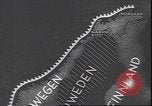
Laborers build Germany's Atlantic Wall coastal defenses in Europe from Norway to Spain during World War II.
German coastal defenses in Europe during World War 2. A map of Finland and Sweden. A map southward toward France and depiction of Atlantic Wall running Dutch, Belgium, and French coast facing the English Channel. Artillery and gun emplacements and fortifications along Atlantic Wall in Europe. A German soldier standing atop a fortification bunker looks through binoculars out across the English Channel. Forced laborers (slave labor) construct German coastal defenses at a beach. Concrete being mixed and poured and slave workers build the coastal defense reinforced concrete pillboxes. Massive guns and artillery being raised at the Atlantic Wall coastal defenses. The barrel of a large gun.
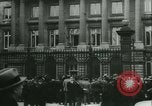
Prince Charles is named Regent by the House of Representatives in Brussels.
The appointment of Prince Charles, Count of Flanders as the Regent of Belgium after the liberation of Belgium from German occupation. View of the House of Representatives in Brussels (Place de la Nation 1, 1008 Bruxelles, Belgium). Representatives take their seats inside. Prince Charles, Count of Flanders takes an oath as he is named the Regent of Belgium during the imprisonment of his brother, King Leopold III, in Germany. Prince Charles emerges from the building and is congratulated by officials.
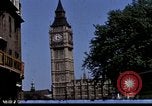
Scenes of Allied troops and life in London during World War II in Europe
Day time life in London, United Kingdom while night-time raids by Germany on London were still common in World War II. The Big Ben clock tower. A double decker bus on the street. U.S. soldiers visit Westminster Abbey (Dean's Yard, London SW1P 3PA, United Kingdom). Traffic near the Marble Arch (London W2 2UH, United Kingdom). Citizen speakers address various crowds in London's Hyde Park. Several speakers take their turn. Policemen talk to a man. Allied officers and soldiers in the crowd.
3rd Armored Division units with French children near Dragon's teeth on the Siegfried Line in World War II.
Ardennes, France in World War 2. Green hills in the countryside. American General Joseph Collins talks to General Maurice Rose of the 3rd Armored Division (who was later killed in Cologne, Germany). 3rd Armored Division units celebrate. Soldiers on M3A1 Scout Car; Willys MB U.S. Army Jeep; and Harley Davidson WLA Military motorcycle, coming.out of a gate. French children in school uniform with the soldiers. Soldiers talk to them and pose for pictures with them. White flag on a pole outside a German home. French children stand before Dragon's teeth on the Siegfried Line, pyramidal fortifications built by slave labor. They shut their ears due to the loud noise made by gun fire nearby. Soldiers walk among the fortification. A GMC CCKW 5.3 ton 6X6 U.S. Army cargo truck seen in background.
U.S. Army Engineers construct a corduroy road on swampy mud using wood logs in Holland.
Construction of roads in Holland during World War 2, by U.S. Army engineers. Swampy mud blocks the traffic. Soldiers shoveling mud. Trucks and equipment stuck in mud, with wheels spinning. United States soldiers move the mud with rolling equipment. Soldier in a jeep crosses the muddy area. U.S. army engineers work with rolling equipment. They stand on the rolling equipment to push the mud out of the way. Soldiers try to pull a jeep out of the mud. Engineers cut down trees and fit wood logs to make corduroy road. Vehicles pass over the bridge. Traffic restored and trucks and armor including tanks continue their advance toward Germany. Close-up view of U.S. Army soldiers smoking cigarettes, cooking their K-rations over a wood fire, and then eating. One soldier takes a bite of food and shakes his head conveying that it does not taste good.