


 Francais
 Deutsch
 Italiano

Refine Your Search
+"Germany" +1945 stock footage and images
- Showing 1219 to 1224 of 2008 results more
 Hide
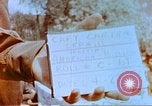
Marshal of the Soviet Union Konstantin Rokossovsky signs autograph as Americans and Russians meet in Torgau, Germany.
Russian and American officers and soldiers meet in Torgau, Germany during World War II. Russian women and American and Russian soldiers dance at a party given in celebration of Russian American meeting at Torgau. Three Russian musicians play instruments. Dancers at a party. Russian officer and American woman correspondent dance. Several views of dancers. Large group of officers seated at tables. Russian soldiers hold Russian flag brought from Stalingrad. Marshal of the Soviet Union Konstantin Rokossovsky signs autograph. Dancers dance in the party. Pictures of U.S. President Franklin D. Roosevelt and Soviet President Joseph Stalin in the background.
United States soldiers stand around on bomb littered street of Nuremberg, Germany during World War II.
Bomb littered streets in Nuremberg, Germany. Sign 'Nurnberg' with letter 'b' missing due bomb damage. Street littered with bomb damage. Bomb damaged buildings. Two United States soldiers stand around on littered street. German village nestled near edge of a river. German village in the valley. Interiors of U.S. Army Air Forces B-26 Marauder bomber aircraft in flight shows pilot.
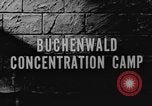
Piles of dead, mutilated and emaciated bodies at the Buchenwald Concentration Camp in Weimar, Germany.
Survivors and emaciated bodies of prisoners at the Buchenwald Concentration Camp in Weimar, Germany immediately after World War II. Prison gate with sign "Jedem das seine" (To Each His Own) integrated on the iron gate. A Swiss Red Cross truck arrives at the Buchenwald Concentration Camp with aid for survivors. The survivors line up at the prison after their liberation. Allied soldiers stand around. Nationality and prison number tattooed on the stomach of inmates. Piles of dead, mutilated and emaciated bodies. Some survivors among the dead. Mutilated faces of the survivors at the camp. A truck loaded with piles of emaciated dead bodies outside a crematorium. Allied soldier show a weapon used by SS (Schutzstaffel) soldiers. Ovens inside and piles of bone ash on the floor of the crematorium.

Ruins of Hotel Kaiserhof, the Reichstag and Adolf Hitler's Chancellery in Berlin, Germany (WW2)
Damaged buildings of Berlin, Germany during World War II. Ruins of Hotel Kaiserhof, the Reichstag and Adolf Hitler's Chancellery. Men find a Nazi uniform buried in the rubble. A young man standing on debris imitates Adolf Hitler. The young man does an impressive Hitler parody.
Students of Royal Hungarian High School march into Prisoner of War enclosure at Freyung, Germany near end of World War II.
Youth cadets from the Royal Hungarian High School march into a U.S. 11th Armored Division Prisoner of War enclosure at Freyung, Germany, during final days of World War 2, in Europe. Several takes of the young boy students, with packs and in soldier uniforms, marching through a gateway into the enclosure, as U.S. soldiers watch them. U.S. Army translator talks in German with the boy soldier leading the group.
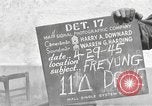
Hungarian schoolboys are interviewed by American soldiers of U.S. 11th Armored Division at Freyung, Germany in World War II
American soldiers interviewing prisoners at the U.S. 11th Armored Division Prisoner of War enclosure in Freyung, Germany near the end of World War 2. An American Army Sergeant questions a young man with help of another Sergeant, interpreter, who speaks to him in German. The boy identifies himself as being Hungarian from the Royal Hungarian High School. The boy tells them he learned marching drill, but had no weapons training. He had been enrolled four years, and had never been engaged in combat with Americans. He states his age as 14 years. Scene shifts to another interview with a younger boy soldier. The interpreter asks if he speaks German. The boy says no, he is Hungarian. Nevertheless, with some difficulty, they determine that he too is from the Hungarian military school. When asked about his military training, the boy answers by demonstrating, standing at attention, saluting, and simple close order drill actions. They determine that he is in the third year of school. The film director calls for a cut at this point. They resume asking if he ever fought against Americans. He has difficulty understanding but eventually says no. The boy is 12 years old.