


 Francais
 Deutsch
 Italiano
Refine Your Search
+"Germany" +1945 stock footage and images
- Showing 1351 to 1356 of 2006 results more
more Hide
Hide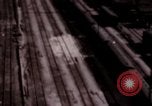
Aerial views of bomb damage from a U.S. Army J-3 Piper Cub, flying over Wiesbaden, Germany
Bomb damage in Wiesbaden, Germany during World War II. Aerial views from rear of a U.S. Army Air Force aircraft making a low pass show bomb damaged marshaling yards. Shadow of the aircraft on ground reveals that it is a J-3 Piper Cub. Aerial views of bombed out bridge towers and bridges over rivers. Large town square with many people gathered there. A bomb-damaged train and buildings along a track. Bomb-damaged residential apartment buildings. The shells of former homes.
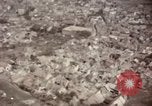
Aerial views of bomb-damage in Bad Durkheim, Worms and Frankfurt am Main in Germany during World War II.
Bomb damage in Worms, Germany during World War II. Bomb damaged marshaling yards in Bad Durkheim (Bad Dürkheim). Aerial views of bombed bridges in Worms. Views of bombed bridges in Frankfurt am Main.
Aerial views of bomb-damaged buildings and marshaling yards in Worms, Germany during World War II.
Bomb damage in Worms, Germany during World War II. Aerial views from a U.S. Army Air Force aircraft making a low pass shows refugees in a prison camp. Bomb damaged marshaling yards and bombed-out buildings in Worms. Aerial view of a pontoon bridge with U.S. military vehicles moving across it. Several views of destroyed and bomb damaged bridges in Frankfurt am Main. A steam locomotive and train moves across one span, still intact. A formation of U.S. Army Air Force B-26 Marauder bombers in flight.
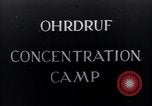
U.S. Generals tour newly liberated Ohrdruf concentration camp near Weimar, Germany towards the end of World War II.
Nazi atrocities at Ohrdruf concentration camp near Weimar, Germany towards the end of World War II. U.S. Army Generals Dwight D. Eisenhower, Omar N. Bradley, George S. Patton and Walton H. Walker inspect the camp. The Generals inspect the scaffold and talk to prisoners. A woodshed is filled with dead bodies stacked in piles. The Generals view lime-covered corpses. Inmates demonstrate how they were tortured. Dead bodies are strewn on the ground. U.S. Congressmen also view the camp. A crude cemetery with charred remains.
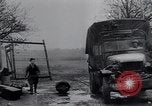
Colonel Sears compels Nazi officials to tour Ohrdruf concentration camp near Weimar, Germany towards the end of World War II.
Nazi atrocities at newly liberated Ohrdruf concentration camp near Weimar, Germany towards the end of World War II. A truck brings local townspeople, including Nazi party officials, who are forced to accompany the townspeople. Commander of U.S. 4th Armored Division Combat Command A Colonel Hayden Sears stands near Nazi officials. The visitors view dead bodies of inmates shot on the eve of U.S. arrival. Two slave labor bosses are shown at the camp. The Nazis are forced to go into a woodshed. Visitors view the charred remains of victims at a crematory near Ohrdruf.

Head of the American War Crimes Investigation Team, Major Herman Bolker, examines emaciated patients at the Hadamar Institute in Germany.
Post-liberation views of Nazi atrocities at the Hadamar Institute (Hadamar Euthanasia Centre) in Hadamar, Germany towards the end of World War II. American officers visit the building where, under the guise of an insane asylum, 35,000 people were murdered. The visitors examine emaciated patients. Head of the American War Crimes Investigation Team, Major Herman Bolker, leads the examination. In the graveyard attached to the institution, bodies are exhumed for autopsies. Men wear gas masks as they lift corpses out of holes and line up bodies. Major Bolker list data. The head of the institute, Dr. Adolf Wahlmann and the head male nurse, Karl Willig, are questioned about the use of morphine, before being led off to await a trial.