


 Francais
 Deutsch
 Italiano
Refine Your Search
+"Germany" +1945 stock footage and images
- Showing 1723 to 1728 of 2006 results more
more Hide
Hide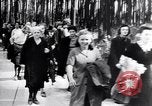
Civilians of a town, Weimar on a forced visit to the Buchenwald concentration camp of the Nazis after World War II.
The Buchenwald concentration camp of Nazi Germany shortly after its liberation in World War II. 1200 civilians of a town Weimar, nearby the camp, being sent on a forced tour of the camp. A group of smiling civilians, men and women walk towards the camp. Civilians enter the camp and see the display of articles made of human skin. Lampshades, paintings and display of human bones serve as evidence of atrocities committed against camp victims. Human heads shrunk to one fifth of their normal size. Women faint and are carried out. Civilians visit the ill-conditions of prisoners at surviving sections of the camp. Truckloads of dead bodies of victims of this camp.
Surviving and dead victims of the Dachau concentration camp of the Nazis, rescued after World War II.
The Dachau concentration camp of the Nazis after World War II. Aerial view of buildings and compound of the camp. The entrance with the Nazi swastika. Liberated inmates of the camp belong to countries like Germany, Poland, Czechoslovakia, France and Holland. Starved and leaned prisoners of the camp in miserable conditions. Starved dead bodies. Survivors rescued on a cart. Trains filled with lumps of dead bodies lifted by inmates for burial.

United States Army rescues women prisoners of Penig concentration camp run by Nazis during World War II.
Penig concentration camp of the Nazis in Germany during World War II. Soldiers of the 6th armored division of the United States Army at rescue and liberation operation. Hungarian women inmates at the camp. American doctors examine wounds of the women inmates. Emaciated, starved inmates in unhygienic conditions suffer from various diseases. Soldiers carry and escort victims by ambulance and military vehicles to a nearby hospital of the German Air Force. German doctors and nurses forced by Allied soldiers to attend the inmates. Smiling women inmates
Major Herman Bolker of the U.S. military and his subordinates visit atrocities at Hadamar concentration camp after World War II.
Hadamar concentration camp in Germany visited after World War II. Major Herman Bolker and his sub-ordinates step out of a U.S. military truck and move into the camp. Disease-stricken, weak and starved prisoners at the camp. Guards dig a common grave and pull out corpses of the victims of this concentration camp. Doctors and priests at the place. Guards make notes about the dead. Chief physician of the camp, Adolf Wahlmann, with head nurse, Karl Willig, are interrogated by Major Walker. He shows a bottle of morphine, as morphine injection was commonly used to murder the inmates. Soldiers arrest Wahlmann.
Russian prisoners at the Paderborn concentration camp raid the food stores after being liberated by Allied army during WW II.
Paderborn concentration camp in Germany visited after World War II. The 2nd division of the 9th Army of the Allied military forces arrive at the camp with their tanks and weapons. The liberated Russian prisoners raid food stores for stealing baking flour kept at the stores. Prisoners break the door of store. Man eating baking flour. Men fight over a little flour. Soldiers control the prisoners.
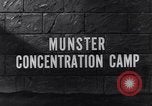
Prisoners at the Munster concentration camp liberated and given food by 9th Army of Allied military during World War II.
Munster concentration camp in Germany after World War II. The 9th Army of the Allied military forces arrives at the camp with their tanks and weapons and liberates prisoners of the camp. An inmate washes his wounds. Inmates cook food for them, supplied by the Allied troops. The liberated French and Belgian prisoners. Water tanker for prisoners. A happy old man smiles.