


 Francais
 Deutsch
 Italiano
Refine Your Search
+"Germany" +1953 stock footage and images
- Showing 7 to 12 of 60 results more
more Hide
Hide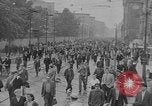
Uprising of 1953 in East Germany: Crowds in East Berlin protest against East German Communist government policies
Unrest in Berlin, East Germany. A large crowd gathers to demonstrate against East German government. A banner carried by some demonstrators calls for free elections. Armed Stasi watch the demonstrators. Demonstrators burn banners and posters and damage public property. People stands on roofs of houses and watch the demonstrations. Armed East German police and some Soviet soldiers watch the demonstrators from their headquarters. Demonstrators tear up and burn signs and start a bonfire. East German Stasi reinforce the checkpoint between the Soviet and American sectors of Berlin. A uniformed Berlin police officer, wearing traditional hat, assists a person who was manhandled by the mob. A building set afire by the demonstrators. View from West Berlin of mob in East Berlin. Sign reads: "You are leaving the American Sector."
United States and Russian troops in Germany after World war 2; division of West Germany and East Germany
Bomb damaged and ruined buildings of Nazi Germany in 1945, including the Reichstag. Nazi Eagle symbol of Third Reich pulled down from building and crashes to the ground at end of World War 2. United States Army of occupation marches into city as German population lines sidewalks and watches them parade. Sign on a shop reads "Gaststatte Schosser." Many buildings in view are damaged or destroyed from bomb attacks during World War 2. American soldiers occupying German give candy to German children who at first hide from them. Nazi leaders including Hermann Göring, Rudolf Hess, Joachim von Ribbentrop, and Wilhelm Keitel, seen on trial in the Nuremberg war crimes trials. German people struggling to rebuild. women and children trying to gather wood from stumps of trees for fuel. A woman sawing a log. Women and children scraping food from inside trash cans and refuse bins, to stay alive during scarcity and shortages after the war. Americans providing food assistance and feeding German children in relief lines. Close up of a smiling boy as he receives food or drink. Soviet Russian Army soldiers occupying East Berlin and marching in formation. Russians removing an industrial lathe and other machinery and tools from Germany as the Soviet Union continues to strip Germany of resources after the war. A map of Germany and Berlin seen with divided regions as American, British, French and Soviet zones. Views of empty streets and heavily damaged buildings of Berlin after the end of the war. Children play amidst the desolation and destruction in East Berlin. View of Kammergericht, Headquarters of the Allied Control Council. Leaders seen meeting inside include American General Joseph T. McNarney, French General Marie Pierre Kœnig (Marie-Pierre Koenig), Soviet General Georgy Konstantinovich Zhukov,. British Field Marshal Bernard Law Montgomery. View of Spandau Prison guarded by troops of occupying powers. Soviet and American troops drill and march on the grounds of Spandau Prison. An American soldier relieves a Soviet soldier at a watch post. Soviet blockade of West Berlin begins in June 1948. View of a man shutting down power in a power plant and lights going dark in Berlin. Blackout conditions in Berlin during the blockade. Germans plant vegetables in city to survive. Germans exchange goods in black market setting. A man plants vegetables in view of the Brandenburg Gate. The Berlin Airlift operations underway. U.S. Air Force C-54 aircraft flying low and arriving in Berlin, bringing supplies to West Berlin. C-97 landing. U.S. military forces unloading relief supplies and food from airlift aircraft. American C-47s and C-54s in the Berlin Airlift. Soap and milk being unloaded from airplanes. German children gather on a hill and watch low-flying American airlift planes as they approach to land at Tempelhof Aerodrome in Berlin. An Air Force airman throws a package out of the aircraft. It is a very small parachute with candy that drops from the American airplane to the waiting children. Children run to retrieve it and they share and eat the candy. Blockade is lifted in 1949 and rebuilding of West Berlin resumes. View of railroad tracks being re-linked, a locomotive running on tracks, and trains cross between East and West Berlin. Ships loading goods onto trains for Berlin. A coal processing factory running again in Germany. German workers producing industrial parts and goods again in production factories. West German construction workers rebuilding structures in West Germany. German people cast votes, establishing Federated German Republic (West Germany). Figures seen include U.S. General Alfred B. Gruenther with Konrad Adenauer, President of the new German Republic, together in Bonn, Germany. Soviet Russian troops marching on parade in East Germany. East German workers rioting in 1953, in protest of increased production quotas in Communist controlled East Germany. Soviet forces in armored vehicles patrol the streets and disperse the crowd. A large electronic billboard banner flashes West German messages and propaganda to those who can view it in East Berlin. Citizen refugees from East Germany arriving in a processing center in West Germany, carrying bags and luggage. East German refugees laying on the ground on blankets in a crowded immigration processing center of West Germany. A woman irons clothes in the immigration center, while a child plays with dolls.
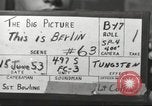
East German women being airlifted by a British European Airways aircraft in Berlin, Germany.
An Allied airlift in West Berlin, Germany. British European Airways office at Berlin Tempelhof Airport. Women refugees from East Germany sign flight papers. Refugee women in a waiting room as they look at an aircraft. Two women smiling. The women board a British airplane (G-AMSR). A clerk marks a British European Airways bulletin board listing the number of refugees who left the area on March 8th, 1953.
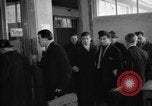
Scenes at a refugee Camp in Germany.
German refugees at a camp in Germany. Men entering a building lobby, show their identification papers. People seated at a desk talk. Families with all their belongings finding their way to assigned quarters in the camp. A sign reads: "Haus E" and "Police Registration" (in German). A woman walks with a baby. Group of refugees stands near a low building. Two children run and play around some dumpsters. Families carrying suitcases board a special bus. A woman serves food to families in a dining hall. Views of several persons seated and eating a meal. Women hanging wash to dry on clothes lines behind their housing. (Note: This might be the Marienfelde refugee transit camp around 1953, showing East Germans fleeing to the West. )
Scenes of Berlin divided by newly built Berlin Wall; Unrest in the years after division into East and West Berlin, Germany
The divided city of Berlin, Germany caused by the erection of the Berlin Wall. Shows early scenes of the Berlin Wall being built. Opening scene shows camera pan from Brandenburg Gate down to street level where East German construction workers are using a jack hammer and hand digging a trench across the middle of the street to serve as foundation for the Berlin Wall. A Soviet guard watches over the construction workers. East Germans and Soviet Russians walking with a spool of razor wire, putting up barbed wire barricades along other sections of the dividing border. German citizens gathered along the wall as it is built in a field area. Several young men in suits being pushed and harassed by a guard on the East German side of the Berlin Wall. View of a railroad train track that has been cut, and workers digging a deep trench at the site to build the wall right through the run of railroad track. East German refugees walking through a checkpoint area, desperate to leave east Germany before total closure of the border occurred. Refugees gathered in crowded shelters with mattresses on the ground. Young German children and babies sleeping on mats. Views of barbed wire crossing railroad track runs. Animated map showing routing of aircraft for the Berlin Airlift in response to the Berlin Blockade by the Soviet Union in 1948. Views of various aircraft flying overhead, bringing supplies to citizens during the blockade. Relief supplies and food being unloaded at airport for citizens. People waving white handkerchiefs in the air to express thanks as a Berlin Airlift airplane passes overhead. Scene changes to 1953 riots on the streets of East Berlin, Germany, with crowds of protestors throwing rocks at a Soviet tank and views of a building on fire with smoke pouring from its windows. Next scenes show West Berlin scenes as a juxtoposition of the East Germany scenes. Views of successful German industry and commerce in West Berlin. People working in West Berlin. Newly built tall buildings in West Berlin. German people shop in stores. A boy adds a bar of chocolate to a shopping basket. Men working in large industrial plants and factories. Large Siemens equipment in use in an electrical transmission component factory. A scientist or engineer looking through a microscope like device.
World tensions after World War II. The Baruch Plan. The Berlin Airlift. The Korean War. The Cold War. The Atomic age. Ballistic Missiles
Speaking before United Nations Atomic Energy Commission (UNAEC) in its first meeting in June 1946, Bernard Baruch proposes international control of all atomic energy -- the so-called Baruch Plan. Low level aerial view of ruined post World War 2 European city. Goods including heavy equipment, locomotives, being loaded aboard ships to aid in the postwar recovery of Europe (The Marshall Plan). Workers in Western Europe making use of Marshall Plan materials to rebuild their national infrastructures. West European farmers restoring agriculture. View from overflying light airplane of parts of postwar Berlin in 1948. Blocked roads and empty railroad tracks leading from East Germany to West Germany, blocked by the Soviet Union. Barge traffic at standstill due to Soviet actions. U.S. C-54 transport aircraft flying supplies into West Berlin (The Berlin Airlift) during the Soviet blockade of that city. West Berlin citizens watching U.S. transport aircraft bringing fuel, food and other essentials into the isolated city. A C-54 flying low over empty railroad lines, as it prepares to land in West Berlin. Supplies offloaded from a DC-3 ( AKA C-47 or British Dakota) equipped with unusual set of rear cargo doors. Supplies being moved on Tegel Airport with many C-54 aircraft in the background. Numerous C-47 aircraft operating at Tempelhof airport. An East German official opening a barricade as Soviet blockade of West Berlin ends on May 12, 1949, and supply trucks begin to move over roads again. Flags of Western nations flying on high flagpoles. Glimpse of Allied warships underway during the Cold War. Formation of P-38 Lightning aircraft in flight overhead. NATO troops marching and NATO armor on parade. Flashes of heavy artillery firing at night. Korean refugees moving South in 1950 with the outbreak of the Korean War. View of UN Security Council meeting in the absence of Soviet representative. U.S. tanks firing guns and American infantrymen in conflict with North Korea in Korean War. American wounded on stretchers.Delegates of both North and South Korea signing the Korean Armistice Agreement in P'anmunjŏm, on July 27, 1953. A rocket is launched. Images of earth from inside a space craft in orbit. Narrator mentions the first satellite to circle the earth, the soviet Sputnik 1 in 1957. View of Soviet pilots in low pressure altitude chamber. A test subject in an aircraft making a maneuver that allows him to experience "weightlessness." Objects in his cockpit float about. A military rocket launch monitored by arrays of radar. An object being retrieved from space by means of a parachute. A nuclear powered submarine. Rockets on display during a military parade in Red Square, Moscow, the Soviet Union. A U.S. Air Force B-52 bomber taxiing. More views of rockets seen during a Soviet military parade in Red Square, Moscow.