


 Francais
 Deutsch
 Italiano
Refine Your Search
+"Guadalcanal Solomon Islands" +1942 stock footage and images
- Showing 25 to 30 of 33 results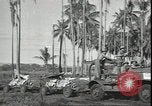
U.S. Marines handle equipment on Guadalcanal beach, Solomon Islands during World War II.
U.S. Marines in Guadalcanal, Solomon Islands during World War II. A truck pulls trailers loaded with 1000 lb. bombs. Marines sit on bombs. The ammunition dump. Equipment handled on beach. Marines unload crates. A crane in operation.
Amphibious forces carried by U.S. Coast Guard, at Guadalcanal and in North Africa during World War II
United States Coast Guard operations in World War 2. Underwater views of ship's anchors being weighed, Convoy of U.S. ships in Pacific Theater, in July, 1942. The Attack Transport, USS Hunter Liggett underway, with crews doing amphibious training. Members of the 1st Marine Division aboard USS Hunter Liggett with Coast Guardsmen. Officers confer aboard vessel. Marines read books on ship. August 7, 1942, U.S. Marines begin amphibious assault against Japanese on Guadalcanal. Naval guns bombard Guadalcanal Island. Marines descend from the USS Hunter Liggett, on nets and enter LCVPs (Higgins boats) operated by Coast Guardsmen, to assault the island. Marines hit the beach from the boats. Marines firing small howitzers and advancing on the island. November 7, 1942, convoy of eight hundred ships en route to North Africa. Warships bombard the shore. An officer observes through binoculars. British and American troops descend on nets into LCVPs from Attack transports: USS Joseph T. Dickman (APA-13);USS Leonard Wood (APA-12); and USS Samuel Chase (APA-26). Troops hit the beaches of North Africa, under fire.
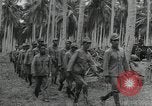
Japanese prisoners assembled and some given medical aid. Admiral Nimitz decorates Marines. Guadalcanal, WWII
Allied campaign against Quadalcanal and Solomon Islands during World War II. Captured Japanese Labor Battalion prisoners (called Termites by the Marines) and some Imperial Marines march and are lined up. Japanese prisoners seated behind a barbed wire fence. A Japanese soldier being given first aid. treatment by an American medic. Dead Japanese soldiers from a Regiment commanded by Colonel Kiyonao Ichiki, are seen on the beach at, 'Alligator Creek.' (They fell during a nighttime attack against entrenched U.S. Marines, on 21 August 1942. The ICHIKI Regiment lost 777 killed during their attack. Only six members of the regiment escaped.) Corporal Barney Ross (former U.S. boxing champion) receives a Japanese flag as a souvenir. U.S. Navy Admiral Chester W. Nimitz decorates Marine Colonel 'Red' Mike Edson, Commander of the 1st Marine Raider Battalion and U.S. Marine pilots: Major Smith, Captain Carl and Major Gaylor during the ceremonies. Brief glimpse of Marine Major General Alexander A. Vandegrift with Admiral Nimitz
Native porters file along a trail as armed U.S. Marines in a foxhole prepare to attack during invasion of Guadalcanal.
United States Marines infantry move up to front positions on Guadalcanal in the Solomon islands during the Guadalcanal invasion, World War II. Infantry column in a valley on Guadalcanal. Explosions occur in distance. U.S. mechanized equipment in the foreground. Native porters filing along trail. U.S. soldiers look on. U.S. soldiers and natives filing along trail and through valley. Guadalcanal terrain. U.S. Marines in a foxhole with bayoneted rifles and grenades in the foreground. U.S. Marines in a foxhole armed with tommy guns. A Marine in a foxhole with a blacked face and a tommy gun. Another Marines in foxhole as they look over the valley.
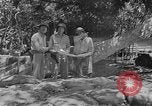
Three U.S. generals converse and pose for pictures on Guadalcanal in World War II
As film opens, Brigadier General William H. Rupertus, Assistant Commander of the First Marine Division (on the left) and Major General Alexander McCarrell "Sandy" Patch (in the center) Commander of the U.S. Army 23rd Infantry Division (the Americal Division) and his Assistant Commander, U.S. Army Brigadier General Edmund Sebree, are seen looking at a map on Guadalcanal, during World War 2. Rupertus converses with Patch and shakes his hand. He then shakes hands with Sebree, as both of them laugh at some comment made. General Sebree salutes General Rupertus, who returns his salute, and the three of them walk away. Close up of General Patch, posing for the camera. He fastens the chin strap on his steel helmet and then releases it. Closeup of General Rupertus, posing for the camera.
American Marines land and advance inland in Guadalcanal.
American Marines and the Japanese forces in Guadalcanal during World War 2. Animation depicts the Allied forces plan against the Japanese forces on islands in the Pacific Ocean. A convoy of U.S. ships. The United States Marines land on Guadalcanal. Marines running out of landing craft while under fire. The Marines move inland. Combat scenes show soldier in prone position firing rifle. A U.S. Marine firing a machine gun at enemy Japanese in jungle area inland of beach during battle. Face of Marine in fox hole. (World War II period).