


 Francais
 Deutsch
 Italiano
Refine Your Search
+"Guam" +1944 stock footage and images
- Showing 61 to 66 of 74 results more
more Hide
Hide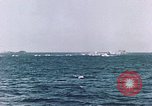
U.S. Marines in LVTs and LCVPs as they head towards the coast of Guam, Mariana Islands during World War II.
United States Marines during Allied operations in Guam, Mariana Islands, World War II. LVTs (Landing Vehicles Tracked) underway in the Pacific Ocean. A ship at sea. Smoke rises in the background. A puff of smoke rises upwards. LVTs and LCVPs (Landing Crafts Vehicle Personnel) underway at sea. U.S. Marines loaded onto LVTs and LCVPs as they head for the Guam coast. A LST (Landing Ship Tank) at sea as a LVT enters the LST.
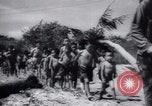
U.S. forces assist native people on Saipan and Guam in the Mariana Islands after capturing them during World War II.
U.S. forces on Saipan and Guam in the Mariana Islands during World War II. Native women and children are liberated by U.S. Marines on Saipan island. American military hospitals provide medical care in Guam. U.S. Navy doctors and native nurses treat the sick. Food is distributed to native children.
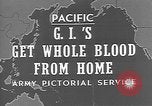
Blood donated in United States for wounded soldiers in Pacific Theater.
United States troops receive whole blood from home in Pacific Theater. An animated map shows boxes of blood flown from San Francisco to Pearl Harbor, Guam, and Leyte. Vehicles parked outside a Red Cross center. A woman donates blood. A nurse sits near her. Blood is kept in portable refrigerators. 'Human blood' written on the boxes. Plane lands in Pearl Harbor, Hawaii. The boxes are unloaded. The crew loads the boxes onto another plane. The boxes arrive in planes Guam. The blood boxes arrive at Base Hospital and are kept in refrigerators. Wounded soldier receives blood in Leyte, Philippines. (World War II period).
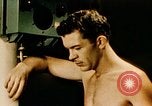
U.S. Navy Assault Force advances while U.S. aircraft bomb Japanese air bases and shore installations on Tinian Island.
USS Yorktown CV-10 in the Pacific Theater during the Battle of the Philippine Sea. The carrier advances towards the Mariana Islands. On the eve of battle, soldiers scrub up to lessen the danger of infection in case they're wounded. Sailors clean up, bathe and rest. Priests conduct services aboard the ship. Sailors take communion and pray. Crewmen read and sleep on their bunks. The carrier underway at dusk. Cooks and bakers prepare a hearty meal of stakes and eggs. Officers take their meal at a table. The alarm goes off to warn of an enemy attack. Sailors rush to their battle stations. Bombardment by Japanese torpedo bomber planes. Fire due to explosions around the ships. Black smoke rises up into the air. Anti aircraft fire from the U.S. ships, planes are hit and descend towards the water. The alarm sounds, pilots rush and board planes and take off. The Radio Plotting Room in charge Smokey and other operators tracks down enemy planes. A map depicts Japanese air bases and military installations in the Mariana Islands, including the Japanese fortified Guam. Radio operators at work. U.S. planes in flight. They swoop down upon Tinian Island and bomb enemy installations. Explosions due to bombardment. Shore installations and air bases bombed. Craters on the island. The U.S. Assault Force battleships including USS Colorado, USS Tennessee and USS Pennsylvania advance. Explosions due to enemy fire. (World War II period).

Highlights of the Allied New Guinea campaign and other Pacific battles against the Japanese in World War II
The Allied campaign across New Guinea and onward to the Philippines during World War 2. U.S. warships firing their guns at night. Flashes illuminate the blackness. Bombs dropping from an aircraft bomb bay. Bombs exploding on stretch of jungle near water. A U.S. Army Air Forces B-26 bomber in flight View rearward from very low flying USAAF bomber as it bombs it drops explode behind. U.S. troops making amphibious assault on New Guinea. Map showing path of Allied attacks from Australia, across New Guinea from Port Moresby to Buna and on to the Admiralty Islands, cutting off Japanese-held Rabaul, New Britain. Map shows Allied forces moving towards Japanese strongholds at Wewak and along the North shore of New Guinea and bypassing Wewak to strike at Hollandia. General Douglas MacArthur is seen aboard a U.S. warship conferring with American and Philippine officers. Annimated map shows Allied assaults on Japanese positions along the coast from Hollandia, to Warde, Biak, and beyond, stepping along towards the Philippines. Views of numerous fallen Japanese soldiers numbering more than 150 thousand dead. Crosses in battlefield cemetery at graves of some of the more than 13 thousand Allied military who lost their lives during the campaign. A soldier paying respects at one of the gravesites. Admiral Chester Nimitz with members of his staff at his headquarters in Hawaii. U.S. Navy F4F aircraft launching from an American aircraft carrier. American aircraft bombing Japanese positions on an atoll. U.S. warships bombarding Japanese positions with their heavy guns. Admiral Nimitz standing with Admiral William Halsey. More Navy gunfire and amphibious assault scenes. Map showing places where Allied forces had to battle the Japanese, including, Tarawa in the Gilbert Islands, Kwajalein, in the Marshals, Saipan, and Guam in the Marianas, and Palau to complete the "bridging" of the Pacific to the doorstep of the Philippines.
Worldwide operations of United States Coast Guard in World War 2
Overseas activities of United States Coast Guard in World War II. U.S. Landing Craft Infantry, LCI(L) 617, part of LCI Flotilla 22 in World War 2. She is seen underway in rough waters of the Pacific ocean during 1945. Coast Guardsman ordered to Battle stations. A Coast Guardsman observes approaching enemy aircraft through binoculars. Coast guard gunner fires Antiaircraft guns using foot trigger. Enemy aircraft crashes in ocean. A Coast Guardsman signals using semaphore flags. Beachhead supply operations. Coast Guard Picket Boat, CG-42022, seen patrolling around U.S. transport ships in a Persian port, while they carry lend lease supplies to the Soviet Union. Coast Guard combat patrol in jungle using canines (dogs). The Cactus (A) Class 180 foot buoy tender, USCGC Tupelo placing a buoy at sea. Releasing a weather balloon. A Coast Guard wooden 83 foot cutter ("83 footer"). Loading a Coast Guard B-24 aircraft on Guam. The plane takes off. Invasion task force of U.S. warships underway. Coast Guard crews at various duty stations aboard their ships during the war. The former luxury ocean liner, SS Manhattan underway, her decks crowded with troops, following her conversion into the U.S.Coast Guard-manned USS Wakefield (AP-21). U.S. Navy attack transport USS Arthur Middleton (APA-25) at sea in the Pacific. Coast Guard operating transport ships unloading cargo for Allied invasion forces and running inter-island shipping service in the Pacific, during World War II.Landing Ship Tank (LST-788) arriving at the beach next to Landing Ship Medium, LSM-242, on Iwo Jima. A Landing Vehicle Tracked (LVT) being driven off LST-760. USS LCI(L)-87, Flagship of LCI Flotilla 10. Her Captain, M. E. Imlay, USCG, is seen on her bridge, before departing from England for the Normandy invasion. U.S. Landing Craft Infantry, LCI(L)-668 at beach and troops wading ashore.