


 Francais
 Deutsch
 Italiano
Refine Your Search
+"Hawaii USA" +1942 stock footage and images
- Showing 1 to 6 of 131 results more
more Hide
Hide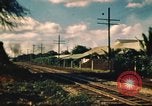
Oahu Railway and Land Co. (OR&L) Freight Trains, Oahu, Territory of Hawaii ca. 1942
Railroad scene on Oahu, Territory of Hawaii, at Kalihi-Kai just east of the Libby cannery and west of the old Oahu Prison. World War Two "blackout" headlights can be seen. The first locomotive is OR&L No. 39 with three gondolas. The second is OR&L No. 34 with boxcars and the third OR&L No. 32 with a train of boxcars and pineapple cars. Brakemen and Conductor shown riding on top of cars. (The OR&L did have three cabooses, but they were not popular with the crews.)
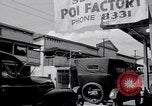
Streets with cars and pedestrians and a military truck in Honolulu, Hawaii, during World War II, 1942
Streets with cars and pedestrians and a military truck in Honolulu, Hawaii, early in World War 2. A model 'T' Ford car drives on the road. Sign over a shop idenfifies "Poi Factory." Pedestrians walk on sidewalks. A military ambulance on the road. Houses and buildings on roadside.
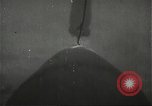
Scenes, from 1942 Japanese movie, about attack on Pearl Harbor in World War II
Scenes from the Japanese movie "The War at Sea From Hawaii to Malaya" made in 1942, during World War 2. These sequences purport to present the Pearl Harbor attack from the Japanese point of view. Movie depicts torpedo launched from midget submarine. Mountains in the background. The torpedo hits USS Arizona. Smoke arises from explosions. Submarine rises to the water surface. Burning battleships and naval installations in the background. Young Japanese officer looking at blazing battleship through binoculars. USS Arizona buckling amidships from torpedo explosion. Nighttime scene of Pearl Harbor after the Japanese attack. Interior of the submarine. Officer sending Morse code signal. Communication room aboard Japanese ship. Number of radioman in the room, conversing amongst themselves.
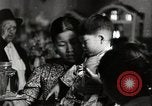
Japanese and Japanese American civilians at school, and working in offices and banks in Hawaii
School, office and bank in Hawaii in approximately 1941-1942 showing people of Japanese descent around the time that relocation centers for Japanese civilians were opened in the USA. A woman sits with a child. A woman shows cloth to other women. Man points to a diagram of building to other men. A Teacher in a school writes on a blackboard. Men in an office discuss. Man at bank counter gives a packet. A man and woman work in office. Exterior view of the Iolani Palace in Honolulu.
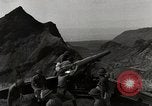
Japanese people worship in temples and salute the United States flag in Hawaii.
American soldiers practice with anti-aircraft artillery in Hawaii circa 1941-1942. People of Japanese descent visit a Shinto shrine and show respect to the United States flag. Flags of United States and Japan on display at entrance of a shrine or temple. Japanese civilians visit a Shinto shrine. They walk through a torii gate. Girls in kimono worship at the Shinto shrine. Priest bows in temple. A family of Japanese descent worships in shrine together. Japanese children carry the United States flag and hold hands over their hearts as the flag passes by during a civic ceremony. Woman serves punch at a social gathering. Men stand and talk. (World War II period, just before time of opening of internment camps and relocation centers for civilians iof Japanese descent).
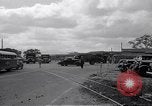
Traffic stops on a road as a commuter passenger train departs Pearl Harbor Naval Shipyard for Honolulu
Oahu Railway and Land Company locomotive No. 76 departs Pearl Harbor Naval Shipyard with commuter train for Honolulu. Passenger cars with freight doors had been previously converted to "can cars" by the OR&L and returned to passenger service after the Dec. 7th 1941 attack. Style of blackout headlight indicates 1942. Cars and trucks on road stop near a railway crossing. Men pass the crossing. Palm leaves near a sea shore. (World War II period).