


 Francais
 Deutsch
 Italiano
Refine Your Search
+"Hiroshima Japan" +1945 stock footage and images
- Showing 13 to 18 of 41 results more
more Hide
Hide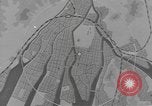
Destroyed buildings in an aftermath of atomic bomb explosion, Hiroshima, Japan
A map shows the epicenter of atomic bomb explosion in Hiroshima, Japan. Rubble covered area, one kilometer away from the epicenter. Concrete buildings completely destroyed and steel structures bent and distorted. (World War II period).
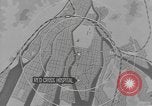
Destroyed Red Cross hospital in an aftermath of atomic bomb explosion, Hiroshima, Japan
A map shows the location of Red Cross hospital and its distance from the epicenter of atom bomb explosion in Hiroshima, Japan. Broken windows and rubble of the destroyed Red Cross hospital. Map shows location of Hiroshima Gas Company and the destroyed building. Former Imperial Headquarters building completely destroyed by atomic bomb explosion. Rubble covered area. (World War II period).
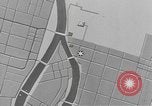
Undamaged Torri Gateway in an aftermath of atomic bomb explosion, Hiroshima, Japan
A map shows the location of Chamber of Commerce and industry building and Commerce and industrial exhibits building and their distance from the epicenter of atom bomb explosion in Hiroshima, Japan. Torri Gateway stands undamaged amidst bomb wreckage. Chamber of Commerce destroyed and industry building with destroyed parapets. Commerce and industry exhibits building with a destroyed dome shaped roof. A group of Japanese researchers of Nippon Iga Sha arrive in a truck and inspect the damaged buildings. (World War II period).
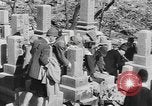
Damaged Ai-oi and Motoyasu Bridge in an aftermath of atomic bomb explosion, Hiroshima, Japan
A group of Japanese researchers of Nippon Iga Sha inspect the damaged buildings and make note of vital statistics after atomic bomb explosion in Hiroshima, Japan, soon after the end of World War 2. A map shows the location of Ai-Oi Bridge and Motoyasu Bridge. Damaged Ai-Oi Bridge with sidewalks blown apart. View of cap stones of Motoyasu Bridge jumped out of place in opposite direction as a result of explosion with blast wave centered at bridge. Wide sweeping camera pan view of destroyed, rubble covered area with low mountains behind.
Colonel Paul Tibbets, Pilot of the Enola Gay, describes his mission dropping the atomic bomb on Hiroshima Japan.
Crew members of the B-29 Enola Gay are interviewed about their atomic bombing mission over Hiroshima Japan by the United States Army Air Force, during World War II. In this interview at North Field, Tinian Island in Marianas Islands, Public Relations Officer, Major John F. Moynahan (not seen) interviews Colonel Paul W. Tibbets, Jr., Pilot of the Enola Gay Among things Colonel Tibbets mentions, he recounts that he took a steep turn to avoid radiation from the explosion. When he saw the explosion he was surprised about its intensity. The cloud from explosion covered the whole city of Hiroshima.

President Harry S. Truman reads prepared speech after dropping of atomic bomb on Hiroshima Japan during World War 2.
U.S. President Harry S. Truman delivers a speech following the dropping of the atomic bomb on Hiroshima, Japan, during World War II. U.S. President Harry S. Truman seated at desk in cabin of a ship. He reads prepared speech stating that a single American aircraft dropped one atomic bomb on Hiroshima and destroyed its usefulness to the enemy. He reminds listeners that the Japanese began the war from the air at Pearl Harbor. He speaks about the U.S. Armed Forces and the production of atomic bombs in the United States. The President states that the U.S. is now prepared to completely destroy every productive enterprise of Japan, by bombing Japanese docks, factories, and communications. Truman states that the U.S. shall completely destroy Japan's power to make war. President Truman notes that acceptance of the Ultimatum of July 26th issued at Potsdam, could have saved the Japanese people much suffering. But it was rejected by Japan's leaders. He states that the U.S. have spent more than two billion dollars on the greatest scientific gamble in history and have won. This is due to the greatest achievement of organized science in history.