


 Francais
 Deutsch
 Italiano
Refine Your Search
+"Honolulu Hawaii USA" +1941 stock footage and images
- Showing 1 to 6 of 24 results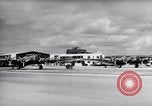
B-17 bombers of the U.S. 19th Bombardment Group arrive at Hickam Field after flying from San Francisco
Twenty one New B-17B bombers of the U.S. Army Air Corps 19th Bombardment Group are parked at Hickam Field in Honolulu, after flying 2400 miles from San Francisco, on May 31, 1941. Several views of the B-17s on the field. One simply displays the number 96 on its tail. A momentary glimpse of a Lockheed P-38 aircraft taxiing away, past parked B-17s. (World War II period).
Japanese air attack on Pearl Harbor blows up U.S. battleships and destroyers in Honolulu, Hawaii during World War II.
A 1943 film about the December 7, 1941 Japanese air attack on Pearl Harbor in Honolulu, Hawaii during World War II. Film blends dramatized scenes with actual historic footage from the event. Formations of Japanese bombers approach Pearl Harbor. USS Arizona (BB-39) bombed. U.S. personnel aboard USS Arizona as the ship is bombed. Smoke billows up from the explosion. U.S. sailors aboard USS Oklahoma (BB-37). USS Oklahoma and USS California (BB-44) are bombed by Japanese aircraft. U.S. troops fire machine guns at Japanese aircraft. USS Cassin (DD-372), USS Downes (DD-375), and USS Pennsylvania (BB-38) bombed in the dry dock of Pearl Harbor. Ships in flames. USS Oglala CM-4 sinks after being attacked. Air raid alarms sound in Honolulu. Japanese people in Honolulu as the Japanese air raid on Pearl Harbor continues. A Japanese man being interviewed after air raid says he cannot think that Japanese aircraft attacked Pearl Harbor.
U.S. soldiers fire guns at Japanese aircraft during Pearl Harbor Raid of World War II.
A film blending dramatized and actual footage about the Pearl Harbor Raid by Japanese bombers during World War II, on December 7, 1941. A formation of Japanese bombers in flight over Pearl Harbor in Honolulu, Hawaii. U.S. soldiers fire machine guns at Japanese aircraft. Guns of navy ships. A Japanese aircraft falls down in flames after being attacked. Bombing of U.S. ships in Pearl Harbor. Gun crews fire guns from the ships. Wounded sailors are evacuated by medics.
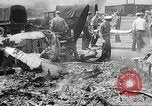
U.S. Navy officers and sailors attend prayer services for dead servicemen in Honolulu, Hawaii after the Pearl Harbor attack.
From a 1943 film blending dramatized scenes and actual archival footage about the conditions soon after the attack on Pearl Harbor in Honolulu, Hawaii in December 1941 by Japanese bombers during World War II. U.S. troops remove the dead bodies of soldiers who died in action. The U.S. flag on the grave of a U.S. soldier. Pictures and parents of U.S. service men of the Navy, the Marine Corps, the Army and Medical Corps who died during Pearl Harbor raid. The family of a U.S. Medical Corps Lieutenant who died during Pearl Harbor raid. Wife of the same lieutenant holds her baby born after the attack. Prayer services for the dead U.S. servicemen. Families of the dead servicemen lay wreaths and flowers around U.S. flags. U.S. Navy officers and sailors at shore attend the memorial services. Ceremony shows line of U.S. Navy sailors laying garlands around each U.S. flag bearing the names of U.S. servicemen who died during Pearl Harbor attack. An Army Chaplain and Navy officers attend the prayer services. Palm trees on the beach.
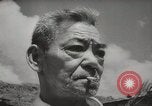
Japanese people in various occupations and financial institutions and schools in Honolulu, Hawaii.
Japanese people and Japanese Americans in Honolulu, Hawaii before the attack on Pearl Harbor during World War II. Japanese workers. Narrator discusses origins of Japanese workers and various trades and businesses in which they work. A street with houses on either sides and clothes hanging. Japanese people walking on the street. People walk in front of shops. Automobile traffic in the background. Japanese men pour from a container. People in a flower shop. Children outside their houses. Clothes drying on ropes. Japanese children outside a school. The 1941 telephone book in Japanese. A daily newspaper printed on machines. Stacked newspapers. Japanese workers work in a sugarcane field. They load cargo on a cart. Boards of the various Japanese financial institutions. People enter a bank. Women fishing and boats in a river. Japanese people work as shopkeepers. A Japanese doctor. Workers carry cargo on a trolley. A man sits in a dentist clinic. The dentist opens a door. Japanese nurses come out of a building. People on a street. Exterior of a Japanese hotel. Boards read Japanese people in various occupation.
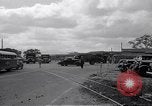
Traffic stops on a road as a commuter passenger train departs Pearl Harbor Naval Shipyard for Honolulu
Oahu Railway and Land Company locomotive No. 76 departs Pearl Harbor Naval Shipyard with commuter train for Honolulu. Passenger cars with freight doors had been previously converted to "can cars" by the OR&L and returned to passenger service after the Dec. 7th 1941 attack. Style of blackout headlight indicates 1942. Cars and trucks on road stop near a railway crossing. Men pass the crossing. Palm leaves near a sea shore. (World War II period).