


 Francais
 Deutsch
 Italiano
Refine Your Search
+"India" +1938 stock footage and images
- Showing 13 to 18 of 18 results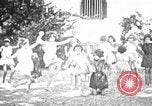
Children and teenagers play in a garden and girls learn to dance at a mission school in India.
Scenes of students at a foreign mission school in India in the 1930s. Children play in a garden and dance. Girls at mission school learn to dance and perform a group dance.
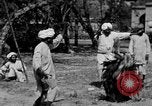
A man performs bird dance and girls learn to dance at a mission school in India.
Men dance in India. A Indian man performs a bird dance. Girls at mission school learn to dance. Men tie their turbans. A policeman talks to a man. People seated.
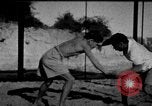
Recruits engage in wrestling exercise at an India army camp.
Young Indian recruits compete in a covered sand-filled wrestling pit at an army camp in India. Several pairs of recruits are seen wrestling. Trees in the background. A referee enters.

British woman and a boy climb onto back of elephant using a ladder in India.
British woman and a boy in India climb onto an elephant with a ladder. Elephant rider seated on the elephant. Indian man removes the ladder.

Japan's possible shortages of material for clothing in World War 2. Japanese domestic production of cotton, wool, and silk
Illustrated discussion of Japan's limitations in natural resources prior to World War II. Workers shown in textile mills which employed more than half of Japan's factory workers prior to the war, satisfying domestic and export needs. Analysis of the natural resources. Cotton thread is rolled on the spindles in the Textile mills in Japan. Textile mills produce fabric in Japan. Japanese women work in the textile mills. Bales of raw cotton imported from Japanese possessions in Korea and Formosa, and from the United States,India, Brazil and China. They are transported via horse carts and manually pushed on small rail carts to storage buildings for stockpiling. People cultivating some of the small amount of cotton grown in Japan. Horses and cattle used to pull plows in rice paddies. Pigs used as scavengers. Woolen fabric is produced from wool. Some of Japan's very few sheep being sheared for wool. Women working in fields of mulberry trees where silk worms flourish on their leaves. Views of the silk being spun onto spindles in a factory. Silk fabrics being stacked. Illustrated summary highlights Japanese domestic shortages of cotton, wool, and leather needed for clothing.

Kuda Bux thrills the onlookers at Rockefeller Center by walking barefoot through a pit of fire, New York, United States.
Kuda Bux walks barefoot through pit of fire, New York. Mohammedan from India, Kuda Bux thrills the onlookers at Rockefeller Center by walking barefoot through a pit of fire. Kuda Bux poses.