


 Francais
 Deutsch
 Italiano
Refine Your Search
+"India" +1944 stock footage and images
- Showing 61 to 66 of 73 results more
more Hide
Hide
Manufacture and deployment of Boeing B-29 Super Fortress bombers during World War II
Film beginning shows a line of Indian women carrying large wooden bowls on their heads as they walk past a line of Boeing B-29 Super Fortress bombers parked on an airfield ramp in India during World War 2. A B-29 bomber descends and lands on the airfield runway. Scene shifts to the Boeing factory at Wichita, Kansas, where most of the aircraft were manufactured during World War 2. (They were also made by Bell Aircraft Company in Atlanta (Marietta), Georgia, and by the Glenn L. Martin Company in Omaha, Nebraska.) In the Wichita plant, a large room filled with B-29s under construction is seen. A line of women uses hand power tools to finish aircraft parts. A large section of a B-29, including landing gear and tires, moves by overhead crane to be mated with another section in an assembly operation. Men manually push a landing gear with tires installed, along a floor. Workers walk along underneath an assembled B-29 as it is towed out of the factory. Tail view of a B-29 with engines running. View of man working on a B-29 tail rudder. Wing flaps being lowered in function check. Scene shifts, again, this time to China, where a line of B-29s is seen on a ramp at a secret base. A jeep drives under the left wing of a parked B-29, guarded by an armed Chinese sentry. Chinese laborers work with hand tools to make a ditch to drain water from the airfield ramp. Chinese workers unload and roll 55 gallon drums of gasoline for aircraft fueling. A Chinese name (Ding How!)painted on the fuselage of a B-29. Major General Claire Chennault shakes hands with some of a B-29s crew as they prepare to depart on a bombing mission. A Chinese soldier gives the crew a "thumbs up" sendoff. The B-29 takes off on the mission. a group of airmen sit atop a B-29 to watch the takeoffs. Camera focuses on another takeoff and then shows a B-29 aloft, glinting in sunlight and then cruising above clouds. Glimpse of B-29 flying over snow covered mountains (possibly in Japan).

British plane flies over Burmese jungles and carries injured soldiers fighting on Burma front during World War II.
Allied planes fly over Burmese jungles and maintain the supply lines for their forces fighting in the China Burma India Theater during World War II. A British Short Sunderland Flying Boat aircraft flies over jungles in Burma and lands in a lake. Natives on a raft load supplies in the plane from the raft. Another raft arrives with injured soldiers fighting on Burmese front. The wounded taken for treatment in the airplane.
Lt. Gen. Joe Stillwell lands at SEAC airfield in Ceylon, where he meets BG Frank Merrill, during World War II
A U.S. Army Air Forces C-47 aircraft approaches a South East Asia Command airfield in Ceylon, in World War 2. As it taxis in after landing, the words: "Uncle Joe's Chariot" can be seen painted below the cockpit window, along with the China-Burma-India Command Insignia. U.S. Army Lieutenant General Joseph Warren Stilwell, AKA Joe (Vinegar) Stilwell, steps from the airplane's rear door carrying a campaign hat in his left hand. He shakes hands with Brigadier General Frank Dow Merrill (of Merrill's Marauders) and other officers. Stilwell (now wearing his campaign hat) converses with Merrill. Together, they walk toward a waiting staff car.
Earth moving equipment including cranes, steam rollers, tractors, steam shovels and bulldozers in the Pacific Theater (WW2)
Earth moving equipment in the Pacific Theater (World War II). Earth moving equipment at a construction site. A sign reads : 'Sidewalk Superintendents Club'. Cranes, steam rollers, tractors, steam shovels at work. A jungle road and a bridge. Soldiers fire artillery, bomb target areas and battleships attack. Display of man power, fire power, air power and sea power during the war. Engineers lay a steel mesh. An aircraft lands on an airstrip as a bulldozer clears the airstrip. In China, Chinese people work manually. In India, elephants carry wooden logs and load them into a truck. In North Africa, camels carry load. In America, machines are used. A bulldozer levels land.
U.S. Army engineer Colonel Lewis A. Pick and U.S. General William Edward Raab arrive and view Ledo Road during World War II.
Ledo Road in Burma is viewed by U.S. Army Generals during World War II. U.S. Army engineer Colonel Lewis A. Pick and Commanding General Services of Supply U.S. China-Burma-India Theater of Operations William Edward Raab Covell arrive in an army transport plane. They are greeted by U.S. Army engineer Colonel Joseph Green and Lieutenant Colonel Harold A Whittier. Generals in jeep being driven on Ledo Road. Generals view Ledo Road.
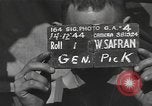
Arrivals of U.S. Army Generals Colonel Lewis A. Pick and William Edward Raab Covell at Myitkyina Airfield during World War II.
Arrivals of U.S. Army officials at Myitkyina Airfield, Burma during World War II. C-47s taxi on Myitkyina Airfield. U.S. Army engineer Colonel Lewis A. Pick and Commanding General Services of Supply U.S. China-Burma-India Theater of Operations William Edward Raab Covell arrive in army transport plane. Generals are greeted by Lieutenant Colonel Hirschfield, Myitkyina Base Service of Supply CO (Commanding Officer). General Covell promotes Lieutenant Colonel Hirschfield to full Colonel.