


 Francais
 Deutsch
 Italiano
Refine Your Search
+"India" +1945 stock footage and images
- Showing 25 to 30 of 40 results more
more Hide
Hide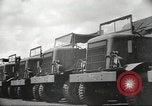
The problem of getting U.S. supplies from Calcutta to Santahar through rail road lines during World War II.
A film based on problems of getting U.S. supplies to China from Calcutta, India during World War II. U.S. trucks and jeeps parked at U.S. 28th Air Depot in Calcutta. Indian laborers unload supply crates from the trucks. The supply crates are transported to a dock. A barge at a dock in the Hooghly River. The laborers unload crates from a truck onto a rail road car. A train heads for Santahar. Native laborers unload supplies from the train in Santahar. Heavy trailers on flat rail road cars. The laborers carry gasoline drums on poles. They work around railroad tank cars. The laborers load boxcars with supplies.

UN Charter signed in San Francisco Conference; President Harry S. Truman addressing General Assembly; Franklin Roosevelt speech about peace
Delegates arrive in San Francisco for United Nations Conference for World Organization in San Francisco, California. U.S. President Truman arrives by airplane at the conference and is met by representatives from U.S. delegation including Stettinius. Delegates from other countries are also present and greet the President including Jan Smuts of South Africa and William Lloyd Mackenzie King of Canada. Views of presidential motorcade traveling through streets of San Francisco in a parade-like environment, with crowds lining the sidewalks and cheering. Delegates sign the United Nations Charter during the conference. First to sign is Dr. Wellington Koo from China, signing with a traditional Chinese brush. Also shown signing is Gromyko from the Soviet Union, Lord Halifax from Great Britain, and the delegation from France led by acting delegation chairman Joseph Paul-Boncour. Next is Edward Stettinius and Senator Tom Connally, Senator Arthur Vandenberg, Commander Harold Stassen, from the United States. U.S. President Harry S. Truman addresses the general assembly. Representatives of different nations like Lord Halifax of Great Britain, Mackenzie King of Canada, Jan Christian Smuts of South Africa, Andrei Gromyko of Russia and Pandit Jawahar Lal Nehru of India can be seen. Flashback to President Franklin D Roosevelt, shortly before his death, addressing Congress about the coming San Francisco Conference. Roosevelt speaks, expressing his hope that Congress and the American People would "accept the results of this conference as the beginning of a permanent structure of peace, upon which we can begin to build, under God, that better world in which our children and grandchildren -- yours and mine - children and grandchildren of the whole world -- must live and can live."
Delegates of 50 nations participate at the United Nations Conference in San Francisco, California.
The United Nations Conference opens in San Francisco, California near the end of World War 2. Flags of the participating nations. U.S. President Truman speaks to the UN delegates from Washington DC. Cars outside the venue of the conference. Personage at the conference include South Arabian delegates, North African Prime Minister and Field Marshal Jan Christian Smuts, China's Foreign Minister TV Soong, British Foreign Secretary Anthony Eden, U.S. Secretary of State Stettinius, Andrei Gromyko, Jan Masaryk, Lord Halifax, Molotov and delegates from India, Mexico, Lebanon, Greece, Chezoslovakia, Egypt and Netherlands. Photographers take pictures. Typists work at typewriters in Associated Press Headquarters room. Telephone operators at switchboards. China's Foreign Minister TV Soong, Soviet Russian Foreign Minister Vyacheslav Molotov and British Foreign Secretary Anthony Eden each address the conference.
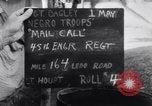
African American soldiers of 45th Engineer Regiment exchange photos and get haircuts at Ledo Road near Tingkawk Burma (WW2)
African American soldiers of 45th Engineer Regiment share pinup photos of Lena Horne outside a tent at mile marker 164, Ledo Road, near Tingkawk Burma during World War II. A sign on the tent reads, "The Yard Bards." One soldier kisses the pinup photo. Another African American soldier gets a haircut from an African American barber while reading the "India-Burma-Theater-Roundup" newspaper. Headline on newspaper reads, "Worst Week of War for Japanese as Nazi Western Front Cities Burn."
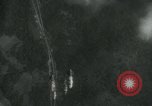
Bombing by the 7th Bomber Group (H) Squadron and the 4934 Bomber Group of the U.S. Army Air Force in Burma during World War II.
U.S. Army Air Force attacks enemy positions in China-Burma-India Theater during World War II. The 7th Bomber Group (H) Squadron and the 4934 Bomber Group of the U.S. Army Air Force target railroad and road bridges to drop bombs. Four bombs dropped simultaneously on a bridge. Bomb destroys with an explosion.
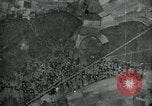
7th Bomber Group (H) Squadron and 4934 Bombardment Squadron of U.S. Army Air Force over Moulmein in Burma, WWII
U.S. Army Air Force attack enemy positions of Burma in China-Burma-India Theater during World War II. The 7th Bomber Group (H) Squadron and the 4934 Bombardment Squadron of the U.S. Army Air Force during a mission on railroad bridges in Moulmein in Burma. Smoke rising from bombed places in farms and railroads.