


 Francais
 Deutsch
 Italiano
Refine Your Search
+"Iwo Jima" +1945 stock footage and images
- Showing 7 to 12 of 406 results more
more Hide
Hide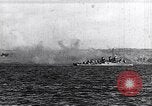
U.S. Coast Guard combat cameramen capture beachhead activities in Iwo Jima.
1945: Combat cameramen film the U.S. forces landing at the Iwo Jima beachhead. Marines and Coast Guard landing parties under attack, explosions at sea. A Coast Guard cutter. Barrage balloons in the sky. Landing Crafts move towards the shore. Explosions in the water. The U.S. Coast Guard landing party on the shore. Beachhead activities as the U.S. Marines arrive. Landing Craft reach the shore. Troops climb out, unload equipment and run inland. A crane at work. Troops crouch in the Landing Craft. They treat a wounded comrade. (World War II period).
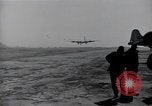
B-29 bombers of United States Army Air Force land at a base on island Iwo Jima, during World War II.
United States Army Air Force at their base on the island of Iwo Jima, during World War II. B-29 bombers of the U.S. Air Force land on landing strip one after the other. Airmen at the runway. Airman marshaling a B-29. A pilot looks out form cockpit window of one of the B-29. The aircraft with painted nose art of an attractive, semi-nude woman and slogan 'A-Broad With Eleven Yanks.' (B-29 number 42-24698. Assigned to 499th BG, 877th BS. Shot down over Kyushu, Japan July 11, 1945. 1 crewman killed, 10 survived and rescued. Missing Air Crew Report (MACR) 14344.)
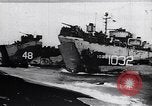
U.S. Coast Guard combat cameramen capture CG and Navy Landing Craft at the Iwo Jima beachhead.
1945: United States Coast Guard and Navy Landing Ships at the Iwo Jima beachhead. Soldiers on the beach. Military vehicles and tanks unloaded from the crafts. Coast Guard and Navy Landing Craft smashed by the hidden guns of Mount Suribachi. Waves lash against the shattered boats. Soldiers salvage parts. Soldiers and military vehicles on the beach. Half-tracks and tanks. Soldiers carry supplies. Landing Craft off shore. (World War II period).
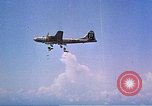
U.S. defeats Japan in Pacific through air power in World War II; multiple views of American combat aircraft in action in World War 2
From "The Last Bomb": The defeat of Japan through American airpower in World War 2. Mix of actual combat footage and a small amount of vintage, dramatized, pilot in cockpit footage. A single B-29 from the 39th Bomb Group (stationed at North Field Guam) drops clusters of incendiary and fragmentation bombs over Japan. Bombs away view of large number of bombs falling toward Japan. A formation of B-29s from the 498th Bomb Group, Isley Field, Saipan, in flight during a daytime bombing mission over Japan. Explosions and smoke rise from targets in Japan, including two Japanese aircraft plants and an airdrome as part of U.S. tactical plan 574. Color, low aerial view of massive bomb damage over Tokyo following U.S. air attacks of March 1945. Escorting P-51s from Iwo Jima engage defending Japanese fighter aircraft in dogfights. Aerial gun camera footage of Japanese airplanes being hit, exploding, bursting into flames, and falling from sky to crash. Later, P-51s conduct strafing attacks against Japanese ground targets, including: lines of communication; railroads; marshaling yards; factories; airfields; ships; and harbors. Color gun camera footage shows these strafing attacks. P-51s returning to land at Iwo Jima and performing celebratory rolls over the field. Crippled B-29s making emergency landings on Iwo Jima. A B-29 from 500th Bomb Group with an engine shutdown. A B-29 from the 29th Bomb Group. Bad weather over runway at Iwo Jima forces a P-51 pilot to bail out over the field. A B-29 from the 6th Bomb Group ditches in water near beach on Iwo Jima. A B-29 crashes and bursts into flames during landing at Iwo Jima (all crew escapes.) Firefighters douse the flames with foam. Formation of B-29s from 39th Bomb Group returning to Guam after bombing mission over Japan. A B-29 crashing on landing and bursting into flames. Sole surviving crew member being carried on stretcher, as firemen and rescue teams work at scene. Formations of B-29s from 498th Bomb Group and 9th Bomb Group, in flight. Good color view from B-29 of the atomic bombing of Nagasaki on August 9, 1945, which brought about the capitulation of Japan and end of World War 2. Large mushroom cloud rising into the air following atomic bomb explosion at Nagasaki.
American and Japanese aircraft attack each others airfields in World War II. B-24 and B-29 heavy bombers strike Japanese targets
Formation of U.S Army Air Forces B-24 Liberator bombers, flying over Iwo Jima during World War 2. View from one of the aircraft of Japanese air field below. Nightime view of American anti-aircraft fire directed at Japanese bombers attacking Saipan. Explosions and fire silhouetting American aircraft on Saipan's Isely field during Japanese air raid. Burning U.S. B-29 bombers. Scene changes to Japanese aircraft destroyed on the ground at the air base on Iwo Jima. Bodies of dead Japanese airmen on the air field. Later view of P-51Ds from the 21st Fighter Group at Central Field on Iwo Jima, in the summer of 1945,after the field had been substantially upgraded to allow B-29 operations. A B-29 is seen displaying an "F" tail code. A formation of B-24 Liberator bombers in flight on a bombing raid. Waist gunner inside a B-24 firing at attacking Japanese fighter aircraft. A Japanese fighter going down in flames at night. View from a B-24 of another, off its left wing, flying in formation with its number 3 engine shutdown and propeller feathered. View from B-24 bombing oil facilities at Balikpapan, Borneo. Bombs bursting on the ground. Glimpse of B-24s in formation. Aerial views of bomb bursts carpeting target areas below. Aerial view of B-24s flying above smoke rising rapidly from bombs bursting below. View of bomb craters left below (probably from later reconnaissance flight).
Japanese 1931 aggression in Manchuria condemned by the League of Nations. Continued Japanese aggression in the Pacific, through World War II
Japanese international activities during 1931-1945. Opening scene shows Japanese troops embarking on ships bound for an invasion of Manchuria, in 1931. Officers walking on the dock, amongst the departing troops. Scenes of explosions and destruction. Views of Shanghai during Japanese attacks in 1937. Destroyed buildings. Civilian dead lying in the streets. Japanese soldiers racing along a street in a three wheeled motorcycle vehicle. Change of scene shows Japanese diplomat Yosuke Matsuoka addressing a League of Nations meeting in 1933, after that body adopted a report blaming Japan for events in Manchuria. He objects to that action and then leads his delegation in walking out of the meeting. View of Japanese delegates in top hats and bowler hats exiting the building. Scene shifts to Japanese forces firing artillery and machine guns in Manchuria.They wave large Japanese flag victoriously after a battle. The next scene shows Italian forces occupying Ethiopia and raising the flag of the Kingdom of Italy, as Italian troops salute, presenting arms of rifles with fixed bayonets. Axis leaders celebrate the 1940 Tripartite Pact between German, Italy and Japan. The festivities take place in a hall displaying the three nation's flags on the walls. A large number of persons attend including Japan's Prime Minister, General Hideki Tojo, seen with two celebrants. Scene reverts to China with Chinese civilian people trying to escape from invading Japanese forces. The refugees carry their belongings as they flee. Occasional shell burst is seen among advancing Japanese troops as Chinese soldiers put up resistance. Chinese soldiers firing artillery. In the U.S., Japanese envoys Kichisaburō Nomura and Saburō Kurusu are seen walking together into a building and entering a room inside. Next, are views of the Japanese attack on Pearl Harbor, with huge plumes of smoke obscuring the bombed U.S. battleships in the harbor. U.S. battleships in line formation in the Pacific during World War 2. Aerial view of U.S. warships moving in parallel. British ships augmenting the U.S. warships. Naval guns firing. U.S. amphibious assaults on Japanese held islands in the Pacific. Prisoners of the Japanese who suffered in the Philippines. General Douglas MacArthur mingling with former prisoners and internees upon his return to Manila in 1944. Aerial views of Iwo Jima. Naval bombardment and amphibious assault of Iwo Jima. Numerous fallen Japanese soldiers. The iconic American flag raising by U.S. Marines on Iwo Jima. View of Lieutenant General Simon Bolivar Buckner Jr. during the campaign on Okinawa, where he was killed in action. A Soldier being carried on a stretcher. Another throwing a hand grenade. U.S. soldier firing at a Japanese defender who falls out of his bunker. Large numbers of Japanese prisoners of war assembled in a field. Japanese Kamikaze attacking U.S. warships off Okinawa. The sky filled with antiaircraft flak clouds. View of 40mm Bofors antiaircraft cannon firing and a Japanese plane falling and exploding on impact in the ocean.