


 Francais
 Deutsch
 Italiano
Refine Your Search
+"Iwo Jima" +1945 stock footage and images
- Showing 397 to 402 of 406 results more
more Hide
Hide
A pack being transferred from U.S. Navy USS Irwin to U.S. Navy USS Cecil in the Pacific Ocean during WWII.
U.S. Navy attack transport USS Cecil underway in the Pacific Ocean towards Iwo Jima, Japan during World War II. U.S. Navy destroyer USS Irwin comes along side the attack transport USS Cecil. A small pack being transferred from the destroyer to USS Cecil. The pack moves along a line connecting the two ships. Men on the deck of the destroyer. Ships in the background. A turret at the bow of the destroyer.
Japanese Kamikaze airplanes attack USS Saratoga (Feb 21) and USS Bunker Hill (May 11) in the Pacific Ocean.
From German newsreel Welt Im Film: Shows Kamikaze airplanes in operation over the Pacific Ocean near Japan during World War II. Kamikaze airplanes are shot down and crash into the ocean. Aircraft carrier USS Saratoga (CV-3) in the Pacific Ocean near Iwo Jima. A Japanese kamikaze suicide airplane hits USS Saratoga. Smoke rises from the ship. Crewmen try to extinguish the fire with water hoses. USS Bunker Hill (CV-17) underway in the Pacific Ocean on May 11. View from Bunker Hill as a Kamikaze airplane hits USS Bunker Hill. The aircraft carrier bursts into flames. Crewmen fight fire on USS Bunker Hill. Smoke rises from the aircraft carriers after being hit by Kamikaze airplanes. Crewmen at work on the carrier ships with large hose pipes. U.S. Navy crew cling to floating debris and swim in water after the attacks toward rescue ships. They are pulled aboard a ship.
Naval units march in honor of USN (United States Navy) Fleet Admiral Chester William Nimitz in Washington DC, United States.
A parade in Washington DC, United States in honor of USN (United States Navy) Fleet Admiral Chester William Nimitz. A sign reads 'Welcome Nimitz'. The motorcade of Admiral Nimitz moves along a street followed by a parade of naval units. Navy personnel and Marines march along the street. Spectators cheer. Army jeeps with signs reading 'Iwo Jima' and 'Tarawa' move along the street. Women Marines parade. U.S. Coast Guard patrol dogs march with their handlers. A formation of naval aircraft fly overhead. A replica of USS Missouri (BB-63) is used as a review stand for Admiral Nimitz at the Washington Monument. Admiral Nimitz reviews the marching units.
Bullets and tracers firing during a night attack; a smiling man on board the USS Saratoga (WW2)
The USS Saratoga (CV-3) sailing in the Pacific Ocean during World War II. Narration by Dr. Edgar Maurice Cortright, United States Navy Lieutenant on board the USS Saratoga at the time of its bombing by Kamikaze planes during the Battle of Iwo Jima. Bullets firing from a night attack. The narrator mentions a Kamikaze plane has been struck down by the USS Saratoga but the view is too obscure. A smiling gentleman. Dark smoke rises from the USS Saratoga after a Kamikaze attack. Wild sound narration by Mr. Cortight. He mentions a story about the captain refusing to recognize that the17 to 25 planes picked up on radar were Japanese until they were hit by the Kamikaze attack.
A tanker fuels the USS Saratoga on day after a Japanese kamikaze aircraft attack (WW2)
The fueling of USS Saratoga (CV-3) from a tanker a day after a Kamikaze attack on the aircraft carrier. Dr. Edgar Maurice Cortright, United States Navy Lieutenant, narrates his experience on board the USS Saratoga at the time of its bombing by Kamikaze planes during the Battle of Iwo Jima in World War II. A sack is passed to the tanker support using a breeches buoy. The fuel lines are hauled across the USS Saratoga and the tanker ship. Men working on the decks of the USS Saratoga and tanker. The tanker fuels a destroyer at the same time. One of the three tankers accompanying the USS Saratoga is the USS Bismarck Sea (CVE- 95). Crewmen from the USS Saratoga watch as the tanker fuels both the aircraft carrier and the destroyer. Crewmen and tanks on deck as the destroyer bounces up and down. Mail is being transferred from the destroyer to the aircraft carrier. Dr. Cortright talks about the importance of receiving mail from loved ones and the work of volunteers who deliver mail to them.
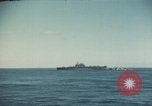
USS Bismarck Sea and USS Saratoga sailing in the Pacific Ocean (WW2)
The USS Bismarck Sea (CVE- 95) sailing in the Pacific Ocean during World War 2. Dr. Edgar Maurice Cortright, United States Navy Lieutenant, narrates his experience on board the USS Saratoga (CV-3) at the time of its bombing by Kamikaze planes during the Battle of Iwo Jima in World War II. Crewmen sitting on top of a damaged Grumman F6F Hellcat fighter plane on the USS Saratoga a day after the Japanese Kamikaze attack. Wreckage of a Grumman F6F Hellcat fighter on deck. A Jeep drives past the wreckage. Crewmen clearing debris on the flight deck. Fighter sitting on the starboard side by the flight deck crane. A gaping hole on the flight deck that went down five decks. Debris on the flight deck. Sailors removing the wreckage of destroyed fighters. They use a rope to pull the destroyed aircraft to the side.