


 Francais
 Deutsch
 Italiano
Refine Your Search
+"Japan" +1916 stock footage and images
- Showing 1 to 4 of 4 results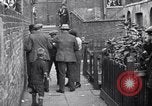
Events that initiated World War I and animated map showing involvement of nations from 1914 through 1918
Opening scene shows a man being roughed up by a group of men in an alleyway with pushing and shoving as they fight. A slate comments (in French) that when nations are bellicose, an assassination can cause a world war. Next, a slate shows picture of the world and states (in English) "One murder may start a world war." Another slate (in French) states that In 1914, while Europe's armies and fleets were more powerful than they had ever been, the nephew of the Emperor of Austria (Archduke Ferdinand) was assassinated. A front page is shown of newspaper, "Journal De Geneve" carrying the story. Next scene is a view of the city of Sarajevo. The ancient Emperor's Mosque dominates the scene. A slate appears asking Where is Sarajevo? It is followed by a map of Europe in 1914, which zooms in on Austria and Serbia and identifies and labels Sarajevo,in Austria, close to the Serbian border. Slates (in French) says Austria accused Serbia of War and other nations enter the melee. Animated World map shows the nations getting involved, starting with the German Empire in 1914, including its African colonies, and then successively showing Russia, France, Belgium,Great Britain, Japan, and the Ottoman Empire. Map advances to 1915, showing the Italian empire, Bulgaria,and Central Arabia. In 1916 it adds Portugal, Roumania. Next, the U.S.A. is added in, 1917, along with Central and South America, Greece, Siam, and China. Finally, the slate shows the war ending in 1918. Slate shows Armistice Day, the 11th hour of the 11th day of the 11th Month (November), with time shown on hands of Big Ben in London.
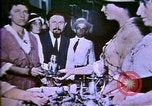
U.S. President Wilson gets reelected as Americans prepare for war during World War I
Events during World War 1. Sketches : In November 1916 newspaper shows Wilson reelected as a president. Cartoon depict the people of America supporting the Wilson's policy of peace. Several sketches of Thomas Woodrow Wilson after winning the election. Second inaugural of President Wilson at the United States capitol in Washington D.C. The German High Command in Berlin. Posters show the hardships of German citizens due to Allied blockade. Germany announces unrestrained submarine warfare against all vessels. Posters of the Germans destroying the American ships. The New York times reports German demarche to Japan and Mexico for support to Germany. Sketch depicts Germany Secretary of foreign affairs, Arthur Zimmermann seeks these alliances. Theodore Roosevelt addresses people. Several sketches of Woodrow Wilson. On April 2nd 1917 President Woodrow Wilson obtains declaration of war against Germany, from congress. American enters the conflict. U.S. Soldiers carry weapons in the battle field. sketches of several American officials. People work in factories to produce war materiel. A person with posters promoting Liberty bonds. A blindfolded person draws numbers from a bowl for civilian conscription. Citizens entering military service. People in a railroad train and others stand outside. People holding baggage walk in a group. A doctor checks the mouth of a recruit. Army recruit getting a haircut. Soldier stands holding guns. Soldiers practice firing artillery. Soldiers march. American recruits practice on wooden guns. Several sketches of the allied armies.
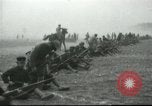
Officers and civilians watch as Japanese troops maneuver in Japan during World War I.
Japanese soldiers maneuver in Japan during World War I. Troops seated on the ground. They hold and fire rifles. Officers watch the troops. An officer discusses with other officer. Soldiers fire artillery. Smoke rises from the firing. Trees in the background. Civilians seated behind a roped off area watch the maneuvers.
Austrian cavalry troops seen, and British infantry troops advance in an open battlefield during World War I
The First World War. Austrian cavalry troops, horse carriages and infantry troops in World War 1. Charles I of Austria leaning over from a horse and talking to royal family members in a carriage. Very brief shot of Japanese funeral forJapanese Navy Admiral Heihachiro Togo, Tokyo, Japan. German Army troops in formation marching to battle in 1914. Newspaper headlines showing outbreak of World War 1. British Army soldiers in trenches fix bayonets on rifles and advance on a battlefield, taking refuge in a bomb crater. Gas shells and or smoke explode nearby as they advance on the battlefield. Explosions occur and smoke rises in the background. Medics with stretchers stop to assist some injured soldiers.