


 Francais
 Deutsch
 Italiano
Refine Your Search
+"Japan" +1937 stock footage and images
- Showing 1 to 6 of 44 results more
more Hide
Hide
Views of Japan and its militarism from 1937 through 1943 . Construction of B-29 bombers in the United States
Volcanic eruption and creation of island of Japan. Glimpse of map of Japan. Gardens and rivers. Two men demonstrate samurai sword techniques. Japanese soldiers advance through smoke carrying rising sun flag. Chinese suffering under Japanese military occupation. Two executed with rifles. Japanese soldiers waving weapons and red ball flags. A DC-3 aircraft flying over a Japanese Pagoda. Vies of Old Japan. Farmers at work. One manually turning a water pump with his feet. A man using a pole to propel a boat. Modern methods adopted in Japan for terraced farming. Japanese building railroads. Japanese modern locomotive on South Manchurian Railway. in 1934. A Japanese twin engine bomber taking off. The Japanese ocean liner, Asama Maru, in the 1930s. Glimpse of numerous ships in Tokyo harbor. Western style architecture in modern Tokyo buildings. Neon lights on the Grand Palace Hotel and other establishments in Tokyo. Industrial smoke stacks. Women at work in a silk factory. Finished product stamped "Made in Japan."Steel ingots being made in a Japanese steel mill using scrap iron imported from the U.S.A. Chinese victims of 2nd Sino-Japanese War. Japanese troops on parade. Dead American Marines on shore of Tarawa Atoll in the Pacific in World War 2, killed in battle. Japanese high ranking officers reviewing troops on parade. Japanese warships underway. Troops parading beneath the Imperial Palace in Tokyo. American B-25 bombers on flight deck of the USS Hornet, headed to bomb Tokyo.A crew of Doolittle's Raiders standing by their plane. B-25 taking off from the Hornet. Formation of B-25s in flight. View from bomber of smoke rising from bombing of Tokyo below. Brigadier General Jimmie Doolittle pledging to repeat bombing of Tokyo. Supply train entering a Boeing Company defense plant. United States war production workers being scrutinized as they enter the facility and punching in at a time clock. Poster in the plant picturing a B-29 bomber aircraft on a message in German describing it as an instrument for a "Destruction Battle against the Luftwaffe." Bold letters, above, in English read: "They're Promised-Let's Deliver 'em!" And, below, the words: "B-29, Super Bombers." Slabs of aluminum sheets fill a factory room. Overhead traveling cranes move them. Workers in airplane manufacturing and assembly plant use heat and brakes to shape the aluminum sheets. Multiple views of the aluminum being machined and stamped to specifications. Wings being fabricated. Relatively unskilled labor using jigs to perform the work. Woman war worker operating an overhead crane moving a wing in the plant. Views of plane parts moving across the ceiling via cranes. Women workers driving rivets into wings. Men and women employees working inside fuel fuel compartments of wings. A floor full of engine nacelles. A floor full of 2200 HP radial engines. A skeleton nose section being fabricated. Midsections and bomb bays being assembled. Workers crawling through the airframe during aircraft assembly. A woman working on a connecting tunnel. Sub-assemblies made by contractors arriving at the plant. More views of Boeing employees including young, old, men, and women, at work in the plant.

Japanese bombers bomb a Chinese cities, including Shanghai, and infantry advance during Second Sino-Japanese War (WW2)
A 1945 film titled 'The Enemy Japan Dream of Empire' details Japanese conquests starting with China during Second Sino-Japanese War in 1937. United States Ambassador to Japan Joseph C. Grew speaks about the ruthless nature of Japanese. Wall maps in the background. Aerial formation of Japanese bombers over a Chinese city, possibly Shanghai, during Second Sino-Japanese War (World War II), 1937. Smoke billows up from bomb bursts. Dead bodies of civilians on bombed streets. View of damaged Palace Hotel in Shanghai. Japanese infantry and horse-drawn munitions carts advance into the city. Car pulls up in front of building in Japan and a guard opens door. Japanese military leaders exit car. View of many tall banners with Japanese rising sun symbol hanging from ceiling. Japanese statesmen and army Generals confer in Japan.

Snippets from various Japanese movies circa 1937
Snippets from various Japanese movies circa 1937. View of a Japanese coastal town . A Japanese man in western attire talks to his wife at home. The wife, wearing a kimono, looks away from her husband sadly. Cars driving on hilly road. A Japanese woman chatting as she sits between two men in the back of a convertible car in the countryside. A woman talks to a man smoking on a dock. She walks towards a docked cargo ship. Men and children fishing in the countryside. Cars and trains are seen moving on a bridge in the background. A man and a child walk past boats on the beach. The child avoids the waves as they walk.
U.S. Lieutenant General Daniel Sultan explains Japanese aggression in China and need for troops in India and Burma during WW2
World War II film about the China, Burma, India (CBI) Theater of Operations. A soldier is seen filling out a form seeking information about him and inviting him to write in questions about anything he hadn't learned through normal information channels. Scene shifts to Information and Education Department of the Burma-India Command, where it is being processed by a soldier. Lieutenant General Dan I. Sultan, commander of Burma-India Theater, is seen next, seated at a desk, with wall map of the region behind him. He is appearing in an information film intended to inform troops under his command. He notes that more than half the troops who filled out the information form, asked why American troops were stationed in India and Burma. He refers to the recent recall of General Stillwell and the splitting of CBI into two theaters (China and India/Burma). He states that the purpose is a path toward Japan. An animated map shows China (that narrator notes has been fighting Japan since 1937). Animation shows Japan walling off China from the outside world, by seizing her ports, and then concentrating its grip on the Eastern part of the country. Without access by sea, the allies had only one option to assist China in the fight against Japan. That was to open the Burma Road. Film shifts to scenes of Japanese bombing of Shanghai and Chinese civilians abandoning the city in 1937 during Second Sino-Japanese War. Wounded and injured Chinese fighting fires while tending casualties in an open area. Glimpse of Chinese soldiers near one of their few large artillery pieces. A gun crew manning one of her few antiaircraft guns. Chinese jam road in trek to the unoccupied provinces of the country. Chinese carrying casualties on stretchers, making do without ambulances. Chinese coping in the face of all kinds of shortages. In contrast, well supplied Japanese troops are shown in formation. Japanese troops, military vehicles and equipment are seen. Japanese firing machine guns and heavy artillery against Chinese positions. Japanese armor and long lines of troops engaged against the Chinese, who continue to resist in spite of shortages and hardship. Chinese soldiers without shoes, marching in a column.
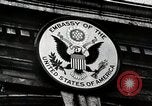
Beginnings of the Second Sino-Japanese war
Sign over American Embassy in China. Colonel William Mayer, former military attache in that embassy relates events precipitating Second Sino-Japanese war. Scenes of the Marco Polo bridge near Peking, on night of July 7, 1937, as Japanese artillery bombards the area. Animated map shows movement of Japanese forces out of Manchuria to occupy Peiping and Tientsin. Victorious Japanese troops stand atop a building, raising their flags and shouting cries of victory. Japanese army officers sit around a table smiling and contended and others walk in a group. Chinese artillery crews are seen retaliating as they fire field pieces at Japanese positions in Shanghai. Shells explode in background, and Chinese infantry advance through damaged buildings and rubble. Animated map shows Shanghai and other cities, and film transitions to view of the bustling city of Shanghai on the Yangtze River. In the seaport, large ocean liners and freighters, as well as tug boats and Junks, are seen. What looks like a Japanese Tachikawa Ki.54 Type 1 transport plane takes off over a Chinese pagoda. Double-decker buses travel through the streets. Rickshaws are also seen. Map outlines the foreign residential areas of the French Concession and the International Settlement. American, British and Japanese flags are shown in the International Settlement. Detachments of troops from Japan, Britain, France, and United States Marines are seen. A U.S. Marine is posted as a sentry at the Shanghai Power Company. Coolies carry heavy bucket on a long pole. British, French and Japanese troops also performed sentry duties. Japanese troops and armored cars are seen. A scuffle breaks out in August, 1937, and Japanese soldiers start moving in trucks, take up firing positions, and begin firing guns from their armored cars. Map shows Chinese counterattack pushing the Japanese contingent toward the Khangpoo River. Next it shows Japanese warships and reinforcements in the Yangtze River and their advance toward Woosung and Shanghai. Views of Japanese warships bombarding the shore and large explosions from their striking shells. Beachhead is shown South of Shanghai, where two divisions of Japanese infantry are seen arriving in landing craft. They advance across the fields toward Shanghai. Map shows Chinese withdrawals to West and South, toward Nanking and Hangchow. Chinese medics along with infantry march in retreat. Japanese pilots are seen being briefed. Next, Japanese Mitsubishi G3M bombers are seen in flight, and bombardiers and other crew in them. Bombs falling on the city. Civilians running for cover as bombs explode. Aichi D3A1 aircraft dropping bombs. The Shanghai waterfront being bombed and civilians running.
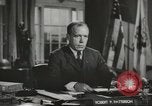
American Undersecretary of War speaks to difficulties facing Allies in confronting Germany and Japan in World War II
Undersecretary of War, Robert Porter Patterson, Sr. speaks about a report from the General staff outlining the needs for combating Germany and Japan in World War 2. He cites Operation Husky, the invasion of Sicily, as an example of what will be needed. He continues to narrate in the background as an animated map appears showing the buildup of supplies and Allied forces in North Africa; Allied air forces flying 60 thousand sorties over Sicily and, the direct amphibious assault using 3,200 vessels. Map also depicts opposing forces of 12 (“unwilling”) Italian Divisions and 3-1/2 German Divisions. View of Allied troops carrying some of their 31 thousand casualties on stretchers from field ambulances. Allied medics attending to the wounded. Some are seen lying on stretchers in a row on the ground near a wall. Interior of a field hospital where surgeons and other medical personnel treat the wounded. Animated map shifts to Europe with Germany at its center, showing , in contrast to Sicily that was only an “outpost,”, the heavily fortified perimeter of Axis controlled areas; the axis industrial might; and the disposition of 300 German Divisions (mostly on the Eastern front) defending the region. Next, the map illustrates Japan’s defended regions in the Pacific Image returns to Undersecretary Patterson i n his office, speaking of the Allied offensives planned for next year (1944), and emphasizing their challenge and difficulty. Scene shifts to General Jonathan Wainwright and his garrison at Corregidor, in the Philippines, surrendering to Japanese forces in 1941. Japanese military camera pans over the Americans being taken prisoner. Other Americans and Filipinos are seen being marched together under guard. Scene shifts to classic views of the Japanese attack on Pearl Harbor, Hawaii, on December 7, 1941. View of Japanese soldiers executing two Chinese civilians in 1937. Dangling bodies of persons hung by Nazis during Operation Barbarossa in Russia, in 1941 A Russian soldier comforts a little girl as he escorts her across a snowy landscape. Time bomb left by German forces retreating from Naples, Italy, in 1943, blows up a Post office building . Views of damage to building and bodies of victims. American Military Police assisting a victim. American soldiers carrying an injured civilian on a litter. Scene shifts to British Foreign Minister, Anthony Eden, Soviet Foreign Minister, Vyacheslav Molotov, and U.S. Secretary of State, Cordell Hull, entering a hall in the Spiridonovka Palace, during the 1943 Moscow Conference in Russia. Close-up of the American, Soviet, and British flags on a table. View of many delegates seated around the table. Close-up of Molotov, Eden, and Hull signing conference document.