


 Francais
 Deutsch
 Italiano
Refine Your Search
+"Korea" +1945 stock footage and images
- Showing 19 to 23 of 23 results more
more Hide
Hide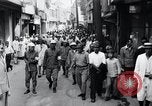
Heavily crowded streets of Kyongsong in North Korea.
Narrow streets of Kyongyong, heavily crowded with civilians. Japanese soldiers march on the side of a street. Native men and children follow the troops. (World War II period).
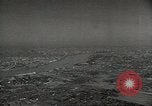
Japanese troops surrender Shanghai and South Korea in the Pacific Theater at end of World War II.
Aerial view passing over Shanghai at end of World War 2, just after VJ Day surrender of Japan. People in Shanghai celebrate the surrender of Japanese troops. Citizens sew and the hold up a American flag. Various allied citizens celebrate together with Shanghai residents. A building with flags of America and China in front of it, a large "V" for victory, and a picture of Chiang Kai Shek on the wall. In Seoul, U.S. soldiers march and Korean citizens cheer the end of World War 2. A surrender ceremony takes place at Governor's Palace. Japanese and Allied officers sign documents. Lt. General John Hodge signs documents accepting the Japanese surrender. In front of the Palace, the Japanese flag is lowered from a flag pole, and the American flag is raised as officers salute.
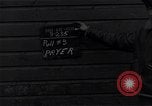
Pilots of the USAAF 334th Fighter Squadron celebrate their victories at Debden Airfield in England, during World War II
Three pilots, Major Gerald Montgomery, Major Howard D. (Deacon) Hively, and Captain Shelton W. "Shell" Monroe, of the U.S. Army Air Forces 334th Fighter Squadron, 4th Fighter Group, discuss a map during World War 2.. Logos of the Eagle Sqadron and the 334th Fighter Squadron displayed above a wall containing small painted German crosses representing enemy aircraft destroyed, probably destroyed, and damaged. Airman stencils two more under the destroyed column. Major Howard D.Hively of Athens, OH.,with another Major looking at record of aerial victories on the wall. Hively holds a sign reading "300 destroyed." He hands it to the other Major who tacks it onto the wall using the butt of his .45 caliber automatic pistol as a hammer. They smile and shake hands. Then Lieutenant Timothy Cronin stencils three more crosses in the destroyed column, under the 300 sign, as Lieutenant Victor Rentschler looks on smiling. The two men each recorded kills on Christmas Day 1944, one of which was the 300th kill for the squadron. (Shelton W. Monroe was later killed in Korea after his plane was shot down on April 17, 1951. )
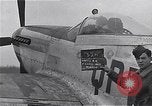
Pilot and Intelligence Officer of the USAAF 334th Fighter Squadron at Debden Airfield, England, during World War II
Pilot of USAAF 334th Squadron, 4th Fighter Group, Captain Shelton W "Shell" Monroe, of Waycross, GA. in the cockpit of his P-51, during World War 2. He starts the airplane, but shuts down and gets out to talk with Intelligence Officer, Captain Ben Q. Ezzell, who is dressed in Class A uniform, and carrying some sort of document. They talk and Ezzell gives Monroe a cigarette to smoke. Shelton W. Monroe was later killed in Korea after his plane was shot down on April 17, 1951.
Surrender of Japanese Imperial forces aboard USS Missouri in Tokyo, Japan.
Surrender of Japanese Imperial forces leads to end of World War II. American planes approach Atsugi Air Base in Japan. Wrecked Japanese planes on airfield. Japanese labor works on airfield. C-54 aircraft lands in Atsugi. General Douglas MacArthur disembarks the plane. USS Missouri in Tokyo bay. Surrender ceremonies aboard USS Missouri. Japanese Minister of Foreign Affairs, Mamoru Shegemitsu (with cane), General Yoshijiro Umezu, Major General Yatsuji Nagai, Katsuo Okazaki, Rear Admiral Tadatoshi Tomioka, Toshikazu Kase, and Lieutenant General Suichi Miyakazi on deck of USS Missouri. Cameramen record event. General MacArthur speaks on mike. American officers surround General MacArthur. Surrender Instrument on table. Eleven men Japanese Delegation move ahead to sign the Surrender Instrument. Mamoru Shegemitsu signs Surrender Instrument. General Jonathan Wainwright and Lieutenant General Sir Arthur E Percival of British Army step forward with General MacArthur to sign Surrender Instrument. Map shows surrender locations like China, Manchuria, South West Pacific, Central Pacific, Japan, South Korea and Philippines.