


 Francais
 Deutsch
 Italiano
Refine Your Search
+"Leipzig Germany" +1945 stock footage and images
- Showing 7 to 12 of 17 results
Monument to the Battle of the Nations in Leipzig, Germany, seen during final days of World War II in Europe
Opening scene shows the Monument to the Battle of the Nations erected in Leipzig, in 1913, commemorating the 100th anniversary of the epic battle of Leipzig, and the defeat of Napoleon by a coalition of allies arrayed against the French. Notable are images of Teutonic knights standing guard around the upper periphery of the monument. Closeup of the base of the monument and entranceway. Some signs of war damage are visible. Camera pans upward. An American soldier is seen in lower left foreground, manning an M45 Browning .50 caliber Quadmount anti-aircraft gun. Camera continues to pan over details of the monument. (World War 2; WWII; WW2)
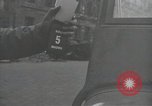
American soldiers cope with snipers in City of Leipzig, near end of World War II in Europe
Opening scene of film shows war damage with rubble at sides of street in Leipzig, Germany, during final days of World War 2, in Europe. American soldiers are hunkered down on sidewalks near buildings, attempting to combat snipers from across the street. Smoke rises from part of the building, and a white flag is seen in the window of another part of the building. Several American soldiers fire their rifles at the building. A puff of white smoke rises from the building. A Sherman tank is seen parked on the street. Shaky closeups of the target building with smoke coming from several windows. Change of scene shows a Sherman tank moving along the pathway of a tram. Closeup from behind of an American soldier firing his rifle from the corner of a building. Camera moves back showing another soldier speaking on a field telephone. Several German civilians walking past the area. Several soldiers patrolling along a sidewalk. German civilians congregating in small groups on a sidewalk. A man in one group waves a white handkerchief. Two Sherman tanks moving along a street. An American soldier hunkered down by a building corner while a uniformed German Sergeant stands calmly, next to him. A Sherman tank turns a corner on a street.
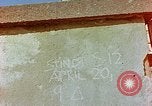
Tanks and infantry of the United States Army enter Leipzig in Germany (WW2)
Tanks of the United States Army and infantry men drive in the streets of Leipzig in Germany after taking it over during World War II. Signboard 'Leipzig 69th Infantry Division'. A dead German military officer's body covered with overcoat. Dead bodies of Deputy Mayor of Leipzig, his wife and daughter. They were Deputy Mayor and Municipal Treasurer Dr. jur. Ernst Kurt Lisso, at his desk, his wife Renate Stephanie, in chair, and their daughter Regina Lisso after committing suicide by cyanide in the Leipzig New Town Hall (Neues Rathaus Martin-Luther-Ring 4, 04109 Leipzig, Germany). Damaged buildings in Leipzig. Scattered waste and debris of demolished buildings from Allied bombing.

British Members of Parliament visit German concentration camps after Allied victory in Germany (WW2)
British Members of Parliament (MP) visit sites of German atrocities including Buchenwald, Bergen-Belsen after the end of World War II. The Members of Parliament at a concentration camp witness piles of dead bodies of German prisoners, a whipping block, the crematory ovens. The MPs also visit the Belsen camp of political prisoners. Starving and dead prisoners at the camp. Ground near the camp covered with dead bodies. A mass grave with piles of dead bodies. Dead bodies of prisoners burnt, shot, fired, and trapped in barbwires. Scenes of Chief Warden and commander Josef Kramer, Gestapo guards, and women guards of the Belsen camp arrested. Security guards of the camp arrested. Escaped prisoners of a Stalig near Leipzig guide the MPs towards more jails and dead bodies killed when trying to escape the burning building. Dead bodies of Germans in Leipzig who committed suicide by cyanide poisoning before being captured, including Deputy Mayor and Municipal Treasurer Dr. jur. Ernst Kurt Lisso, at his desk, his wife Renate Stephanie, in chair, and their daughter Regina Lisso, all in the Leipzig New Town Hall (Neues Rathaus Neues Rathaus Martin-Luther-Ring 4, 04109 Leipzig, Germany). Body of Volksarmee General, who also died by suicide.
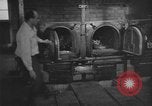
Crematory at Buchenwald; torture instruments at Lublin, massacres at Leipzig, German citizens see Nazi horrors and atrocities
Scenes at liberated concentration camps near end of World War 2 in Europe. A man opens crematory ovens at Buchenwald concentration camp. Heaps of bones and ashes. Sign of oven manufacturer: J A Topf and Sons, Erfurt, Germany. Men empty an oven of burned bones. View of instruments of torture in prison at Lublin, Poland (possibly part of Majdanek Concentration Camp in Lubin?) Victims of torture by Nazi German captors. Dead bodies of victims killed near fence at "schlachthaus" (slaughter house) in Leipzig Germany. Women look through fence at the dead. Bodies of victims who died attempting to flee burning barn. Local German citizens walk amongst the dead lying in concentration buildings and yards. German citizens are pressed into service loading the bodies of the dead on litters and into trucks. Concentration camp survivors are seen being given food and assistance. Two emaciated young victim survivors (they appear to be teenage boys) share a bowl of soup. German soldiers held as prisoners of war. German tribunal considers charges against Nazis. German citizens removing Nazi victims from mass grave. Bodies of the dead laid out on hillside. German citizens visit Buchenwald and see display of Nazi art and keepsakes created from human skin and bodies of victims.
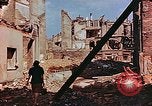
Piled rubble, demolished buildings and damaged buildings after United States Army enters Leipzig at end of World War 2
United States Army cameraman views of the city of Leipzig in Germany at the end of World War II in Europe. Ruins of buildings destroyed during bombardment and artillery firing during the war. Scattered wastes of demolished buildings, bricks and dust in stack block the roads. A woman walks from nearby a ruined building. Pedestrians walking amid rubble. Elevator of a building stands even after rest of building is demolished.