


 Francais
 Deutsch
 Italiano
Refine Your Search
+"Los Angeles California USA" +1944 stock footage and images
- Showing 1 to 6 of 16 results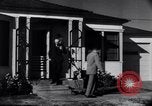
British worker and his American counterpart in labor exchange program visit the Lockheed aircraft plant in Los Angeles, Calfornia
A British guest on labor exchange program visit to the U.S. during World War 2. He leaves the home of his counterpart American host in Los Angeles, California. They leave in the American's car and drive a considerable distance to the Lockheed Aircraft Company facility. View of Honor Roll listing 15, 174 Lockheed affiliated members of the U.S. Armed Forces. The British-American pair walk past a Lockheed Ventura airplane under construction. View of a room filled with P-38 Lightning fighter planes completing final construction, outside the plant. A film clip of the maiden flight of the Lockheed Constellation aircraft (Later designated C-121 by the Army Air Corps) is inserted at this point. It shows the Constellation taking off from the factory airstrip in 1943, and climbing without raising its landing gear. View of aircraft fuselage under construction, where the British worker is inquiring about the manner of its assembly. Next he is seen observing a turntable press operation being run by men and women workers. View of workers using pneumatic hand tools to remove wrinkles from edges of pressed products. A woman punch operator is seen with safety straps on her hands that pull them away each time the punch comes down. Another woman worker demonstrates an electric spot welder. (The observing visitors are required to wear safety goggles in case sparks are created by the process.) Closeup of the aircraft part being spot welded. More workers operating similar machines in the plant, including an African American man and woman. Workers placing a large sheet of aluminum into a machine that fabricates wings for the P-38 fighter plane. Closeup of the British worker and his American counterpart on a balcony overlooking the production line for the Lightning aircraft. View across the production line floor. The two look into the factory first aid station available to workers and also see the transportation section where worker carpools can be formed. Employees are seen obtaining ration books and driver licenses from government clerks working in the plant itself. Employees are seen eating outdoors under foliage camouflage and others gather at an indoor eating site. Next, a section of a B-17 flying fortress wing, is seen moving out of a manufacturing jig. New components are immediately placed into the empty jig for construction. View of final installation area for B-17s, An overhead crane moves a finished wing, including engines, to be mated with its fuselage. Glimpse of numerous B-17s being assembled. A finished B-17 bomber being towed out of the factory.
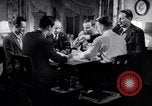
British factory worker and his American counterpart on an international exchange visit to the Lockheed aircraft plant in Los Angeles (WW2)
A British guest on labor exchange program visit to the U.S. is staying as a house guest of his counterpart American in Los Angeles, California. We see him with several friends of his host, who also work at the Lockheed aircraft plant. They are teaching him the card game of poker. The leave to attend a meeting of District Lodge 727, International Association of Machinists and Aerospace Workers, AFL-CIO (Lockheed-California Company). There the British guest is allowed to ask questions of the union. He and his American counterpart are seen at a podium as the Briton asks about the strength of the union inside the Lockheed plant. The local union Secretary responds that they have 45 thousand members in the Lockheed plant and, noting that the British man was a shop steward back in England, mentioned that the local also had 3000 shop stewards in the Lockheed factory. The British visitor asked how the union would be affected after the war, when labor requirements would be reduced. A member answers that the first action would be to return to a 40 hour work week (from the wartime 50 hour week). He states that some workers would return to pre-war work and jobs. Finally, he says they expect Lockheed to expand the scope of its manufacturing to include consumer goods. The union is asked about accommodating workers returning from the military and answers that it is covered in the union contract, which calls for their seniority to continue to accrue while in service. The union also provides for war injured handicapped workers to return to work, and sponsored legislation to provide post-service education opportunities for all returning veterans. Asked about women now employed in the plants, one woman union member stated that many would return to their homes. But the immediate need is to employ more women to the help the Allied forces win World War II as soon as possible. Regarding the prospect of post-war employment, one union member noted the national need to convert from wartime production to the manufacture of consumer goods. The union members favored the idea of continuing labor union exchange visits between the Allied countries in the future.
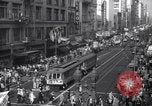
Shops and streets crowded with pedestrians in Los Angeles California near Broadway and West 7th Street
Cars, buses, street cars, pedestrians in a crowded street area of Los Angeles, California, during World War 2. Trolley passing by. Crowd walking by stores and shops near intersection of Broadway and 7th Street in Los Angeles. Elevated view of intersection and traffic. Bank of America and various stores in view. The Owl Drug Company's store in seen. Pedestrians include men and women, and some U.S. military soldiers and U.S. Navy sailors in uniform.
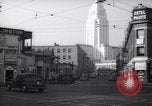
City Hall in background, Sumitomo Bank and other shops in Little Tokyo region of Los Angeles, California
Los Angeles City Hall (200 N Spring St, Los Angeles, CA 90012, United States) visible in the background. Hotel Pacific seen. San Pedro Hotel at 206 1/2 San Pedro in "Little Tokyo." The Sumitomo Bank Ltd Los Angeles Branch office in the street. Theatre Fuji seen, with some Navy sailors walking past. Store fronts for Gashin Grocery and Bamboo Room bar. Two Japanese-American women exit the grocery. Pedestrians walking near intersection of First Street and San Pedro Street in Little Tokyo.
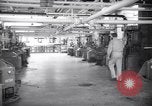
Goodyear Tire and Rubber Company in Los Angeles
Workers in Goodyear Tire and Rubber Company. Workers work in Control room and Meter room. Reactor tanks seen. Rubber coagulates from Holding tanks washed and filtered. Rubber crumbs leave press as rubber bales which are then packed.
High school students work part time at the Lockheed and Douglas aircraft plants in Los Angeles.
United States high school students work part time at aircraft plants during World War II. 'James A. Garfield High School' written on the school building in Los Angeles. Boys and girls in the school campus. Students relax in garden and the campus. The students work at the Lockheed and Douglas aircraft plants. Girls get ready for their part time job. They work in the company. The boys perform different tasks like drilling and welding in the aircraft plant. Older men help them. Aircraft parked on ground. Three boys are interviewed. Aircraft in flight.