


 Francais
 Deutsch
 Italiano
Refine Your Search
+"Mariana Islands" +1945 stock footage and images
- Showing 67 to 72 of 125 results more
more Hide
Hide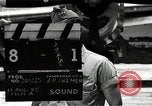
Captain Kermit Beahan, bombardier of B-29 that dropped atomic bomb on Nagasaki, interviewed at Tinian, Marianas Islands
Setting: Airbase at North Field, Tinian Island in Marianas Islands. Public Affairs Officer, Major John F. Moynahan (not seen) identifies Captain Kermit K. Beahan, bombardier of the B-29, "The Great Artiste." (Note: Captain Beahan was the regular pilot of the B-29, "The Great Artiste", which was scheduled to carry the bomb. But it needed to be re-instrumented for the mission. So, instead, its crew simply switched airplanes with the crew of the B-29 "BocksCar" which was already properly configured. Thus, "BocksCar" was the airplane from which bombardier Beahan actually dropped the bomb.) When asked about his experience, Captain Beahan recalls being greatly relieved when clouds parted and the target, Nagasaki, could be clearly seen. He felt that dropping the bomb on Nagasaki, was the biggest thrill of his lifetime. (World War II period).
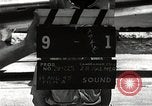
Captain Theodore J Van Kirk, navigator of B-29,'Enola Gay' interviewed at Tinian Island base, Marianas Islands in WW II
Atomic bombing mission in Japan by the United States Army Air Force, during World War II. U.S. military base in North Field, Tinian Island in Mariana Islands, South Pacific. Captain Theodore J. Van Kirk, the navigator of 'Enola Gay' (B-29 which dropped atomic bomb on Hiroshima) is asked about his experience, by Public Affairs Officer, Major John F. Moynahan (seen only from the back at very end of clip). Captain Van Kirk stands in front of Enola Gay and states his belief that the new bomb they carried would be a great help in shortening the war.
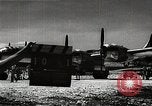
'Enola Gay,' the B-29 that dropped atomic bomb on Hiroshima,parked at North Field base,Tinian, Marianas Islands.
U.S. military base in North Field, Tinian Island in Marianas Islands, South Pacific. 'Enola Gay' the B-29 bomber that dropped the world's first atomic bomb on Hiroshima, Japan, parked on the ramp. The fuselage of Enola Gay. Name Enola Gay painted on its nose. (World War II period).
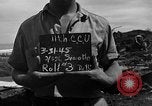
Remains of crashed B-29 at crash site on Tinian in the Northern Mariana Islands in World War II
Remains of United States Army Air Forces B-29 Superfortress that crashed in Tinian, Northern Marianas Islands during World War 2. It was B-29 number 42-65283, nicknamed "Big Wheel," from the 9th Bomb Group, 99th Bomb Squadron. Opening scene shows remains of two engines and bent propellers from the crashed B-29. Ocean and a B-29 coming in for a landing are seen in background. Two destroyed engines and props along with partially intact empennage, are the only recognizable parts of the airplane. Aircraft debris is scattered close to the beach. Three U.S. Army Air Force personnel stand looking over the wreckage.
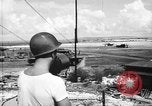
USAAF 19th Squadron P-47 fighters strafing Japanese targets on Tinian Island, Mariana Islands, in World War II
Air strike missions against Tinian Island heavily garrisoned by Japanese Forces during World War 2. P-47 Thunderbolt fighters of 19th Squadron taking off from Aslito Airfield in Saipan Island. P-47s in flight. Large formation of P-47s. Aerial view of Tinian Island, Mariana Islands. Aerial view of Tinian town and airstrip. P-47 strafing shows smoke rising from target area.
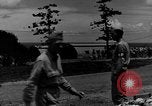
General Spaatz decorates Sergeant Klabo with Legion of Merit award in Tinian, Mariana Island during World War II.
General Carl Spaatz in Tinian, Mariana Island during World War 2. A Military Police officer salutes as a jeep arrives. U.S. Army officers step from the jeep. Four officers stand under a tree. A U.S. Army Air Forces (USAAF) B-29 aircraft with a sign on the fuselage that reads ' Goin Jessie. ' General Carl Spaatz , USAAF Chief of Staff, pins a Legion of Merit medal on Master Sergeant Einar (Curly) Klabo. Klabo salutes the General. Crew men lift Klabo on their shoulders. ( Note: "Goin Jessie" flew 50 combat missions with the 9th Bomb Group, 5th Squadron, while M/Sgt Klabo was her crew chief. She never had an abort.)