


 Francais
 Deutsch
 Italiano
Refine Your Search
+"Nanking China" +1937 stock footage and images
- Showing 1 to 6 of 10 results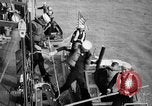
USS Panay Incident: U.S. sailors abandon the sinking United States ship Panay after a Japanese attack in Nanjing (Nanking), China.
Japanese attack on United States Navy gunboat USS Panay anchored in the Yangtze River at Nanjing (Nanking), China. Ship crew and others evacuate the United States ship Panay after a Japanese air attack. Men transfer onto barges and pull away. Men jump into the river. Japanese aircraft in flight. Bullet marks on the ship. Barges approach the coast and views of the Panay sinking slowly in the background. Men unload their belongings on the shore. Gradually the ship sinks.
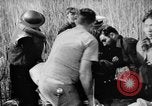
Men injured due to a Japanese attack on United States ship USS Panay looked after in Nanjing (Nanking), China.
Aftermath of the Japanese attack on United States ship USS Panay in Nanjing (Nanking), China. Men injured because of Japanese attack on the USS Panay lying on stretchers. Injured covered with sheets. Severely injured men. A man with a bleeding forehead. A man ties bandages on wounds of a man. Officials speak to each other. Injured carried away on stretchers.
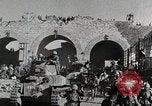
Rape of Nanking during 2nd Sino-Japanese war
Massacres in Nanking during second Sino-Japanese war. Japanese army troops and Type 89 I-Go tanks enter city gates to occupy Nanking, China. they break into a building and take away a Chinese man on a rope tether. Chinese inhabitants confined by the city walls are unable to escape brutal treatment by Japanese soldiers who are seen dragging men, women and children to be shot. Many are herded into a pit where Japanese soldiers standing above, execute them with rifle fire, as others fill the pit with earth, burying any survivors alive. Two Chinese kneeling with arms tied behind them are summarily executed by soldiers with rifles. A Japanese officer follows with a pistol to assure their death. Bodies of dead Chinese civilians litter an alleyway. Many scenes of Chinese killed by Japanese. (Narrator states that Japanese troops murdered 40 thousand men, women and children.) Japanese Field Marshal Count Terauchi Hisaichi is seen stepping from a transport airplane, followed by Field Marshal Shunroku Hata. Count Terauchi looks pleased as he is greeted and exchanges salutes with other officers. Next, the scene reverts, again to the horrors of Chinese peoples' suffering in Nanking, at the hands of the Japanese soldiers. Views of injured and wounded Chinese civilians, at a hospital, in pictures taken by an American Missionary, and smuggled out of china. A woman holding her injured husband as he lies against a cushion in a street. A small child stands near them. Scene shifts to a smiling Field Marshal Shunroku Hata, greeting local commanders, while photographers record the event in background. Views revert to the destruction and human tragedy in Nanking. A picture of Chinese leader, Sun Yat Sen. Chiang Kai-Shek speaking at a podium, and other Chinese political leaders speaking to gathered people, throughout unoccupied China, encouraging them to unite and resist Japanese aggression. Chinese people parading with banners to encourage resistance. Chinese soldiers and political leaders collaborating to raise armies. Chiang Kai-Shek ascending to Political leadership, exhorting Chinese to unite and fight the Japanese. Numerous scenes of rallies calling for unity and resistance. Chinese military officers standing as Chiang Kai-Shek enters a planning session. He sits and then they do. Behind him on the wall is a map of China. Closeup of Chiang as he outlines a strategy to slowly yield territory to Japanese invaders, to buy time for developing and arming Chinese forces. One of his staff goes to a wall map and gestures as he speaks. Next, Chinese soldiers are seen setting dynamite charges and blowing up lines of communication (roads). Chinese people pour petrol on grain fields and set them ablaze. Factory buildings being blown up and similar destruction as China pursues a "scorched earth" policy to hinder the Japanese invaders. Millions of Chinese people on the move to Western parts of China. (Narrator calls this the greatest human migration ever recorded.)
Japanese troops break through near Zhongshan Gate and mount the walls of Nanking in China.
Japanese troops fight outside the walls of Nanking, China during the Second Sino-Japanese War. Japanese soldiers on tanks. Smoke arises from explosions in the fields. Troops fire from behind bushes. Soldiers with a flag in the field. They fire artillery, advance, and take cover. Soldiers walk along the Zhongshan wall (China, Jiangsu, Nanjing, Bai Xia Qu). Explosions near the wall. A destroyed part of the wall. Japanese soldiers carry a ladder. They break through near Zhongshan Gate and mount the wall. Soldiers climb up the wall and enter tunnels. Soldiers seated by a barricade of sandbags. Japanese writing on the wall. The Japanese troops give a 'Banzai Cheer' as they wave Japanese flags atop the wall.
Men injured due to a Japanese attack on United States ship Pannay being treated by doctors in China.
Aftermath of Japanese attack on United States ship Pannay in Nanking, China. Men injured as a result of Japanese attack on Pannay carried on litters and in slings to a village. Chinese doctors treat the wounded. An injured American smokes as he lies on a litter. Victims of the attack move to Shanghai in barges. United States gun boat Oahu and British gun boat Lady Bird at the Shanghai port. Injured transferred aboard the boats. A casket wrapped in American flag aboard the boat. Men on the deck of the boat.

Japanese attack the United States ship Pannay and people on board rescued in China.
Japanese attack on the United States Ship Pannay in China. An interpreter at a desk explains how the pictures of bombing and sinking of United States ship Pannay were obtained. Destructed buildings in Nanking, China after a Japanese attack. Debris spread all over. A dead body in a field and a woman by its side. American embassy evacuated. American envoys embark onto United States ship Pannay. Japanese aircraft attack the ship and drop bombs. Damaged interior of the ship. Anti aircraft guns aboard the ship fired. Men injured by bombing transferred to a boat along side the ship. Boat pulls away from the coast. Men at the bank of a river. Injured brought to the bank. Smoke rises from the coast after standard oil beat catches fire due to Japanese bombings. Wounded taken care of after landing ashore.