


 Francais
 Deutsch
 Italiano
Refine Your Search
+"New Guinea" +1943 stock footage and images
- Showing 85 to 90 of 101 results more
more Hide
Hide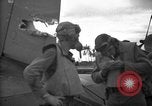
U.S. Marine Lieutenant Marshall, with his severely battle-damaged F4U Corsair at Torokina Air Strip in World War II
Flight operations at Torokina Air Strip on Bougainville Island during World War 2. U.S. Marine First Lieutenant Marshall, and another airman stand and smoke by the tail of the bullet-riddled F4U Corsair aircraft that he just landed on Torokina airfield. The aircraft, Corsair number 25 (BuNo 17736) is from Lieutenant Marshall's unit, VMF-216. They examine the damage on the aircraft. Lt. Marshall, who suffered head injury from cockpit shrapnel is being given first aid in an army tent. Views of damage to the aircraft, including tattered wing, flaps shot up, holes in the fuselage, and huge pieces shot out of the rudder. ( This mission took place on 19 Dec 1943. After flying cover for B-24 bombers over Rabaul, Three U.S. Marine Corps F4Us flown by Capt. Lawrence 'Cloudy" Faulkner, and First Lieutenants Marshal and Guv Kemper, were surprised and engaged by 20-30 Japanese Zekes (Zeros) diving from behind clouds . Lieutenant Marshal was the sole survivor of the encounter.)
Battle off Empress Augusta Bay, during World War 2.
Night engagement off Empress Augusta Bay, during World War 2. Documents describing U.S. forces engaged in the battle. View of the Augusta Bay at dawn. Animation on screen shows the Guadalcanal naval battles and the attacks on Solomon Islands and Bougainville Island. A diagram depicts the movement of U.S. Navy Task Force 39 from Empress Augusta Bay to Shortland Island and diverting towards Treasury Island. Fleet of ships en route. United States B-24 Bomber in flight. Diagram shows the route of Japanese Forces and the United States Task Force 39. Fleet of Japanese ships on the way.

Distance, position and direction of ships at Empress Augusta Bay.
Fleet of United States Task Force 39 ships approach Empress Augusta Bay. Diagram depicts the distances of ships and the aircraft. View of a radar on screen. Diagram shows the direction and formation of ships follow. Fleet of on going ships. Cruisers open fire and explosions occur. Radar shows the range of Northern, Southern and Central groups. (World War II period).
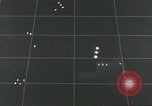
Empress Augusta Bay: Positioning and direction of U.S. ships against the Northern, Southern and Central Japanese groups.
Radar on screen. Diagram depicts the Northern Japanese group firing on 46 Division. Destroyers Thatcher and Spence collide. Fleet of on going ships and explosions on the target. USS Columbia open fires. Diagram shows the distance of Northern Southern and central groups from the range of torpedo fire by 46 Division. Fleet of aircraft bombing on ships below. (World War II period).
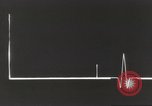
U.S. warships of Division 46 and Division 45 advance toward the Northern Japanese group during the Battle of Empress Augusta Bay.
Artistic rendition: Naval gunfire attacks by the Japanese on United States cruisers. One of the U.S. cruisers is destroyed by the attack. Star shells fired by the Japanese enemy. Diagram shows the Task Force Division 46 and Division 45 ships advancing toward the Japanese Northern Enemy Group. Division 46 fires torpedoes at the cruisers. CIC personnel check graphs. Heavy bombing on the enemy ships. (World War II period).
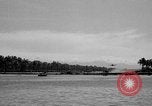
U.S. flight operations at Torokina fighter strip, Cape Torokina, Bougainville, in World War II
View from boat in the water as a U.S. F6F Hellcat aircraft takes off from Torokina fighter strip, Cape Torokina, Bougainville, during World War 2. The aircraft climbs out directly overhead. A small boat is seen at the beach and military vehicles move along the airfield roads. A P-39 aircraft taxis onto the runway and takes off in the opposite direction from the just-departed F6F. Military engineer equipment is seen working on the airstrip. A number of P-39s are parked beside the runway, close to surrounding trees. An F4U Corsair aircraft takes off towards the water (and camera), passing directly over a construction tractor working on the field. Another Corsair takes off over the heads of two armed sentries, and yet, another takes off immediately afterwards. View from the water, as an F4U flies low overhead toward the field for landing.