


 Francais
 Deutsch
 Italiano
Refine Your Search
+"New York City USA" +1917 stock footage and images
- Showing 1 to 6 of 13 results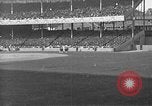
The New York Giants in 1917 baseball World Series games 3 and 4 in New York against the Chicago White Sox.
Baseball 1917 World Series games numbers three and four in New York at Polo Grounds IV stadium in Upper Manhattan, New York City. A large crowd gathers at the stadium to watch the game. New York Mayor John Mitchel arrives along with officers and Mayor Mitchel throws out the first pitch. World Series Baseball game 3 in progress. Giants take the lead at 2 - 0 in the fourth. Robinson scores on Holke's double. Burns singles, sending Holke home. A closeup view of Dave Robertson and Rube Benton in the dugout. The crowd cheers the teams. View also from game 4 where Benny Kauff gets two home runs and Giants win game 4 also. New York crowd, all men, cheering the game 4 win. Mass of spectators exiting the stadium after the game.
Jerry Jones, played by George Murphy, receives his draft letter during his performance at the Follies in New York, 1917
A 1943 American feature film titled 'This is the Army' depicts dancer Jerry Jones, played by George Murphy, as he receives a draft letter during a Follies performance during World War I. Dramatize scenes: Uncle Sam is depicted on a poster in New York that reads: 'I Want You for the U.S. Army Enlist Now'. Buildings along a side of a street. Camera zooms to newspaper headline that reads, "Huns Boast No American Troops Will Reach France." A woman in uniform sings in the street.. She sings and men play musical instruments. Exterior of a building. A banner outside the building reads: 'US Army Recruiting Station'. 'Follies' written outside a theater. Interior of the theater. Performance of singer and dancer Jerry Jones in the theater, played by actor George Murphy. Jerry Jones sings and girls dance in colorful costumes. People watch them. A woman watches the performance of Jerry Jones. A man arrives near her and gives her mail for Jerry Jones from the office of the President. The woman reads the mail. The mail is a draft letter to Jones, inducting him into the U.S. Army.
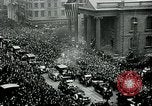
French Marshal Joseph Joffre visits the United States during World War I and is cheered at Joffre Day celebration.
A massive crowd on city streets of New York gathered to cheer Marshal Joseph Joffre of France on his visit to the United States during World War 1. (This is likely the New York City "Joffre Day" celebration on May 11, 1917). Cars move in between the crowd. People carry U.S. flags. Marshal Joseph Joffre talks with a man during his visit to United States. (World War I; World War 1; WWI; WW1)
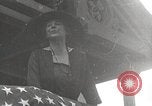
Jeannette Rankin, first woman elected to U.S. Congress, speaks in Union Square, New York City
Jeannette Rankin, of Montana, the first woman elected to U.S. House of Representatives (served April 1917 through December 1918). A pacifist, co-founder of the American Civil Liberties Union, and champion of humanitarian causes, she is seen addressing a group from a speakers pavilion in Union Square, Manhattan, New York City, in September, 1924. She accepts a glass of water from an associate (unseen). Closeups of Rankin leaning over the railing above an American flag, as she speaks to assembled group of men and women. From further away, several men and women associates can be seen at work behind her in the pavilion. Views from behind and to her right, with listeners below and cars parked in the square. Street scene in background. As before, Ms Rankin leans forward to be better heard. (There is no evidence of microphone in use.)
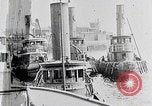
Steamers anchored and in harbor approaching Brooklyn Bridge, New York
Passenger steamers anchored at docks in New York City. Crew wait for passengers. Women and men get on the steamer. Steamers pass under the Brooklyn bridge. View of large World War I military ship with tug beside. View of harbor skyline and tall early skyscrapers and buildings of Manhattan, New York City.
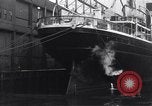
A merchant ship idle at dock of a New York pier, with a U.S. flag on it, during World War I.
Clip shows a merchant ship at dock in New York. It is idle, awaiting resolution from United States legislators, as the U.S. Senate filibusters President Wilson's call to arm merchant ships (against the U-boat threat from Germany in World War I, before America entered the war).