


 Francais
 Deutsch
 Italiano

Refine Your Search
+"New York City USA" +1944 stock footage and images
- Showing 7 to 12 of 48 results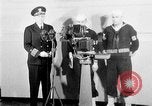
The Norden bomb sight is revealed to the U.S. public for the first time during World War II
The making of a public information film about the Norden bomb sight, during World War 2. Opening scene shows a Norden bomb sight on a pedestal, at the Museum of Science and Industry, in Radio City, Manhattan, New York City. It is flanked by U.S. Navy Captain, Irving Entwhistle and Shore Patrolman, Boatswain's Mate 2nd Class. Orville T. Payne. Another shore patrolman stands behind the bomb sight. The trio waits to begin. Then Captain Entwhistle begins to speak about the significance of the bomb sight to the war effort. The filming is interrupted and takes up again, focusing solely on Captain Entwhistle, as he continues to talk about the bomb sight, but is quickly interrupted, again, by the film director (heard, but not seen). The captain begins, repeating his scripted talk again. Scene shifts to Captain Entwhistle, now standing with hands on the bomb sight. He describes its operation as he maneuvers the sight. He notes the bomb sight's ability to take over control of the bomber's course to the precise drop point. Entwhistle, then looks up and comments: "Is that enough?" He then continues with his talk, but is interrupted, again. Next, Entwhistle picks up again, repeating part of his talk, while the camera pans over the bomb sight. Captain Entwhistle, states that, the instrument "is an automatic pilot, as well as a sight." He rotates the sight various ways for the camera, and asks: "'Want some more?" Scene changes, now showing Harold Barth, President of the Norden company, standing with Captain Entwhistle, who rotates the sight around on its pedestal, while chatting with him. (Microphones do not pick up the conversation.) Mr. Barth leans forward and peers through the sight. Next, in a closeup, the Captain manipulates the sight, while talking to Barth (sound not recorded). Mr. Barth and Captain Entwhistle, take turns looking through the sight. Closeup of the Captain looking through the sight, and manipulating its controls.
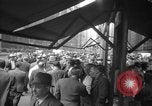
People in New York City learn of Allied invasion of France from newspapers and New York Times building display
At start, film shows crowd (mainly men) gathered on sidewalks in New York City during World War II. Focus shifts to myriad newspapers on a stand, all showing headlines about Allied D-Day invasion of Normandy in Nazi German-occupied France. Men purchase the papers. Glimpse of men moving shoulder to shoulder. The New York Times building at Times Square is seen with latest news being displayed in lights. News messages seen include: "President Roosevelt in Radio talk..." "Rome declares victory at time when Allies invade Europe." "American British and Canadian troops swarm ashore on Northern coast..." American paratroops land behind the Atlantic Wall to deal first invasion blow to Nazi communications." "...The Allies will accept nothing but full victory." View of passengers in a bus reading the Times news as their bus passes the building.

In New York City, people view news about Allied invasion of Normandy France in newspapers and Times building motograph
Pedestrians in New York City lean against a barrier across the street from the New York Times building on Times Square in New York City. They are looking up at motograph ticker (also known as the zipper) which is showing news reports about the D-Day invasion of France by the Allies in World War 2. Several women and men pause to look up and read the news dispatches, including both civilians and men in military uniform. Camera focuses on a Man in Naval uniform standing near a soldier with a young woman on his arm looking up at the news ticker. Scene shifts to view over the shoulder of a woman standing at a news stand reading a Sun newspaper with headline reading: "Invasion Begins. Armies Storm into France in Great Air-Sea Assault." American flag with 48 stars displayed from window in the Times building, as news display begins reading: "Allied armies invade Europe", and "American British and Canadian troops Swarm..." Closeup of a a man seated nearby holding a newspaper with headline "Invasion Army 10 miles inland." A man's hand holding up the New York Post newspaper with headline, "Invasion - We're in France." He flips to an interior page with headline, "Allies Invade Northern France - Sky Troops Land Deep Inland." Two U.S. Navy sailors in uniform look up at the news ticker. One of them has an unlit cigarette in his mouth. Another man at the news stand reading the headlines. A man buys a newspaper and departs. Man in suit and hat crossing the street while reading the newspaper. Unlit cigarette in his mouth. Women and men in a stopped taxi viewing the Times Building motograph from the car window. More men and women standing and reading the zipper headlines. People in a stopped bus reading the Times displays from the windows of their bus.

Members of Maritime Commission, U.S. and British Ministry of War Transport prepare departure of victory ship, in New York City.
Preparations for departure of victory ship from New York to Great Britain, at the end of World War II. Maritime Commission members meet with the representatives of British Ministry of War Transport, at New York City. Members and officers discuss problems of wartime shipping. Phrase 'Time is Short' written on top of a door behind the chairman.

Representatives of British Ministry of War Transport in New York City for meeting with members of Maritime Commission, U.S.
Preparations for departure of victory ship from New York to Great Britain, at the end of World War II. Maritime Commission members meet with the representatives of British Ministry of War Transport, at New York City. Buildings and skyscrapers of New York. Ships and workers at the harbor. Skyscrapers on the waterfront in Manhattan.

Buildings and traffic at night during meeting of British Ministry of War Transport and Maritime Commission in New York City.
Preparations for departure of victory ship from New York to Great Britain during World War II. Maritime Commission members meet with the representatives of British Ministry of War Transport, at New York City. Smokestacks of factories give away smoke at night. New York City buildings and a bridge at night. Busy Broadway and Times Square with vehicles and pedestrians. Number of vehicles passes through a river bridge. Neon lighting on the buildings, skyscrapers, and the shops at night, with many advertisements, theaters, and restaurants. Trucks on roads and traffic guards on duty.