


 Francais
 Deutsch
 Italiano
Refine Your Search
+"North Africa" +1943 stock footage and images
- Showing 79 to 84 of 163 results more
more Hide
Hide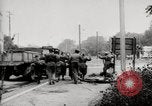
German and Italian prisoners surrender after their defeat in the Battle of Tunisia in North Africa during World War II.
The end of the Battle of Tunisia in North Africa during World War II. German and Italian soldiers surrender. German and Italian prisoners are massed. The prisoners advance with their luggage. German troops advance in their own trucks. The troops carry their food and walk. German officers and prisoners seated in a field. Surrendered German prisoners. Vehicles in the background. The commander of the Axis forces in Africa gets off from an aircraft. He shakes hand with German officials and speaks to them. A soldier puts a lock on a door. Marshal of Italy Giovanni Messe stands beside a car. Messe walks with other officials.
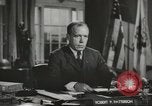
American Undersecretary of War speaks to difficulties facing Allies in confronting Germany and Japan in World War II
Undersecretary of War, Robert Porter Patterson, Sr. speaks about a report from the General staff outlining the needs for combating Germany and Japan in World War 2. He cites Operation Husky, the invasion of Sicily, as an example of what will be needed. He continues to narrate in the background as an animated map appears showing the buildup of supplies and Allied forces in North Africa; Allied air forces flying 60 thousand sorties over Sicily and, the direct amphibious assault using 3,200 vessels. Map also depicts opposing forces of 12 (“unwilling”) Italian Divisions and 3-1/2 German Divisions. View of Allied troops carrying some of their 31 thousand casualties on stretchers from field ambulances. Allied medics attending to the wounded. Some are seen lying on stretchers in a row on the ground near a wall. Interior of a field hospital where surgeons and other medical personnel treat the wounded. Animated map shifts to Europe with Germany at its center, showing , in contrast to Sicily that was only an “outpost,”, the heavily fortified perimeter of Axis controlled areas; the axis industrial might; and the disposition of 300 German Divisions (mostly on the Eastern front) defending the region. Next, the map illustrates Japan’s defended regions in the Pacific Image returns to Undersecretary Patterson i n his office, speaking of the Allied offensives planned for next year (1944), and emphasizing their challenge and difficulty. Scene shifts to General Jonathan Wainwright and his garrison at Corregidor, in the Philippines, surrendering to Japanese forces in 1941. Japanese military camera pans over the Americans being taken prisoner. Other Americans and Filipinos are seen being marched together under guard. Scene shifts to classic views of the Japanese attack on Pearl Harbor, Hawaii, on December 7, 1941. View of Japanese soldiers executing two Chinese civilians in 1937. Dangling bodies of persons hung by Nazis during Operation Barbarossa in Russia, in 1941 A Russian soldier comforts a little girl as he escorts her across a snowy landscape. Time bomb left by German forces retreating from Naples, Italy, in 1943, blows up a Post office building . Views of damage to building and bodies of victims. American Military Police assisting a victim. American soldiers carrying an injured civilian on a litter. Scene shifts to British Foreign Minister, Anthony Eden, Soviet Foreign Minister, Vyacheslav Molotov, and U.S. Secretary of State, Cordell Hull, entering a hall in the Spiridonovka Palace, during the 1943 Moscow Conference in Russia. Close-up of the American, Soviet, and British flags on a table. View of many delegates seated around the table. Close-up of Molotov, Eden, and Hull signing conference document.
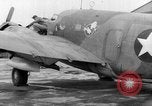
Cartons of movie film are loaded onto an airplane at Mitchel Field, New York. for shipping to North Africa and Australia
U.S. Army Overseas Motion Picture Service in North Africa and Australia. A runway on Mitchel Field, New York. A stationary airplane. A vehicle loaded with cartons is stopped beside the airplane. Cartons of movie film are loaded on the airplane for U.S. Army Overseas Motion Picture Service in North Africa and Australia. A sergeant puts film cartons into the airplane. Lieutenant T. H. Tennant checks the shipment.
United States Navy sailors fill up water in barrels at the Tunis Port in North Africa.
Various U.S. Navy ships and vessels at the Tunis Port in North Africa. U.S. Navy sailors on pier on shore transfer water from one barrel to the other. Sailors stand beside ships and equipment as they shift barrels. Man uses a hose to fill water into a can. A fire extinguisher lying next to the can. (World War II period).
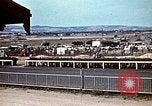
Allied controlled camp for German prisoners of war in North Africa.
Allied held POW camp in Tunisia during the North African campaign, around time of capture of Tunis and Axis surrender in North Africa in World War 2. German prisoners of war move about the compound filled with many small tents and tarps for shelter. German prisoners stand beside military trucks. A German soldier wearing a Afrika Korps M41 Cap smokes a cigarette. A group of German soldiers in a loose line in the background.

General De Gaulle and General Giraud meet at Algeria airport and review French troops in North Africa.
General De Gaulle and General Giraud meet at Algeria airport in North Africa. They review the French troops. The troops are equipped with modern weapons. Car parked in the background. General Giraud decorates General Eisenhower, Allied Supreme Commander. Soldiers march. Trees in the background. (World War II period).