


 Francais
 Deutsch
 Italiano
Refine Your Search
+"North Africa" +1943 stock footage and images
- Showing 7 to 12 of 163 results more
more Hide
Hide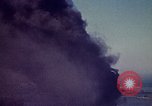
Sailors work to extinguish fire on Allied ships at the Tunis Port following aerial attack in North Africa Campaign.
Allied ships on fire in Tunis Port during the North African Campaign. View on shore as a U.S. Navy sailor and a camera man operating a moving image camera view the fire blazing in the harbor on a sunny day. Black and white smoke clouds arise from the ships. Flames leap upward on the ships. Sunken ships in the water. U.S. Navy sailors use water hoses to extinguish the fires at the bow of a ship. Charred gun on the bow of the ship. Sailors survey remains of burned ships and damage at harbor. Men extinguish the fire with water hoses. (This is possibly footage of the surprise day time raid by German Luftwaffe aircraft attacking Allied ships at Tunis harbor on May 19, 1943, six days after the Axis surrender in North Africa.)
German and Allied forces battle in North Africa; Italians surrender to Montgomery in Tripoli.
Allied troops arrive in Tunisia during Operation Torch of World War II. German aircraft and Allied aircraft engaged in dogfights. Explosions and scenes of aircraft crashing to the ground. Soldiers watch the aircraft through binoculars. Battle of Kasserine Pass in February 1943: Allied tank destroyers blast German tanks "at point blank range" according to narrator, who also notes it was the German's first real battle with American troops. German prisoners of war being marched by Allied soldiers. British troops in Tripoli, Libya in January 1943. Elevated view shows Capitoline Wolf statue in Tripoli with British armor parked below. British Army Field Marshal Bernard Law Montgomery receives surrender of Italian officials. British General Montgomery seated in a jeep passing through the city. People applaud.
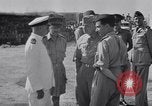
Allies force German forces almost completely out of Tunisia, North Africa, during World War II
Opens with General Dwight D. Eisenhower, Supreme Commander of Allied forces conferring with his deputy for land forces, British Field Marshal Harold Alexander, his deputy for sea forces, British Admiral Andrew Browne Cunningham, and his deputy for air operations, British air marshal Arthur William Tedder, during North African campaign in World War 2 . Map illustrates Allies military plans as analogous to internal combustion engine. General Eisenhower on an airfield consulting with his British Deputy commanders. B-17 bomber in background. Eisenhower salutes the British officers as he walks away. Lieutenant General Carl Spatz, Commander of the North West African Air Force, confers with British air marshal Tedder. Major General Jimmy Doolittle briefs airmen and smiles for camera. Strategic bombers with nose art names Pluto, Yankee Doodle, Jersey Jackass, Alice the Goon, and Fancy Pants. Picture of British Air Vice Marshal, Sir H.P. Lloyd, chief of Coastal air Force. A British Avro Anson aircraft flying air cover over a convoy of Allied ships. Diagram shows how all British and American fighter aircraft and attack bombers were placed under the command of British Air Marshal Cunningham, who is seen stepping from an airplane. British Field Marshal Harold Alexander in command of all ground forces is also seen stepping from an aircraft. Both are seen at a small camp trailer that they shared in the Tunisian mountains, where they work together, at a planning table. Marshal Cunningham is seen briefing air crews in mid March, 1943. B-24 Liberator bombers fly in formation and drop bombs on German Mareth fortifications in Tunis. German anti-aircraft guns create many black flak clouds among bomber formation. View from B-24 aircraft of the bombs exploding on the ground. British Field Marshal Harold Alexander is seen walking with a member of his staff across the sands. Diagram shows planned advance of the British 8th Army. Numerous British heavy guns fire nighttime barrages against the German positions, as British infantry advance during battle. They use scaling ladders and sappers detonate charges. Soldiers carry sticks to line trenches and set up defensive fortifications. Tanks advance. Heavy rain creates problems and some armor bogs down in mud. The next morning British troops are seen in their trenches as smoke drifts across the area. British soldiers moving cautiously under fire. German Field Marshal Rommel looks through binoculars. Additional German armored units entering the area. British gunners firing field artillery and mortars. Map illustrates how 2nd New Zealand Division under Lieutenant-General Bernard C. Freyberg, swings around behind the German line. Formation of British B-26 Marauder aircraft flying over desert. British Vickers Wellington bomber in flight. Bombardier in aircraft pressing a release button and close-up view of open bomb bay door with bombs away view as each bomb is released, followed by huge explosions on ground. British mosquito bomber flying low. Bomb explodes on ground and Mosquito aircraft pulls up and away. Another Mosquito aircraft flying low on a strafing run. Tanks of 2nd New Zealand Division welcomed into El-Hamma, Tunisia, in the Battle of the Mareth line. View of South African army engineers using caterpillar tractor to build roads for Allied forces. Glimpse from rear of three British warships underway in the Mediterranean sea. Front view of a British Queen Elizabeth Class battleship underway. The battleship firing her 15-inch guns. U.S. P-38 fighter planes in formation. Glimpse of pilot in cockpit wearing leather helmet and earphones. Formation of German Junkers Ju-52 aircraft flying low over sea, carrying German troops to reinforce those in Tunisia. View of German soldiers inside the cabin of a Ju-52. Closeup of three Ju-52 transports flying very low over water. Several U.S. P-38 fighter planes attacking the transports. Pilot in one, pressing button to fire his guns. Scenes of aerial dogfight combat between U.S. Army Air Force aircraft and German Luftwaffe aircraft. Gun camera images of P-38s shooting down German transport planes. Map shows American, British, and French forces pressing Eastward against Germans. Views of battle and U.S. Lieutenant General George Patton at the front as his forces move forward during Battle of Guettar. American patrols of light tanks meet up with British patrols from their 8th Army on April 7. Views of the U.S. and British soldiers happy to meet one another and sharing cigarettes. Map shows Allied forces pushing the Germans further. Allied infantry walking into town of Enfilaville. Local families returning to their homes with all their belongings, in carts pulled by donkeys and other animals. In the town, encouraged by British troops, a group of Jewish boys remove Jewish star of David emblems from their jackets that had been used by occupying Germans to identify them as Jewish. British army doctors tending to local women and children.
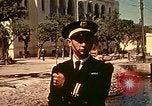
General Dwight D. Eisenhower meets Admiral Sir Andrew Cunningham at Tunis Port during the North Africa Campaign
On shore at Tunis harbor, a British Navy officer gives a sword salute to a senior Naval officer in World War II. U.S. Navy and British Royal Navy sailors lined up on either side of dock for a salute. General Dwight D. Eisenhower accompanied by Admiral Sir Andrew Cunningham and other British and American Navy officers walk past the sailors in review. Cunningham has a walking cane hooked over his left forearm but does not use it. The Union Jack and the British Royal Navy flag are visible. Ship at dock in the background. Eisenhower and Cunningham and the other officers pause and greet in front of a waiting Royal Navy car, RN ME 4096, parked on shore. Eisenhower, Cunningham, and another British officer enter the waiting car and it leaves, passing by a Allied landing ship with number 5 seen on its bow, anchored at the port. Closeup view of U.S. Navy Rear Admiral Richard L. Conolly and another U.S. Navy officer watching after the car drives away. Honor guard sailors march with rifles, departing the dock after the officers leave. (Eisehhower visited Tunis for meetings with British and U.S. Navy officers May 11-13, 1943. This footage is likely during those 3 days.)
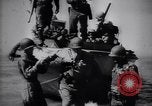
Early life of General George S Patton, and Patton in Africa during World War II.
'The Big Picture' episode narrated by Ronald Reagan depicts the life of U.S. General George S Patton, Jr. Opening scene shows General George S. Patton, Jr. stepping from a landing craft in France, during World War 2. He stands by the side of a road and waves, as elements of his 3rd Army pass in tanks. Patton in a jeep moving with his troops. General Patton pointing with a baton, in North Africa. View of a world globe being circled by a satellite. A baby picture of Patton (called "Georgie"). Patton seen as a boy, fencing, as a cadet at the Virginia Military Institute, and as a cadet at the U.S. Military Academy, West Point. A smiling Patton at West Point. Members of the first football team for soldiers established by Patton. Renault tanks of the 1st Tank Battalion moving with AEF soldiers in World War I. Tank commander George Patton standing in front of a Renault tank. Group picture of American soldiers and tanks, at the Tank School, in Fort Meade, Maryland, after World War I. Closeup of Dwight D. Eisenhower and George S. Patton, in the group. Patton and his wife, Beatrice Banning Ayer, in Old West costumes, for a party, where he displays a pistol in his belt, and in costumes for another party, where they dress as a knight and his lady on horseback. American recruits and draftees being issued uniforms in World War 2. Lieutenant General George S. Patton, Jr. commanding forces for the invasion of North Africa, in November, 1942. U.S. Navy warships fire their guns in advance of an amphibious landing. Landing craft heading toward shore. U.S. troops coming ashore at Casablanca, French Morocco. General Patton accompanied by French officers. Glimpse of U.S. President Franklin D. Roosevelt and British Prime Minister Winston Churchill at their conference in Casablanca in 1943. Patton riding in an armored car with three-star flag displayed. Artillery firing in battle of Tunisia. Lt. Gen. Patton and others observing operations. British General, Sir Harold Alexander, steps from a light airplane to meet with General Patton in North Africa. They converse. General Patton in March 1943 with binoculars observing battle, with Major General Terry Allen on his right, and Brigadier General Theodore Roosevelt Jr. to the right of Allen. They are viewing from a ridge by the village of El Guettar, as allies engage German troops and armor from the 10th Panzer Division. M3 Lee tanks moving in the desert. Knocked out tanks of the German 10th Panzer Division, including German Panzer IV tanks, in the aftermath of the Battle of El Guettar. General Patton coming aboard an American warship, and then standing with an Italian officer and a U.S. Major General. Allied naval bombardment at night. Patton observing though binoculars. Allied warships bombarding Sicily. Allied amphibious forces heading ashore in landing craft. Troops moving ashore. Closeup of troops in a landing craft. Glimpse of Patton in a landing craft. Troops walking across floating dock from a landing ship. U.S. flag flying in sand at beachhead. Landing ships in background. General Patton stepping ashore from small boat, and conversing onshore with a Brigadier General and some troops.
Role of the Jeep in U.S. military operations during World War II.
A U.S. Army Air Forces (USAAF) Waco CG-4A-WO glider is seen descending and landing in a grass field. Upon touchdown, its front pops open and and an army jeep drives out. USAAF C-47 aircraft are seen next, offloading jeeps pulling small artillery pieces, and infantry who move rapidly from the parked aircraft. Jeeps traversing a high hump in a dirt road. A jeep towing an M-3 Antitank Gun 37mm, and others driving through underbrush and bouncing over rough road while towing 37mm guns and trailers. Soldiers stepping from jeeps to set up machine guns. American soldiers playing a game of horse and rider, during a break in duties. Soldiers setting up mortars. Jeeps driving through bodies of water. Two M4A1 (76)W Sherman tanks, with cast steel hulls, drive into a stream. Troops setting up several 37mm guns on a river bank. Two soldiers in a communications jeep. Army officers perusing a map laid out on the hood of a jeep. U.S. field artillerymen using periscopic binoculars on tripods, to spot and direct gunfire. Military vehicles, including jeeps, moving across desert terrain. Artillery crews firing M59 (M2 Long Tom) 155mm guns. A Douglas A-26 Invader aircraft flying overhead. Jeeps in various roles, bouncing along in the desert and laying smoke screens. Jeeps equipped with M3 anti-aircraft guns and others with stretchers for wounded affixed to their sides. U.S. Army Ford GPA "Seep" amphibious jeeps plunging into water and continuing on as boats. A jeep production and assembly line in a U.S. factory showing stages of assembly and finished jeeps driving out of the plant into yards containing hundreds of them. A convoy of jeeps driving over a bridge, and others carrying a U.S. military brass band in a parade in England. A Hollywood actress (Gloria Swanson?) being lifted into a jeep by several men. Glimpse of an unidentified actress with an American soldier, in a jeep. Hollywood stars, Stan Laurel and Oliver Hardy clowning in the front seat of a jeep with Desi Arnaz and two women riding in the back. Several jeeps carrying these and other Hollywood personalities during a war bond parade in Washington DC. The Capitol looming in the background as the jeeps move away from it toward the camera. Jeeps being prepared for transport to overseas destinations. Jeeps being partially disassembled and loaded into wooden crates and placed on rail cars for transport. Jeeps being hauled by cranes and placed aboard ships. Landing crafts mechanized (LCMs) transporting infantry and vehicles, including jeeps. An M4A1 Sherman tank driving out of a landing craft into surf. A jeep being driven onto beach at Adak,in the Aleutians,from a landing craft of the USS J.Franklin Bell (AP-34), in 1942. In 1943, this transport ship was reclassified as APA-16.) American troops with jeep on a South Pacific island in World War 2. A soldier on motorcycle, skids in mud on road in North Africa, and jeeps drive past him. American soldiers ride camels and some drive in a jeep near the Great pyramid and Sphinx in Egypt. Jeeps seen in China, with Generals Joseph Stilwell and Claire Chennault. One parked next to a Flying Tiger P-40 airplane. Soldiers in a jeep in Alaska, next to a tent and sign pointing to "Tokyo." Local tribesmen literally carrying a jeep, on long poles, across a river in Timor. General Douglas MacArthur, accompanied by staff officers, being driven in a jeep along a jungle road in New Guinea, past a line of local tribesmen. Wendell Wilkie, serving as Ambassador-at-large, during the war, speaks to U.S. officers in a jeep. Britain's King George VI in a jeep followed by another carrying Queen Elizabeth. President Franklin D. Roosevelt riding in a jeep to review troops. He removes his hat as they pass the American flag. Sign on a building in North Africa reads "Bizerte." General George S. Patton, standing in a jeep during a victory parade in North Africa. Soldiers at an outdoor religious service during the war with the hood of a jeep serving as a make shift altar.Various views of jeeps driving with soldiers in them.