


 Francais
 Deutsch
 Italiano
Refine Your Search
+"North Africa" +1944 stock footage and images
- Showing 13 to 18 of 28 results more
more Hide
Hide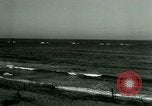
French fighter planes swoop low over Landing Crafts carrying Foreign Legionnaires in North Africa.
French Foreign Legionnaires during practice landings under U.S. Navy supervision in North Arfica. French fighter planes swoop low over a beach. Dummy explosions on the beach. Landing Crafts approach the beach. Soldiers get off the crafts and run inland. U.S. Navy and French officers watch the exercise. Black smoke due to the explosions. A LC with a flag approaches the beach. Soldiers wade through the water towards the shore. Planes fly low over Landing Crafts Mechanized (LCM) off shore. (World War II period).
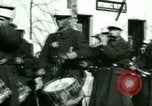
French Foreign Legionnaires march with the military band in North Africa.
French Foreign Legionnaires march with the military band in North Arfica. Soldiers play various instruments as the band marches on the streets. The troops march on cobbled streets. They cross a maintenance building. (World War II period).
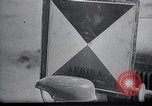
General Erwin Rommel during World War II in Africa.
German General Erwin Rommel inspects German bunkers and fortifications in North Africa. The General talks to a soldier and walks away. The German Army soldiers stand with their military tanks near their bunkers. General Rommel in a tank, having conversation with another officer. (Scenes are from 1941, but narrator is noting that Rommel has died, indicating that this is news form 1944, but is showing scenes from several years prior.)
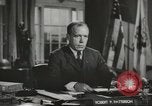
American Undersecretary of War speaks to difficulties facing Allies in confronting Germany and Japan in World War II
Undersecretary of War, Robert Porter Patterson, Sr. speaks about a report from the General staff outlining the needs for combating Germany and Japan in World War 2. He cites Operation Husky, the invasion of Sicily, as an example of what will be needed. He continues to narrate in the background as an animated map appears showing the buildup of supplies and Allied forces in North Africa; Allied air forces flying 60 thousand sorties over Sicily and, the direct amphibious assault using 3,200 vessels. Map also depicts opposing forces of 12 (“unwilling”) Italian Divisions and 3-1/2 German Divisions. View of Allied troops carrying some of their 31 thousand casualties on stretchers from field ambulances. Allied medics attending to the wounded. Some are seen lying on stretchers in a row on the ground near a wall. Interior of a field hospital where surgeons and other medical personnel treat the wounded. Animated map shifts to Europe with Germany at its center, showing , in contrast to Sicily that was only an “outpost,”, the heavily fortified perimeter of Axis controlled areas; the axis industrial might; and the disposition of 300 German Divisions (mostly on the Eastern front) defending the region. Next, the map illustrates Japan’s defended regions in the Pacific Image returns to Undersecretary Patterson i n his office, speaking of the Allied offensives planned for next year (1944), and emphasizing their challenge and difficulty. Scene shifts to General Jonathan Wainwright and his garrison at Corregidor, in the Philippines, surrendering to Japanese forces in 1941. Japanese military camera pans over the Americans being taken prisoner. Other Americans and Filipinos are seen being marched together under guard. Scene shifts to classic views of the Japanese attack on Pearl Harbor, Hawaii, on December 7, 1941. View of Japanese soldiers executing two Chinese civilians in 1937. Dangling bodies of persons hung by Nazis during Operation Barbarossa in Russia, in 1941 A Russian soldier comforts a little girl as he escorts her across a snowy landscape. Time bomb left by German forces retreating from Naples, Italy, in 1943, blows up a Post office building . Views of damage to building and bodies of victims. American Military Police assisting a victim. American soldiers carrying an injured civilian on a litter. Scene shifts to British Foreign Minister, Anthony Eden, Soviet Foreign Minister, Vyacheslav Molotov, and U.S. Secretary of State, Cordell Hull, entering a hall in the Spiridonovka Palace, during the 1943 Moscow Conference in Russia. Close-up of the American, Soviet, and British flags on a table. View of many delegates seated around the table. Close-up of Molotov, Eden, and Hull signing conference document.

USAAF bombing oil refineries in Ploesti, Romania, Colonel Johnson receives Medal of Honor (WW2)
United States Army Eighth Air Force, Second Air Division B-24 Liberator bombers bomb oil refineries in Ploesti, Romania, during World War 2. A map depicting a flight path from North Africa to Ploesti and Germany. B-24 Liberator aircraft drop bombs over Ploesti. A group of B-24 Liberator bombers in flight. Aerial view of Ploesti. Machine gun aimed at Ploesti. Aerial view of an oil refinery on fire. A group of B-24 Liberator bombers flying low over Romania. An oil refinery on fire in Ploesti. Clouds of thick smoke covers the bombed oil refinery. Oil refinery tanks on fire. Firemen use hoses to put out fire in oil refinery. German and Romanian men rush to burning oil refinery. German soldier uses firehose to put out flames. B-24 Liberator bombers returning to North Africa. People watch a B-24 Liberator bomber land on airfield. B-24 Liberator bomber taxiing after landing. United States Army men gather in airfield. Colonel Leon W. Johnson of the 44th Bombardment Group being awarded the Medal of Honor for leading the attack on the Ploesti oil fields.
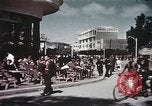
Moroccan city. No cars are seen, but some buses. People travel by burro, camel, bicycle, horse, carriage, and on foot.
Every day street scenes in a Moroccan city in North Africa. The street is very wide. Local residents walking; waiting for public transport. and siting in outdoor sidewalk cafe. Two American soldiers riding in a pedicab pulled by two bicycle riders. Many bicycle riders. Two Western women riding in an open carriage pulled by team of two horses. Moroccan man walking behind burro laden with sacks. Two Moroccan soldiers, or policemen, wearing uniforms with Fezes, walk past and give friendly salute to cameraman. Moroccan man on bicycle, stops to converse with Moroccan woman who is completely robed, to expose only part of her face. A Moroccan man rides a horse in the street, and another rides a burro. Nomads with camels and livestock rest at side of road. As two women sit, looking on, a man stomps some kind bread dough with his feet with dance-like movement. One of the women rises and does the same. (World War II period).